Record Spending and Strategic Divides Define 2026 Midterm Campaigns
While Republican committees outspent Democrats at the committee level, the party split on where to focus millions of dollars reveals deep strategic tensions as polls open.
By Aiko Petrov ·
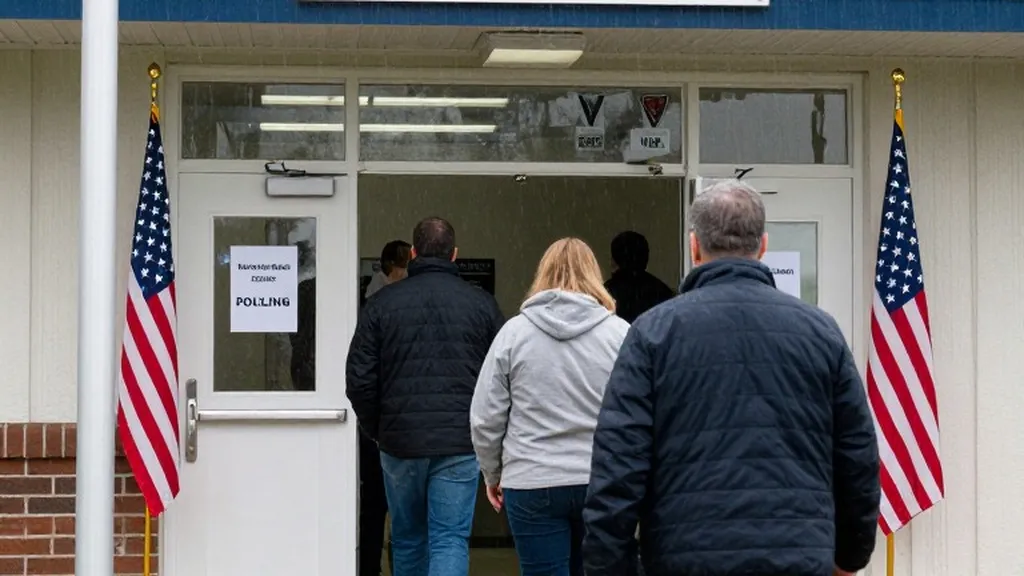
As polling places opened across the country on Tuesday, November 3, 2026, the midterm election stood as the most expensive in history. The Associated Press reported that the total financial outlay for this cycle surpassed all previous records, driven by intense competition for control of Congress during the final two years of President Donald Trump's second term. The sheer volume of money has become a central storyline, with both parties arguing that their specific spending strategies are the key to victory.
The financial data reveals a complex picture of where the money went. According to an AP analysis of AdImpact data, Republican committees outraised and outspent their Democratic counterparts at the committee level. This advantage was bolstered by contributions from Trump-affiliated groups and Elon Musk, who has been a significant financial force in the Republican ecosystem. However, this aggregate lead masks a different reality at the individual level, where Democrats outraised their Republican opponents in many key races.
The most striking detail in the spending data involves the geographic focus of Republican television advertising. The AP analysis found that 88.1 percent of Republican general election TV ad spending went to states and districts that Trump won in the 2024 presidential election. Within that group, more than $850 million was spent in areas where he won by a margin of 10 points or more. This strategy suggests a defensive posture, aiming to lock in support in areas already favorable to the president's party.
In contrast, Democrats have focused their resources on competitive districts and states where the outcome is less certain. This approach aligns with the party's need for a net gain of three House seats and four Senate seats to secure majorities. By concentrating funds in battlegrounds, Democrats aim to maximize their impact per dollar spent, whereas the Republican strategy appears to prioritize reinforcing existing advantages in solidly red areas.
The divergence in spending strategies has fueled debate within the parties about the most effective path to victory. RNC Chairman Joe Gruters emphasized the importance of turnout, stating, "Everything depends on turnout. If we turn out our voters, we win, and that's what we've been planning for." This sentiment reflects the Republican hope that high energy and financial resources can overcome the historical tendency for a president's party to lose seats in midterm elections.
Democrats, meanwhile, have framed the election as a referendum on the current administration's handling of the economy and other domestic issues. DCCC Chair Rep. Suzan DelBene said, "The American people are angry. They want change." The party's candidate-level fundraising edge suggests a strong grassroots effort to mobilize voters who feel the pressure of high prices and economic uncertainty.
Voters across the country expressed these tensions in their own words. Mark Barker of Palm Beach Gardens, Florida, who supported Trump, said, "I've just been following Trump the whole time. I really think he's doing an awesome job." In contrast, James Moore, a 57-year-old librarian in Raleigh, North Carolina, cited financial concerns: "I'm paying more taxes. I'm paying more for my healthcare. I'm paying more for everything." These individual perspectives highlight the broad economic anxieties driving the election.
The Associated Press noted that 35 percent of U.S. adults approve of Trump's job performance, while only 25 percent approve of his handling of the economy. About seven in 10 Americans say the country is heading in the wrong direction. These polling numbers, compiled by AP-NORC, underscore the high stakes of the day's vote and the intense scrutiny placed on the administration's second term.
Beyond the national narrative, specific state races are drawing significant financial attention. In states like Georgia, Ohio, and Michigan, the allocation of funds has been critical in shaping the competitive landscape. The AP reported that economic strain and tariffs have made states like Maine particularly competitive, prompting targeted ad buys from both sides. These local dynamics are crucial because even a small shift in a few districts could determine the balance of power in Congress.
The role of Elon Musk in the financial landscape has also been a point of discussion. His contributions to Republican-aligned groups have provided a substantial boost to the party's war chest. This influx of capital has allowed Republican committees to maintain a spending lead, even as they navigate the complexities of coordinating with individual candidates who may have different strategic priorities.
As the day progresses, the focus remains on how these financial advantages translate into votes. The election is not just about who spent the most, but how that money was deployed. The interplay between committee-level spending and candidate-level fundraising will likely shape the final outcome, making this election a pivotal moment in understanding modern campaign finance dynamics.
Polls are currently open in states like California, where voting is largely by mail, and in traditional in-person voting states like Florida and Texas. The U.S. Postal Service has added hours and staff to ensure mail ballots are counted on time, highlighting the logistical challenges of processing a record number of votes. The final tally will reveal whether the massive investment in this election yielded the desired results for either party.