Amazon Scraps Virginia Data Center Plan
Following intense local pressure, the tech giant will convert a planned AI facility site into residential and mixed-use spaces.
By William Parker ·
Northern Virginia has long been a magnet for corporate infrastructure, but the region's appetite for massive server farms is beginning to wane. In a significant shift from its initial expansion strategy, Amazon has decided to abandon its proposal to construct four new data centers in Loudoun County, a jurisdiction just outside Washington, D.C., that has become synonymous with high-density computing infrastructure. The decision marks a notable retreat for one of the world's largest cloud providers, forced to pivot due to sustained opposition from local stakeholders who questioned the environmental and logistical costs of the project.
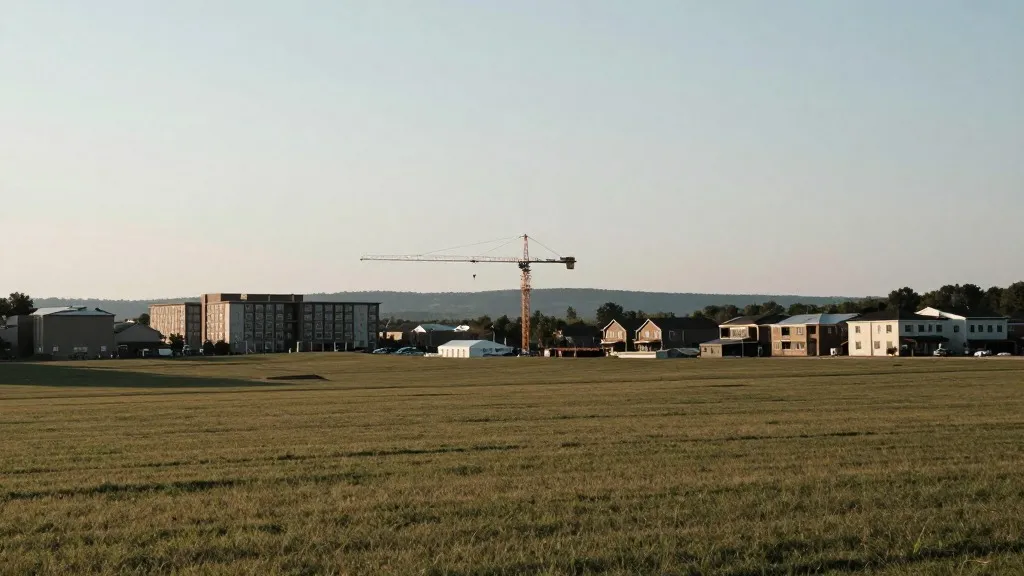
The land in question is a 122-acre former campus belonging to George Washington University. While the company originally intended to fill the space with energy-intensive server buildings, it has agreed to repurpose the majority of the property for residential and mixed-use development. As part of the settlement, Amazon will donate 25 acres to Loudoun County for the construction of a community arts center and recreational facilities. Additionally, the company will contribute $5 million to a local housing fund, a move intended to address resident concerns about affordability and community impact.
This development represents a sharp contrast to the county's nickname, "Data Center Alley," which reflects its status as the home of the planet's largest concentration of such facilities. The timeline of this reversal began in July of this year when Amazon first submitted its proposal to the local board. Tensions escalated by September, when Phyllis J. Randall, the Chair of the Loudoun County Board of Supervisors, met with Amazon executives. During those discussions, county officials suggested that the company might find a more suitable alternative use for the land rather than proceeding with the data center buildout.
Josh Weissman, Amazon's vice president for data center development, acknowledged the company's initial enthusiasm for the site when it became available. However, he stated that the firm carefully weighed the county's "pointed concerns" regarding the specific location. Weissman noted that while Amazon viewed the legal development potential of the property differently than the county did, both parties concluded that a shared vision was preferable to "costly litigation." This approach allowed for a negotiated outcome rather than a prolonged legal battle over zoning and environmental permits.
The backdrop for this decision is a broader national debate regarding the sustainability of AI-driven infrastructure. As demand for cloud services and artificial intelligence capabilities surges, the need for larger facilities has intensified. Yet, this growth has triggered local opposition, with residents wary of noise, water usage, deforestation, and spikes in electricity prices. In response to these pressures, federal officials have also weighed in. Just days before this announcement, President Donald Trump urged data center builders and AI hyperscalers to provide a dividend to local communities affected by energy price increases. He further suggested that these facilities should generate their own power and sell or give back excess energy to the grid.
For Loudoun County, officials are framing the outcome as a success of diplomacy. Randall stated that by choosing "dialogue over reflexive disagreement," the county and Amazon created a new opportunity for the region. She highlighted that the agreement will provide spaces for residents to gather and play, while also offering more attainable homes for working families. This narrative suggests that community engagement can yield tangible benefits beyond mere infrastructure placement.
However, the transition from server racks to housing raises questions about the long-term viability of data center expansion in the region. Critics have pointed out that the local power grid is already under strain, with limited capacity remaining for new high-demand loads. Some argue that the shift to residential development is less a victory for community planning and more a mathematical necessity, given that the region frequently approaches power grid emergencies. The decision also highlights the tension between the rapid expansion of AI infrastructure and the local desire for livable spaces, a conflict that may define future tech developments in the Southwest and beyond.
As Amazon moves forward with its mixed-use plans, the tech industry watches closely. The move signals that even major players must adapt to local regulatory and social landscapes. While the company retains the land and its potential value, the immediate focus shifts to construction timelines and the integration of the donated community spaces. For now, the 122-acre site stands as a testament to the changing dynamics between big tech and the communities that host them.
Source: Tom's Hardware