NASA recruits for lunar base as Artemis commander urges applicants to act
The space agency needs more personnel to expand the Artemis program, with a deadline set for December 3, 2026.
By Lorenzo Marshall ·
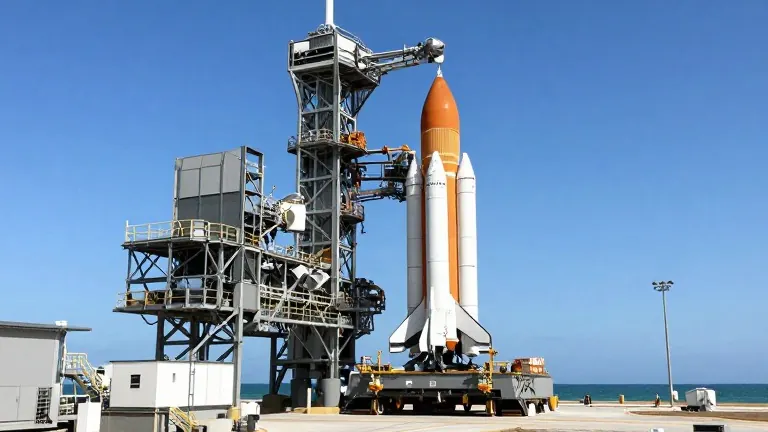
NASA is accepting applications from U.S. citizens for its 25th astronaut class. The agency aims to grow its workforce to support the expansion of the Artemis program and the construction of a permanent lunar base.
Officials announced the opening of the application window on Saturday at an air show at Kennedy Space Center in Cape Canaveral, Florida. The event promoted lunar exploration and recent advances in aviation technology.
NASA has 32 active astronauts. The agency stated it requires more recruits to increase the human presence beyond low-Earth orbit. The last call for applicants closed two years ago. More than 8,000 people applied then, and 10 were selected in September 2025.
Randy Bresnik, the commander of the Artemis III mission, told The Associated Press that the agency has more work to do than astronauts available to do it. He urged potential candidates not to delay their applications.
Applicants must submit their materials by December 3. NASA plans to make final selections by late 2027. The new class will begin training in early 2028, the same year NASA intends to return astronauts to the lunar surface for the first time in over 50 years.
Bresnik and his three crewmates will launch next summer to practice docking their capsule with two lunar landers. One lander is built by SpaceX, and the other is built by Blue Origin. This mission will remain in Earth orbit and serve as a rehearsal for the Artemis IV mission. Artemis IV will attempt to land two astronauts near the lunar south pole next year.
Frank Rubio, a member of the Artemis III crew, noted that the path to space requires patience. He holds the U.S. record for consecutive days in space, having spent 371 days in orbit. Candidates must be U.S. citizens with college degrees and professional work experience. Mandatory training takes two years. It may take several more years before an astronaut flies a mission. Rubio said that going to the moon will represent only about 1% of an astronaut's total experience. The rest of the work involves contributing to the overall mission.