NASA admits Moon mission needs 22 rocket launches
A former astronaut reveals a new high estimate for refueling the lunar lander, raising questions about the timeline for the Artemis program.
By Juan Gonzalez ·
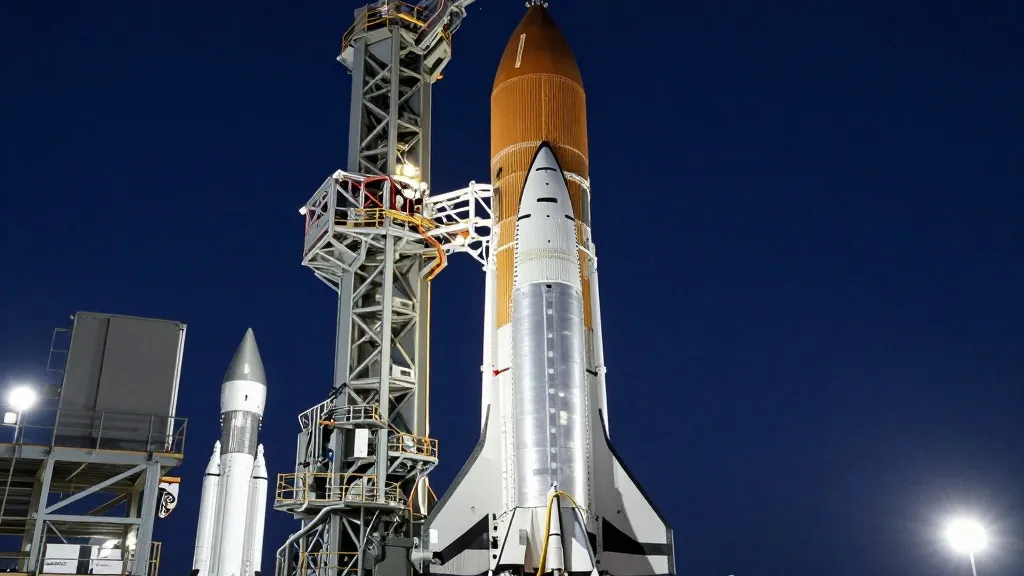
Former NASA astronaut Charlie Precourt disclosed that the agency’s latest internal estimate requires 22 Starship launches to support a single crewed lunar landing. Precourt, a member of the NASA Aerospace Safety Advisory Panel, shared this figure during the panel’s quarterly meeting held on Thursday. The revelation marks a significant shift in the agency's public stance on a metric it has long treated with extreme caution. For years, NASA has been reluctant to pin down exactly how many rocket flights are necessary to fuel a Starship-based lander in low-Earth orbit. The goal is to accumulate enough liquid oxygen and methane propellant to send a spacecraft to the Moon, land a crew, and return them to lunar orbit.
This number has fluctuated over time, often leading to speculation within the aerospace community. In 2023, Lisa Watson-Morgan, who served as the director of NASA’s Human Landing System at the time, told Ars Technica that the agency had a general idea but was hesitant to state it publicly. She later suggested the figure fell within the "high single digits to the low double digits." That range implied roughly a dozen launches, a substantial logistical undertaking that would involve one "depot" Starship and eleven "tanker" Starships dedicated solely to refueling. Other officials have previously cited numbers in the "high teens," but the new estimate of 22 is notably higher than those earlier projections.
The increase in the required launch count stems from growing concerns among NASA officials regarding the performance trajectory of SpaceX’s Starship rocket. The agency had hoped that SpaceX would dramatically improve the vehicle's lift capacity in a short timeframe. Such improvements would reduce the number of tanker flights needed to fill the depot. However, there is now apprehension that these enhancements may not arrive soon enough to allow Starship to play a meaningful role in returning humans to the Moon within this decade as part of the Artemis program.
NASA’s guarded approach to this specific number is unusual, even for an agency that does not possess or desire nuclear weapons. The metric is considered sensitive because it directly impacts the feasibility and safety profile of the entire lunar landing strategy. By withholding the exact count, NASA has avoided committing to a specific logistical burden that could influence its partnerships and budget requests. The new estimate, however, forces a clearer look at the operational demands of the Artemis architecture.
The discussion at the advisory panel meeting focused heavily on the risks associated with landing humans on the Moon. Precourt’s comments highlighted the complexity of relying on a reusable, high-thrust rocket for the most critical phase of the mission. The need for multiple tanker launches introduces additional variables, including the precision of orbital rendezvous and the volume of propellant handling required in space. Each additional launch increases the probability of encountering unforeseen technical challenges before the crew can even begin their journey to the lunar surface.
Reactions to the news have been mixed, with some observers noting that the estimate aligns with conservative engineering margins. The figure of 22 suggests that the current version of Starship may not achieve the massive lift capacity improvements that were anticipated in earlier planning phases. This could mean that the logistical chain for the Artemis mission remains fragile and dependent on a high cadence of successful flights from SpaceX. The agency must now balance the desire for a rapid return to the Moon with the practical limitations of its primary launch partner.
What happens next depends on how NASA and SpaceX respond to these operational constraints. If the 22-launch estimate remains accurate, the agency may need to adjust its timelines or reconsider the role of other launch systems in the equation. The coming months will likely see more detailed discussions about the integration of the Starship lander with the rest of the Artemis infrastructure. For now, the number 22 serves as a stark reminder of the sheer scale of effort required to put boots back on the lunar surface.
As the Artemis program moves forward, this updated figure will be a key data point for both internal planning and public communication. The agency’s previous reluctance to share such numbers reflects the uncertainty inherent in developing a new class of spaceflight hardware. With the estimate now in the open, stakeholders can better assess the risks and resources needed to achieve the goal of sustainable lunar exploration in the latter half of this decade.
Source: Ars Technica