Twitty's Kush Links Thanksgiving to West Africa
Culinary historian Michael Twitty uses a spice blend to trace African roots in Southern cooking.
By Aiko Petrov ·
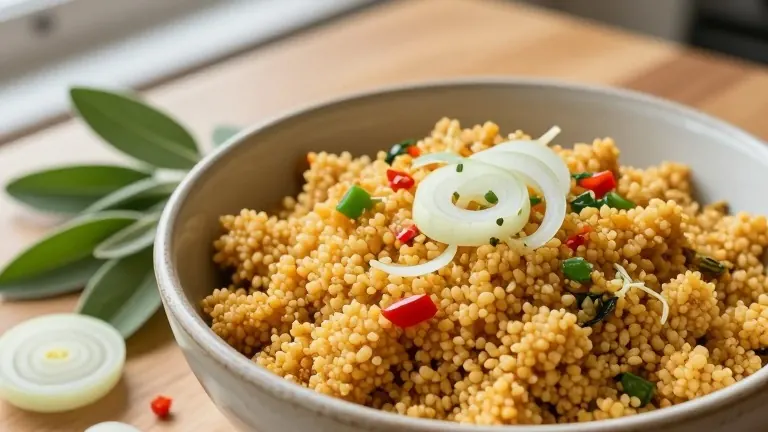
A standard Thanksgiving side dish often masks its origins. Michael Twitty, a two-time James Beard Award winner, argues that the food on the table reveals a history that many narratives overlook. He brought ingredients including fresh sage, fish peppers, and onions from his garden to the studio to demonstrate this connection. The focus was on Kush, a dish he describes as the forerunner to Southern cornbread dressing.
Twitty has prepared this recipe since he was a teenager. The name and components serve as a record of how enslaved people in the Americas preserved their cultural identities through cooking. Twitty notes that the term derives from Hausa, a West African language. He explains that the pronunciation resembles couscous, linking the dish to a region where Islam blends with traditional spirituality. This linguistic tie anchors the food in a specific geographic and cultural lineage.
For Twitty, the dish provides a tangible link to his ancestry. He states that he is part Wolof, Hausa, Fula, and Serer. Knowing this specific heritage allows him to see the dish as a direct reflection of his roots. He contrasts this current knowledge with a past where he could not identify his particular African ethnic groups. The preparation of Kush acts as a method for verifying and honoring that lineage.
Twitty also uses the platform to discuss hybrid culinary traditions among African American Jewish people. He cites examples such as matzah ball gumbo and black-eyed peas with quiche. These combinations reflect North African and Ethiopian influences. He specifically mentions kosher jollof rice and Shito, a sauce usually containing shellfish that is prepared without them in this context. These recipes illustrate how different cultural practices merge in the American kitchen.
The holiday itself holds a complex meaning for Twitty. He observes that a plurality of African Americans do not attach much importance to the traditional lore of Thanksgiving. Instead, they focus on the tradition of cooking and gathering. For him, the meal is less about the myth and more about the people present. The act of eating Kush serves as a reminder of his legacy and origin. The recipe is available in his book, Recipes from the American South.