Caregiver Films Husband's Seven Year Decline
A former casting director documented her husband's early-onset Alzheimer's diagnosis and the family silence that followed a 2019 Thanksgiving gathering.
By Aiko Petrov ·
Charlie requires assistance with nearly every activity of daily living seven years after receiving a diagnosis of early-onset Alzheimer's disease at age 57. His wife, a former casting director who worked on National Lampoon's Christmas Vacation, has documented this progression in a new film titled WALK WITH ME. The project spans four years of their lives and serves as a record of her transition into the role of primary caregiver.
The couple first disclosed the diagnosis to Charlie's father, stepmother, and siblings in late 2019. Charlie had recently left his position as an art director at UCLA Magazine following the medical finding. His mother had passed away years prior, leaving the father, a scholar and former White House staffer, as the matriarch of the family group. The family had a history of compartmentalizing emotions following Charlie's parents' divorce when he was 15.
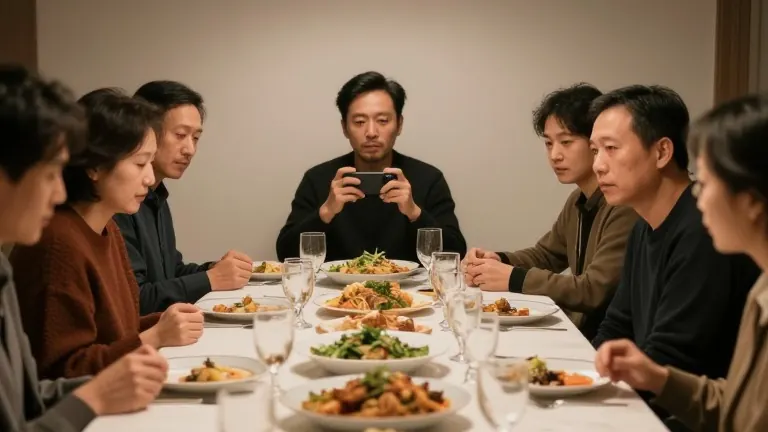
The family gathered for Thanksgiving in Washington, D.C., in November 2019. Despite the recent news, the diagnosis did not enter the conversation during the meal. The father expressed pride in his two sons, his wife, stepchildren, and grandchildren while finishing his final memoir. He remained intellectually engaged but did not address the condition affecting his oldest son. The wife filmed the family sharing what they were grateful for during the meal.
Charlie maintained a sense of agency during this period. He created a website called walkingnla.com to document his walks through Los Angeles with a camera. He described his acceptance of the disease with wry humor, stating that everybody gets something. He preferred to enjoy his family time rather than hold a pity party. The wife noted that his words began to falter, but his wit remained intact.
The wife observed small struggles that the family missed. She worried about Charlie needing to tie a tie for a dinner at the Cosmos Club because neither of them could manage it. She also noted his short temper and uncertainty about his future work. Charlie had been the one to recognize the changes and request a doctor's visit. The wife admitted to hoping his mood would improve and that further tests would reveal a different cause.
Following the arrival of the pandemic, the couple's world shrank due to uncertain work prospects. The wife decided to make a film to cope with the situation and to provide Charlie with a sense of purpose. She convinced her family to participate, arguing that their story represented millions of other families dealing with the stigma of Alzheimer's. She had not anticipated that the documentary would also capture her own transformation into a caregiver, a term that was not yet in her vocabulary.
It took the wife nearly two years to confront Charlie's father about the family silence. She expressed her hurt at his continued behavior as though nothing had changed. She suspected he was afraid to acknowledge the gradual loss of his son to a disease that steals cognitive function. The family has spent years working through the implications of being filmed during difficult moments.
The wife now plans outings with specific accommodations. She selects restaurants with quiet tables and sits in aisle seats near exits in movie theaters in case the noise becomes overwhelming. She identifies airport bathrooms in advance for flights. She pre-thinks these scenarios to maintain a sense of normalcy for Charlie. Her children have learned to remain connected to a father who can no longer communicate in his former manner.
The film is set to premiere soon, aiming to confront the practical, emotional, and financial support required for caregiving. The wife argues that love alone cannot replace the need for assistance. She encourages families to observe changes during holiday gatherings, such as repeated stories or irritation, and to ask questions rather than dismissing them as aging or stress. The goal is to initiate conversations about care requirements and financial planning before they become urgent.
The documentary highlights the gap between the surface-level functioning of a family and the underlying adjustments required to manage a progressive disease. It captures the moment when the family stopped avoiding the topic of Charlie's condition. The film serves as a case study in how families navigate the loss of independence and the shifting dynamics of caregiving over several years.