Strait of Hormuz Deal Hinges on U.S. Reply to Iran's Two-Day Offer
Tehran proposes full shipping access in 48 hours if Washington meets specific terms, while new Supreme Leader Mojtaba Khamenei orders immediate military readiness.
By Harper Foster ·
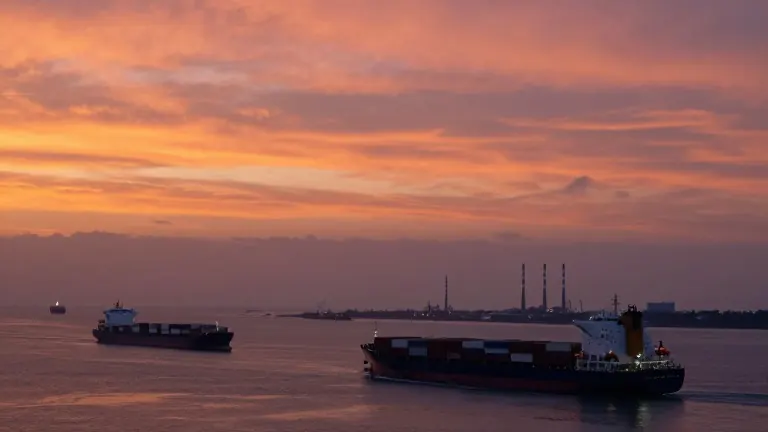
Iran has proposed a deal to fully open the Strait of Hormuz to commercial shipping within two days, a move that could stabilize energy markets if Washington accepts the terms. The Islamic Republic stated that this rapid reopening is conditional on the United States meeting several unspecified requirements. This proposal comes as tensions in the Gulf region escalate ahead of the U.S. midterm elections.
Two Iranian officials confirmed that their diplomatic delegation departed Qatar after days of negotiations. They said communications with the U.S. continue through the Qatari mediator. The officials spoke on condition of anonymity due to the sensitivity of the ongoing talks. President Donald Trump described a Saturday phone call with Israeli Prime Minister Benjamin Netanyahu as very good. He noted they discussed Iran but provided no further details on the outcome.
New Supreme Leader Ayatollah Mojtaba Khamenei met with military chiefs to expand the list of potential targets for U.S. and Israeli forces. He ordered that any response to threats be immediate and without geographic limits. This directive followed the February 28 strikes that killed his father, the previous supreme leader. Khamenei has not appeared publicly since those initial attacks. Security Chief Mohsen Rezaei warned that any new attack would result in devastating blows using new weapons. He described a recent letter from U.S. Vice President JD Vance as a very good sign but said Iran has not yet responded.
The Manama Dialogue in Bahrain served as a venue for regional leaders to voice concern over the widening gap between U.S. and Iranian positions. United Arab Emirates presidential adviser Anwar Gargash stated that if the two sides fail to bridge their differences, the region must worry about the worst. He acknowledged that the stances of Washington and Tehran are currently far apart. The UAE has faced more than 3,000 drone and missile attacks from Iran since the war began, according to the International Institute for Strategic Studies. Most of these projectiles were intercepted.
Commercial shipping in the Strait of Hormuz saw its busiest month for reported assaults in October, marking the highest volume since March. This surge in attacks underscores the economic stakes for global trade routes. Egypt’s Foreign Minister Badr Abdelatty warned that a second round of escalation would be more destructive than the first. He said the next phase of conflict would lead to nowhere. China announced it will send a special envoy to Iran, Oman, and Saudi Arabia in early to mid-November to support dialogue efforts.
Foreign Minister Abbas Araghchi, during a one-day visit to Turkmenistan, said the final outcome depends on answers to specific Iranian questions. The U.S. seeks to address the nuclear issue in any new talks, while Iran prefers to discuss it later. The standoff in the Gulf is increasingly viewed as a competition between Qatari diplomacy and Israeli military strategy. Andreas Krieg, a professor at King’s College London, noted that Qatar is working on a diplomatic offramp while Israel seeks military solutions.
Source: WRAZ
More Business · Watch Your Wallet · Report a business · Got a Story?