Sinjar Power Shift: Iraq Absorbs Yazidi Militia
Baghdad officially integrated 2,500 fighters from the Sinjar Resistance Units into state forces, a move that triggered immediate pushback from Kurdish regional officials.
By Lorenzo Marshall ·
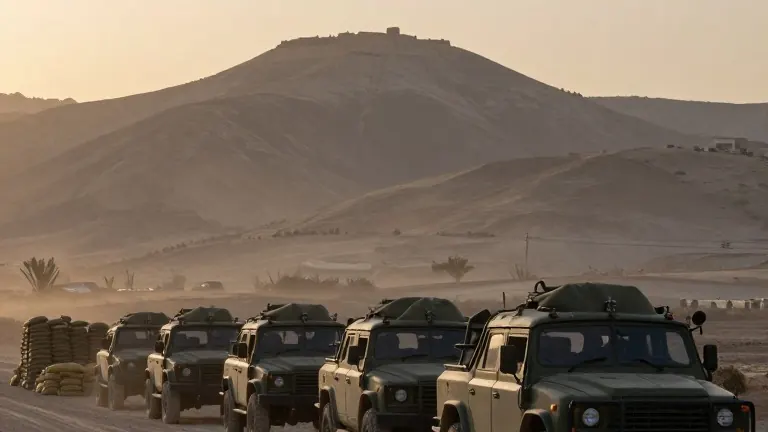
On Monday, a state ceremony in Iraq marked the formal integration of the Sinjar Resistance Units (YBS) into the national security apparatus. The event concluded a political process that began with Prime Minister Ali Faleh al-Zaidi announcing the plan in September. Approximately 2,500 local fighters are expected to be absorbed into various branches of the Iraqi security forces. Murad Ismael, an MP and leader of the Yazidi Cause Alliance, stated that the handover of positions on Mount Sinjar to the Iraqi Army effectively began on Monday. He noted that lists of names were submitted to the state to begin the administrative process.
The YBS, a group with historical links to the Kurdistan Workers' Party (PKK), was formed in the 2000s to protect the Yazidi minority. The group gained prominence after August 2014, when Islamic State militants carried out a genocide in Sinjar, killing at least 5,000 people and abducting thousands of women and girls. The YBS mobilized to fight the IS offensive after the Peshmerga withdrew from the area. Since then, the region has been a site of complex territorial control, with the KRG retaking the city in 2015 and the Hashd al-Shaabi taking control of southern Sinjar in 2017.
The KRG has expressed concern over Baghdad’s unilateral move. On Tuesday, KRG Interior Minister Reber Ahmed argued that the federal government should have implemented the UN-backed 2020 Sinjar agreement, which called for the removal of non-state actors from the governorate. Ahmed stated that steps taken without coordination with the KRG would not restore stability or enable the return of displaced Yazidis. In response, Sabah al-Numan, spokesperson for the Iraqi prime minister, defended the move as part of a comprehensive vision to reinforce the rule of law and regulate weapons under federal institutions.
Regional dynamics have also influenced the timeline. The 2020 agreement was originally opposed by the YBS and Iran-backed factions but supported by Turkey, which sought to neutralize a PKK ally. The fall of the Assad regime in Syria in 2024 reduced Sinjar's strategic value to Iran as a potential supply route. Additionally, Ankara initiated a peace process with the PKK in October 2024, which opened the door for Turkey to accept the integration of the YBS. Mehmet Alaca, an Ankara-based researcher, said Turkey supports the integration of armed groups into state institutions and expects the situation to normalize.
The Turkish Ministry of Defence announced on Wednesday that it welcomed Iraq’s efforts to strengthen state authority. On September 23, Turkish and Iraqi governments jointly announced that the Turkish army would hand over the Zilkan military camp in Bashiqa to the Iraqi military. This transfer was conditional on Iraq ending the presence of banned foreign elements in Sinjar.
Despite the military integration, administrative and reconstruction challenges persist. Yazidi activist Mirza Dinnayi described the next phase as a grey zone, noting that success depends on the political will of all partners to avoid excluding local actors. He emphasized the need for Baghdad to invest in reconstruction and prepare a proper plan for the return of internally displaced persons. According to a joint report from the International Organization for Migration and the UN Refugee Agency in August, 89,709 people, mostly Yazidis, remain displaced in camps in the Kurdistan Region. They have not returned due to security concerns, weak governance, and a lack of compensation.
Sinjar has lacked a mayor since the 2023 provincial elections due to factional disputes. The Nineveh Provincial Council recently opened a nomination window for the post. Former MP and Sinjar district mayor Mahma Khalil called for the establishment of a region with its own administration in accordance with the Iraqi constitution. He added that residents require compensation and that destroyed homes must be rebuilt.
Prime Minister al-Zaidi's spokesperson, Numan, stated that the government is working with local authorities in Nineveh to select a competent local administration. Baghdad also has plans for economic development and aims to establish security conditions to facilitate the safe return of displaced families. The integration of the YBS marks a shift in military control, but the administrative stalemate and the plight of the displaced remain the primary hurdles for the district.
Ahmad Shingali, a Sinjar-based journalist, described the struggle as a proxy conflict driven by the interests of Iran or Turkey. He noted that each faction seeks to shape Sinjar according to its own agenda. The KRG views the displaced population as political leverage between the region and the central government. The federal government faces the task of resolving their status and compensating for losses inflicted by the IS invasion.
Source: Middle East Eye