Kazakhstan Releases Second Tiger Into The Wild
A male tiger joined a female in a reserve near Almaty as officials prepare teams to manage potential conflicts with local livestock.
By Harper Foster ·
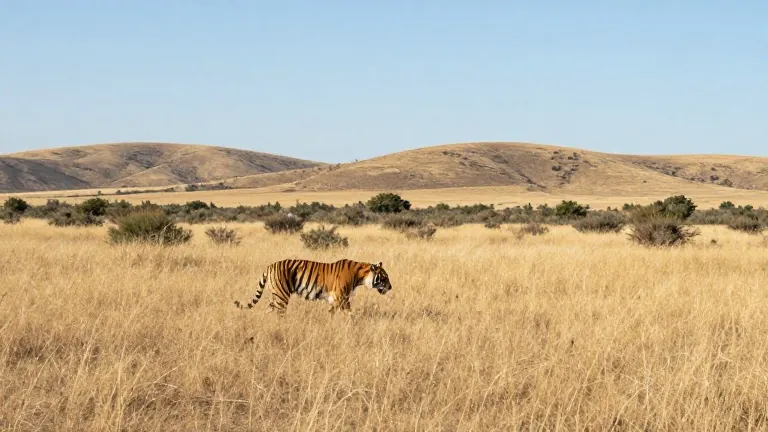
Kazakhstan’s Ecology and Natural Resources Ministry released a male tiger named Amur into the Ile-Balkhash State Nature Reserve on November 2. This marks the second big cat released in the country in recent years, ending a gap of nearly 80 years since the last confirmed sighting of tigers in the region. Amur now shares the reserve with a female tiger named Umit, who was released from Russia on July 31.
The reserve is located approximately 300 kilometers northwest of Almaty. Officials have prepared the habitat by introducing more than 200 deer and over 100 kulans to support the tigers’ food supply. Umit has demonstrated successful adaptation to the wild environment. Within ten days of her arrival, she hunted and consumed a boar and a wolf, according to ministry reports.
Local reactions to the reintroduction are mixed. Valery Bilyachenko, who operates a recreational fishing base near the release site, noted that residents in nearby villages are primarily concerned about the safety of their livestock. He stated that cattle and pastures form the main livelihood in the area, creating natural anxiety that the predators will kill farm animals. Some villages are situated only tens of kilometers from the release zone.
To mitigate these risks, the government has equipped both tigers with satellite-tracking collars to monitor their movements. Officials plan to maintain roaming anti-conflict teams that will scare the animals away if they approach human settlements. Automated text messages will also alert locals when a tiger enters within five kilometers of a village or farm. Bilyachenko said he expects little impact on his business in the short term, though the situation may evolve.
The project aims to establish a stable, self-sustaining tiger population in its historic range. Alibek Kuantyrov of the Kazakh Ecology and Natural Resources Ministry said the goal is not merely to return the predators but to ensure they can live and breed independently. Two additional young tigers are scheduled for release in 2027. The long-term objective is to have around 50 tigers roaming the Kazakh wilderness, which could foster a new niche for wildlife tourism.
The initiative is a joint effort between Kazakhstan and Russia, with funding provided by the World Wildlife Fund, UNDP, and the Kazakh government. The total cost of the project is $30 million. Kazakhstan was home to a tiger population that declined to an estimated 10 animals in the mid-1930s before disappearing entirely by 1948. Sergey Aramilev, director-general of Russia’s Amur Tiger Center, stated that the project demonstrates that restoring historically extinct large mammal species is possible, potentially encouraging other nations to pursue similar efforts.