El-Sayed rejects Trump's jabs as he claims historic first in Michigan Senate
The 42-year-old physician becomes the first Muslim elected to the upper chamber after securing over 52 percent of the vote in the November 3 election.
By Aiko Petrov ·
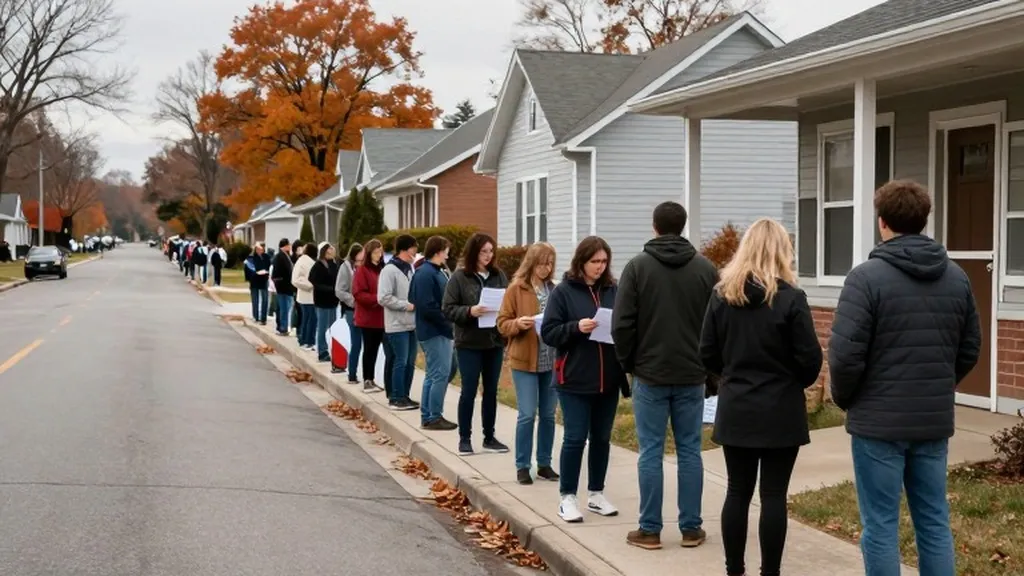
Abdul El-Sayed defeated Republican challenger Mike Rogers on Tuesday to win Michigan's Senate seat. With more than 95 percent of ballots counted, the Democratic candidate had secured more than 52 percent of the vote. This victory makes the 42-year-old physician the first Muslim elected to the United States Senate.
El-Sayed spoke to supporters early Wednesday morning to acknowledge his projected win. He addressed personal attacks leveled by President Donald Trump and Vice President JD Vance during the campaign. Trump had mocked El-Sayed's name and called him a “jihadist,” while Vance labeled him a “psychopath.” In response, El-Sayed stated that President Trump could address him as “senator” when he takes office in January.
The race was a key contest for Democrats in a state that Trump won comfortably two years earlier. El-Sayed campaigned to succeed retiring Senator Gary Peters. His platform focused on confronting economic inequality, increasing healthcare access, and reducing corporate influence in Washington. He specifically cited rising grocery bills and fuel costs as primary pressures on Michigan households.
El-Sayed supports Medicare for All and argues that income should not determine access to medical treatment. He also criticized President Trump's tariffs on Canada, claiming they damaged the Michigan economy due to the state's close ties with its northern neighbor. On foreign policy, he opposed the US-Israeli war against Iran, linking it to higher gasoline prices and inflation. He called for an end to US military assistance to Israel and accused the Israeli government of genocide in Gaza.
These positions drew sharp criticism from his opponents. Rogers alleged that El-Sayed had connections and sympathies with the Muslim Brotherhood. During a televised debate in October, Rogers suggested El-Sayed shared supporters with Hamas. El-Sayed strongly rejected those claims. Far-right commentators also targeted his use of the Arabic word “inshallah,” arguing it signaled a religious threat.
El-Sayed secured the Democratic nomination in August after defeating Congresswoman Haley Stevens. Stevens had received open backing from the American Israel Public Affairs Committee, which spent at least $30 million supporting her. Total primary campaign spending exceeded $50 million. Although Stevens initially pledged to support El-Sayed in November, she endorsed Rogers shortly before the election.
Born and raised in metropolitan Detroit, El-Sayed is of Egyptian descent. He graduated as valedictorian from the University of Michigan in 2007 and later became a Rhodes Scholar at Oxford. He earned his medical degree at Columbia University. His career included roles as an epidemiologist and leadership positions in Detroit's Health Department and Wayne County’s Department of Health, Human and Veteran Services. He previously ran for governor in 2018 but lost the Democratic primary to Gretchen Whitmer.
Source: Al Jazeera
More Politics · World news · Report a business · Got a Story?