Democratic Oversight Committee Targets $1.4 Billion in Trump Pardon Disputes
New congressional priorities focus on financial ties between the president's family, pardoned individuals, and federal contracts, with Utah business leaders and former officials named as potential subjects.
By Harper Foster ·
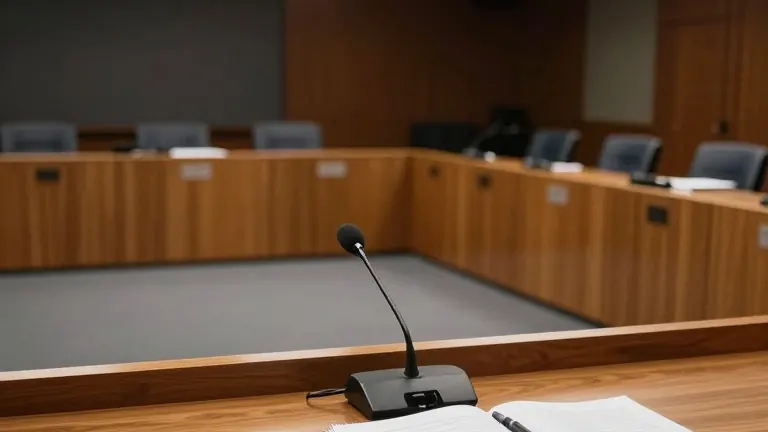
Democratic leaders are preparing a congressional inquiry that directly challenges the financial independence of the Trump administration. The incoming House Oversight Committee has placed the "Trump Crime Family" at the top of its investigative list, a move that puts specific business relationships and pardon recipients in the crosshairs. This shift follows months of Republican calls for similar scrutiny that stalled in a divided Congress.
Rep. Robert Garcia, the incoming chair of the Oversight Committee, outlined four main priorities in a statement on Tuesday. These include the "Trump Crime Family," corporate corruption, abuses by the Department of Homeland Security and Immigration and Customs Enforcement, and the handling of the Epstein files. The committee’s jurisdiction is not limited to government actions, allowing it to examine private sector dealings that intersect with public office.
The focus on financial gain links to a late September push by Sen. John Curtis, a Republican from Utah. Curtis urged colleagues to investigate whether Donald Trump Jr. used his proximity to the presidency for personal financial benefit. That effort did not gain traction while Republicans held the majority, but Curtis said his position remains unchanged. He stated in a Friday statement that Congress has a responsibility to examine whether presidential family members use their access for personal financial gain, regardless of party.
Utah-based individuals face particular scrutiny under the new priorities. Trevor Milton, an auto company founder and convicted fraudster, is a primary target. In May, Democrats sent a letter to Milton questioning his donations to the president. The letter suggested that favorable consideration for pardons may have been influenced by financial contributions or other forms of influence. Milton is one of several Utahns who received clemency from the president.
The investigation is also expected to cover the 18 Utahns pardoned for their roles in the January 6 riots. Lawmakers have raised concerns about whether taxpayers will bear the cost of damages caused by these individuals. Additionally, Brett Tolman, a former U.S. attorney who secured dozens of pardons directly from Trump, could be included in the inquiry, though he has not been named directly by lawmakers yet.
Rep. Jamie Raskin, the ranking member of the House Judiciary Committee, described the current situation as an "assembly line of clemency for cash." He argued in September that the administration had converted the presidential pardon power into a for-profit industry. This framing supports the Democrats' push to examine the financial mechanics behind the clemency process.
Skepticism remains regarding the committee's ability to force compliance from the White House. Jason Chaffetz, a former Republican congressman who chaired the Oversight Committee from 2014 to 2017, warned that enforcement is the weak link. He noted that during his tenure investigating the Obama administration, he issued dozens of subpoenas but had to rely on the executive branch to enforce them, a process that often stalled. He predicted this precedent would return to complicate the current Democrats' efforts.
Claire Leavitt, a professor at Smith College who specializes in government oversight, emphasized the committee's broad legal authority. She noted that unlike other committees with narrow jurisdictions, House Oversight can investigate almost any issue in the public or private sector. She expects the committee to prioritize questions about corruption, including government contracts awarded to friends and donors. Leavitt pointed to the 2019 pharmaceutical hearings as a precedent for using investigations to address consumer costs and send a message about oversight.
The political implications extend beyond the specific findings. Leavitt noted that research indicates public hearings can diminish a president's approval rating even if the administration does not comply with requests for information. The visible nature of the process itself may draw negative attention to the administration. Curtis linked the push for investigation to the midterm election results, stating that Americans voted to restore public trust and that lawmakers should not unplug the subpoena machine now that it is in Democratic hands.
More Business · Watch Your Wallet · Report a business · Got a Story?