Grid Monopoly Fails as US Electricity Rates Jump 30%
New analysis argues that obsolete utility structures, not just data centers, drive rising power costs and service outages.
By Lorenzo Marshall ·
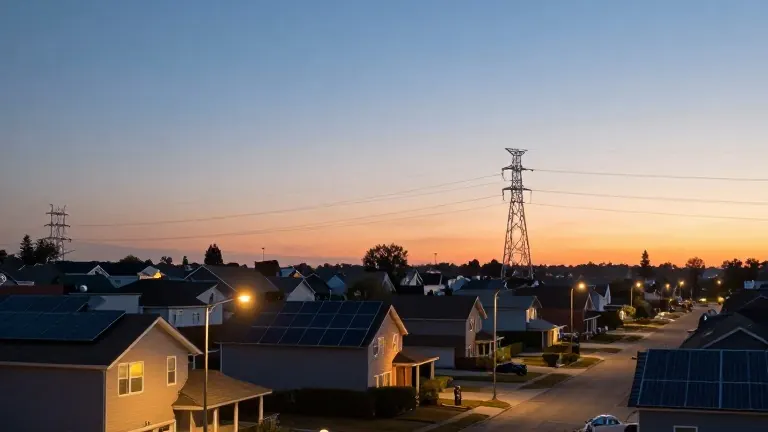
Electricity rates in the United States have climbed 30% over the past five years, adding roughly $300 to the annual bill for the typical American household. This surge is occurring even as the nation debates whether massive new data centers are the primary culprit for higher energy costs. A new report argues that the root cause lies in a century-old utility model that no longer matches modern energy production.
The core conflict is between for-profit utility monopolies and new distributed energy technologies. Utilities maintain exclusive control over the wires that deliver power, a structure originally designed in the early 1900s. Today, that system creates incentives for companies to favor large, capital-intensive projects like power plants and transmission lines over cheaper local alternatives such as solar panels and battery storage.
The financial impact is visible in consumer bills and service reliability. At least eight states have reported preemptive shutoffs of electricity service due to grid strain. In wildfire-prone regions, utility equipment continues to spark fires, forcing states to respond to infrastructure failures that experts say are symptoms of an outdated management model.
Historical context explains how the current structure emerged. States granted for-profit companies delivery monopolies in exchange for oversight. When utility holding companies collapsed in the 1920s and 1930s, Congress passed the Public Utilities Holding Company Act in 1935 to curb excesses. That framework lasted until the 1980s and 1990s, when market consolidation reshaped the industry.
From the mid-1990s to 2015, mergers cut the number of investor-owned utilities by nearly half while electricity use rose 20%. Federal oversight weakened further in 2005 when Congress repealed key parts of the 1935 legislation. This shift allowed utilities to lobby for laws like right of first refusal, giving them priority on new infrastructure. They also added complex review processes and high fees to slow down the connection of new solar and battery projects.
Research from Rewiring America suggests a different path could lower costs. The group estimates that nearly all forecast demand from data centers could be met with residential and commercial clean energy assets. These local resources could be deployed faster and more affordably than the large infrastructure projects preferred by utilities. Community solar projects, which can be built in months, allow renters and others without rooftop space to share in these savings.
California offers a concrete example of this dynamic. Gigawatts of rooftop solar installed by homeowners and businesses saved utility customers more than $2 billion in 2024. Many owners added batteries to dispatch power during peak price periods, lowering costs for the wider grid. The state’s three largest investor-owned utilities have expressed dissatisfaction with this model, noting that consumer savings do not translate into increased shareholder profits.
The report proposes breaking up for-profit utilities to remove the profit motive from electricity delivery. This approach would mirror the federal breakup of AT&T five decades ago, separating the public function of running the network from the competitive function of supplying services. Restructured utilities would profit only by providing valuable services, forcing their proposed solutions for new demands to prove cost-effective against independent producers and local networks.
More Business · Watch Your Wallet · Report a business · Got a Story?