Arizona Polls Close as Voters Tackle New Governor Race and Eight Ballot Measures
Polling places across the state shut at 7 p.m. Tuesday, with the first results scheduled to appear one hour later.
By Harper Foster ·
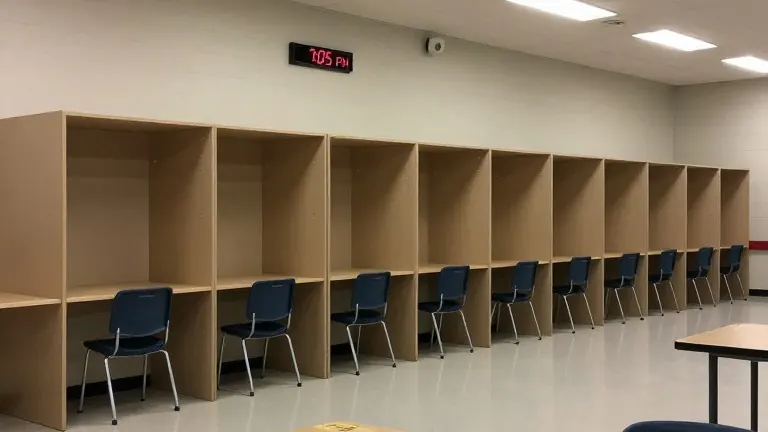
Arizona voters finished casting their ballots at 7 p.m. Tuesday, ending a day defined by a new gubernatorial race and a slate of eight statewide ballot measures. The closure of polls marks the immediate end of voting for the 2026 midterm election. Individuals who were standing in line at 7 p.m. remained eligible to cast their ballots. The state does not use a postmark rule, so all ballots, whether cast in person or dropped in secure boxes, had to be physically received by the 7 p.m. deadline.
The day began at 6 a.m. when voting centers across the state opened. In Maricopa County, election officials reported that all 254 vote centers opened on schedule. A temporary power outage at the Laveen Elementary School District Office vote center was resolved before the 6 a.m. opening time. This marked the conclusion of the voting window for the midterm cycle, which includes contests for governor, attorney general, secretary of state, superintendent of public instruction, and treasurer.
The first batch of election results is scheduled to drop at 8 p.m. The Associated Press will call races in all 435 House districts and the 35 Senate contests up for election this year. Control of the U.S. House requires a majority of 218 seats. Currently, Republicans hold 218 seats and Democrats hold 214. In the U.S. Senate, Republicans hold 53 seats and Democrats hold 45, with 51 seats required for control. The Associated Press is also monitoring races in Michigan, Ohio, Maine, Texas, and Alaska.
At the state level, the Arizona House currently consists of 33 Republicans and 27 Democrats. A party needs 31 seats to control that chamber. The Arizona Senate is split between 17 Republicans and 13 Democrats, with 16 seats required for a majority. All legislative seats in Arizona are up for election in this midterm cycle. Voters also decided on local propositions alongside the statewide measures.
The gubernatorial race pits Democratic incumbent Katie Hobbs against Republican Representative Andy Biggs. The ticket for Hobbs is John Giles, while Biggs is running with Sine Kerr. Green Party candidates Risa Lombardo and Lisa Castillo, and No Label Party candidates Teri Hourihan and Angela Harrolle Mohan, also appear on the ballot. The office of lieutenant governor appears on the ballot for the first time in this election cycle.
Other key statewide contests include the attorney general race between Kris Mayes and Warren Petersen. The secretary of state race features Adrian Fontes against Alexander Kolodin and Duwayne Collier. The superintendent of public instruction contest includes Kimberly Yee, Teresa Leyba Ruiz, Gerard Davis, and Stephen Neal Jr. The treasurer race is between Nick Mansour and Elijah Norton.
Voters in Maricopa County can track their ballot status via the BeBallotReady.Vote website to see when their ballot is received, verified, and counted. Pima County elections maintains a similar tracking website. Residents in other counties can use the Arizona Secretary of State’s online ballot tracker. Voters may receive email or text notifications when their ballot is accepted.
Election rules prohibit photos, videos, firearms, and electioneering at polling locations. A 75-foot perimeter surrounds voting locations where these restrictions apply. Electioneering includes handing out literature, displaying signs, or soliciting votes. The Arizona Attorney General’s Office accepts complaints online and by mail. For immediate law enforcement intervention, voters are directed to contact their local police department. The Secretary of State’s office recommends that victims of voter intimidation contact a poll worker first and document the incident.
The closure of polls sets the stage for the tabulation of results across the state. The first data points will emerge at 8 p.m. as election officials begin the count. The outcome of these races will determine the balance of power in Congress and state government for the next term. President Donald Trump’s final two years in office will be influenced by which party controls the legislative chambers.