Tesla's Ashok Elluswamy Sets Q2 2027 for Driverless Cars, Limited to Robotaxi Zones
Tesla's new timeline for self-driving vehicles restricts the feature to specific geographic areas where the company already operates its robotic taxi service.
By Ji-eun Choi ·
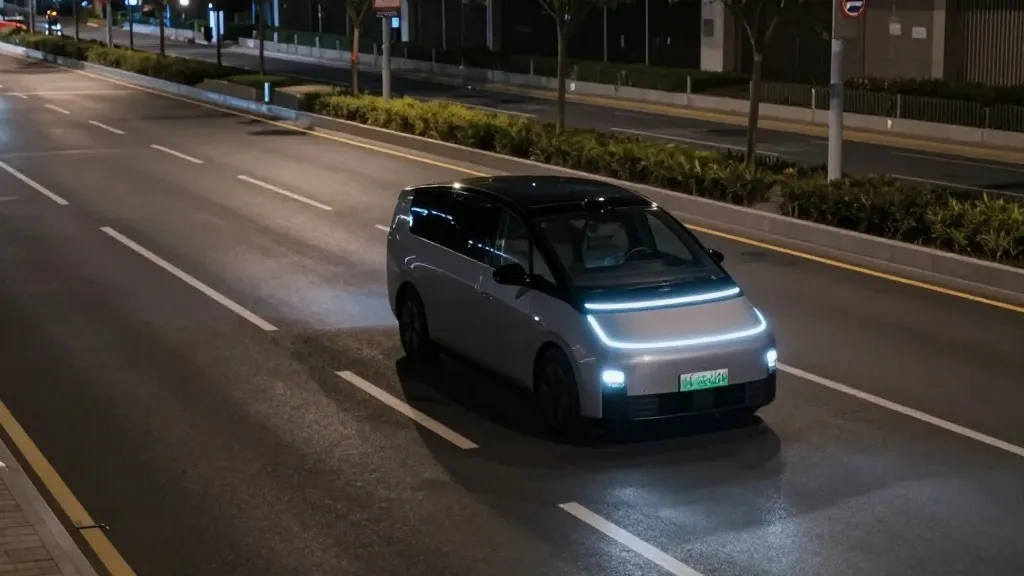
Tesla has outlined a new schedule for enabling unsupervised autonomous operation in customer-owned vehicles, aiming for the second quarter of 2027. The announcement came during the company's third-quarter 2026 earnings call, responding to a prominent shareholder inquiry regarding the feature's availability. The inquiry, backed by a significant number of shares, sought clarity on when drivers could expect their personal vehicles to operate without a human at the wheel.
However, the roadmap provided by Ashok Elluswamy, Tesla's AI chief, involves a significant change in the scope of the capability compared to previous expectations. Instead of a vehicle navigating anywhere a driver requests, the initial step involves owners enrolling their cars into Tesla's managed Robotaxi network. Consequently, a vehicle would only drive itself without supervision within the specific boundaries where Tesla's robotic taxi service is currently active.
The operational areas for this service are notably constrained. Tesla's Robotaxi network is currently active in six metropolitan areas across the United States. Within these regions, the service zones are limited to small sections of the cities; for instance, coverage in Miami is restricted primarily to West Miami and corridors toward Doral and Sweetwater. Similar geofences were established for the launches in Orlando and Tampa.
Operational restrictions further limit the utility of the current system. Within these zones, vehicles are programmed to adhere to low-speed routes, generally avoiding highways and more difficult driving environments. Additionally, regulatory hurdles persist in certain regions. In the Bay Area, operations are not fully unsupervised because California regulations require a safety driver to remain in the vehicle, as the company has not provided data to the California DMV that would permit operation beyond a level 2 autonomous system.
The scale of the fleet is also limited. Tesla reported that its Robotaxi service accumulated nearly 2 million cumulative unsupervised miles by the end of the third quarter. This figure comes roughly a month after the Cybercab was added to the Austin fleet. By comparison, third-party tracking data from earlier in the year indicated that the number of fully driverless Teslas on public roads was in the dozens, rather than the hundreds of thousands previously projected by executives.
This new timeline and its associated constraints represent a shift from the product originally marketed to consumers. Since 2016, the pitch for Full Self-Driving has been a vehicle capable of driving itself to any destination through a software update. Prior commitments have also included promises for unsupervised personal use by the end of 2025 in certain geographies, and assurances regarding the capability for the following year made a year prior to that.
The company has also indicated that hardware limitations may restrict access for some current owners. Drivers with HW3 computers have been informed that their systems cannot support unsupervised FSD, and no clear upgrade path has been established for those vehicles. This contrasts with the capabilities of other entities operating in the autonomous space; Waymo, for example, has surpassed 3 million miles of operation and was already active in Orlando and Tampa prior to Tesla's entry into those markets.
During the earnings call, safety remains the primary bottleneck cited by leadership for the restrictions on operating environments. The AI chief indicated that he guesses those safety issues will be resolved by next year, though he declined to offer a guarantee. The planned capability for Q2 2027 would involve an owner's vehicle joining a fleet under company control within specific zones, rather than a general-purpose autonomous driving update.
Source: Electrek