20,000 a Week: The Ambitious Goal Behind Tesla's Slipping Robot Timeline
Tesla has set a late 2027 target for external Optimus deliveries, citing unresolved challenges in hand mechanics and AI reliability.
By Jonathan Pierce ·
Tesla is targeting a production rate of approximately 20,000 humanoid robots per week, a figure that would translate to one million units annually. On the company's Q3 2026 earnings call, Elon Musk confirmed that this capacity is the long-term goal, but he acknowledged that reaching it requires at least another year of development. This announcement solidifies a new timeline for external deliveries, pushing them to late 2027.
The delay is attributed to three primary hurdles: the robot's AI capabilities, its electromechanical durability, and the complexity of its hands. Musk stated that these issues must be resolved before Tesla can hand over the Optimus units to outside customers. He specified that the initial external deployments will focus on industrial roles that are dangerous, repetitive, or require around-the-clock operation.
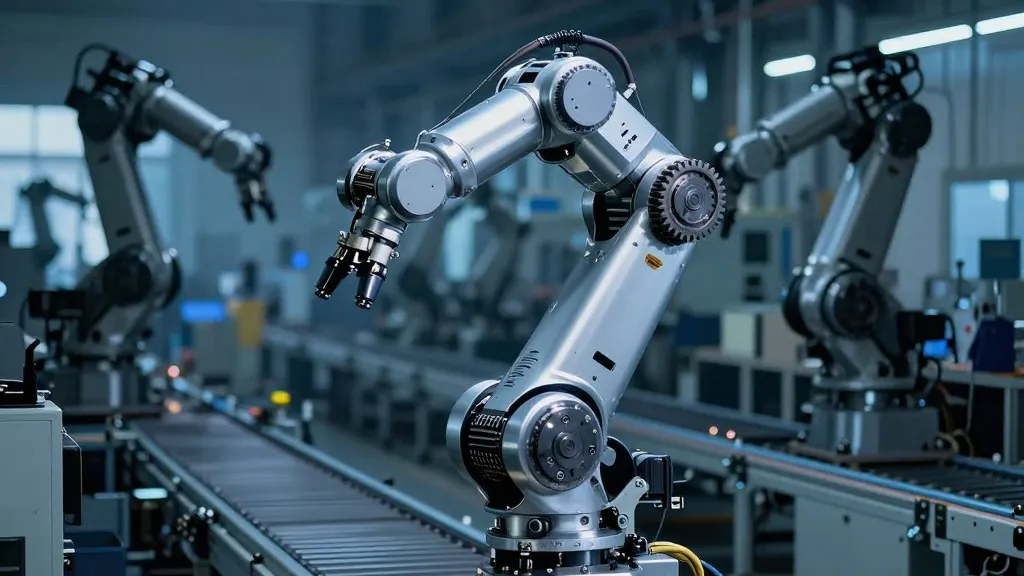
Production is currently underway at the Fremont facility, utilizing the high-volume line previously dedicated to Model S and Model X vehicles. While the majority of the assembly line for a million-unit capacity is installed, Musk noted that the design is still evolving. This ongoing refinement means the full weekly target remains distant, with parts of the physical structure still subject to change.
A significant portion of the development effort is focused on the robot's hands. A Tesla Optimus engineer identified the hands as one of the most difficult hardware components to finalize. The challenge lies in creating fingers that are soft enough to handle delicate objects yet durable enough to withstand constant wear and tear. Unlike human skin, the robotic materials cannot heal, making long-term reliability a major engineering puzzle.
The AI side of the equation presents its own set of obstacles. Unlike Tesla's vehicle fleet, which generates massive amounts of data for its Full Self-Driving system, the Optimus fleet is too small to provide similar data density. To address this, the company plans to build 10,000 to 20,000 robots for an internal training program dubbed the Optimus Academy. These robots will practice tasks to help the AI learn. Additionally, Tesla intends to integrate its AI5 chip into the robots by April 2027.
This is not the first time Tesla has adjusted its Optimus timeline. In 2024, the company suggested internal use in 2025 and external high-volume production in 2026. By January 2025, Musk predicted about 10,000 units would be built, with thousands performing useful work by year's end. That did not happen. The latest shift to late 2027 continues a pattern of moving dates as technical difficulties emerge.
Musk claimed on the call that no other company is close to Tesla in developing a general-purpose humanoid robot. However, competitors are making visible progress. XPeng activated an automated production line for its IRON robot in Guangzhou in September, with over 80% of core processes automated. XPeng aims for mass production by the end of 2026 and deliveries in early 2027, a timeline comparable to Tesla's.
Boston Dynamics, a unit of Hyundai, has also made strides. It began producing its electric Atlas robot in January and has secured all its 2026 deployments, including work with Google DeepMind. In September, the company opened a training center at Hyundai's Georgia facility where Atlas is learning to sequence car parts. Hyundai plans to deploy 25,000 robots across its plants in the coming years. Notably, Boston Dynamics hired Milan Kovac, Tesla's former head of Optimus, in January.
The competitive landscape suggests that Tesla is not operating in a vacuum. XPeng and Boston Dynamics face similar challenges with hands and AI, but they are progressing with their own strategies. Boston Dynamics, for instance, has opted for sturdy grippers for industrial use rather than human-like dexterity, effectively sidestepping the specific problem Tesla is currently wrestling with. As Tesla prepares to release a video of Optimus performing unscripted tasks within the next few months, the market will be watching to see if the late 2027 target holds firm or if the timeline slips once more.
Source: Electrek