Trump halts new Iran strikes after Gulf leaders request pause
The President cited appeals from Qatar, Saudi Arabia, and four other neighbors, though U.S. forces will maintain a naval blockade in the Strait of Hormuz.
By Harper Foster ·
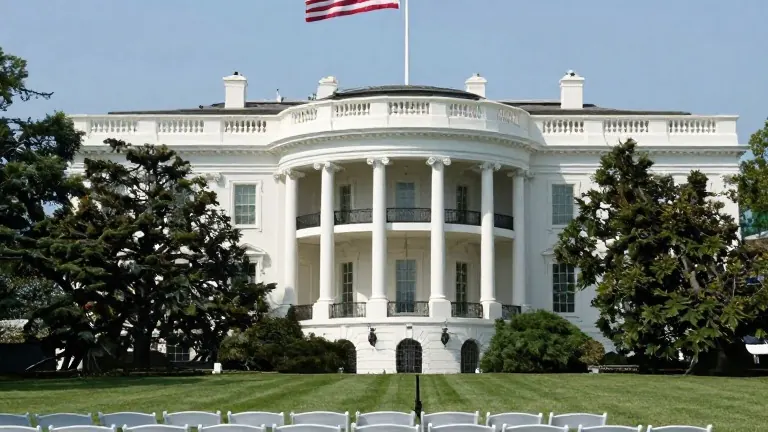
President Donald Trump announced on Monday that the United States will pause new military strikes against Iran.
The decision follows direct requests from several regional neighbors. Trump named Qatar, Saudi Arabia, the United Arab Emirates, Bahrain, and Kuwait as the countries that urged Washington to hold off on new attacks. These discussions occurred after the U.S. midterm election, a period when diplomatic efforts to end the conflict intensified.
Qatari Prime Minister and Foreign Minister Sheikh Mohammed bin Abdulrahman Al-Thani met with Trump and Vice President JD Vance at the White House. Al-Thani had visited Tehran the previous week. He described the talks as positive and posted on X that he was grateful for the discussions aimed at reaching a deal.
Despite the pause, the U.S. will continue to enforce a naval blockade in the Strait of Hormuz. Trump stated in a Reuters interview and a White House briefing that the military is fully prepared with advanced equipment. He suggested the force is ready but does not need immediate deployment.
Hostilities continued during the diplomatic efforts. Iranian state media reported that U.S. forces struck Qeshm island overnight. A provincial official in Iran told the Fars news agency that Sunday night strikes did not affect vital infrastructure or services. The U.S. has not yet commented on these reports.
Maritime figures show attacks on tankers have reached their highest rate since the war began in February. A state television reporter noted that eleven tankers have been disabled in the past ten days. Iranian officials attacked tankers in the Gulf and the Strait of Hormuz this month, while allies in Yemen targeted Saudi Arabia.
Iran’s proposal calls for an end to the U.S. blockade of its ports, the lifting of some sanctions, and a halt to bombing. In exchange, Tehran would stop its own blockade of the Strait of Hormuz and hold further talks on its nuclear program. U.S. Secretary of State Marco Rubio rejected the plan on Sunday, calling the conditions outrageous and unrealistic.
Vice President Vance, who led negotiations for a brief truce in June, is scheduled to meet with Al-Thani. Qatar has served as a primary mediator since the war began. Turkish President Tayyip Erdogan stated on Monday that he had informed Trump of Ankara's desire to avoid a new escalation.
Senior Republicans, including Vance, attributed their party's losses in last week's elections to the ongoing war. Anwar Gargash, a senior official in the United Arab Emirates, warned that a comprehensive political settlement remains difficult. He said the region may face a long period of uncertainty.