Rutter Family Sells Former Work Release Building in Norfolk
The former art and music venue at 759 Granby Street closed in 2017 without notice and now operates as a rentable event space.
By Harper Foster ·
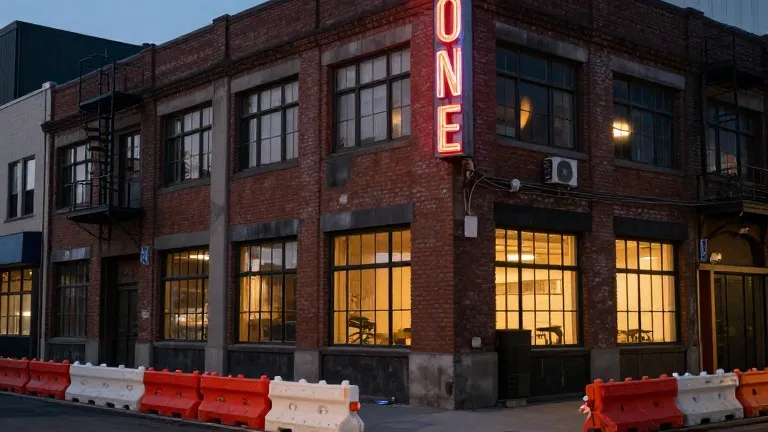
Arthur Rutter has sold the building at 759 Granby Street in Norfolk that once housed the Work|Release art and music venue.
The venue operated from April 2015 to April 2017 on the ground floor of the former Texaco station. It closed without a farewell event or official announcement. The Rutters, Arthur and Meredith, originally purchased the property after previous owners halted a condo project due to the 2008 housing crash. They acquired a gutted structure with no walls, pipes, or wiring.
The Rutter Family Art Foundation funded the initial conversion. The couple aimed to present contemporary art to a general audience, a task Rutter described as one that local museums were unable or unwilling to perform. The timing aligned with the launch of the NEON District. In the summer of 2014, director Careyann Weinberg hosted a brainstorming session with 50 to 100 locals. The group concluded that art alone would not sustain a venue. Rutter labeled the resulting concept a thinking club, an intelligent club, and an art club.
The name Work|Release was suggested by Weinberg’s then-partner Charles Rasputin. It stuck because it carried multiple meanings. The venue opened with AGLOW, a neon sculpture exhibition featuring 12 international artists. Weekly programming varied widely, including symphony collaborations, figure drawing sessions, punk concerts, and DJ sets. Weinberg noted that the crowd included young children, older adults, art enthusiasts, and partygoers from all income levels.
The 2,000-square-foot space hosted a high-profile music lineup. Grammy-nominated artist Masego performed there early in his career. Rapper D.R.A.M. became a regular performer. DJ Tiësto filmed a music video at the venue. The band of Montreal drew a crowd of 500 to 600 people. Bart Barnes, who performs as Fake Uzumi, credited the venue with giving him his first major opportunity. He said the receptive audience encouraged him to take creative risks. Gabe Niles described the space as a beacon of creativity.
Art exhibitions formed the core of the programming. Guest curators rotated through the space. Charlotte Potter curated Native, a show featuring Hampton Roads artists. Jesse Scaccia organized an exhibition on gun violence that brought police officers and Black Lives Matter groups together for a brunch. The event received national media coverage. A graffiti exhibition featured shipping containers in the back lot, a half pipe, and artists from Atlanta, New York, Baltimore, and Richmond. Staff were trained to discuss the artwork with visitors rather than simply restricting their movement.
Operating costs remained high. At its peak, the venue employed 17 people and operated nearly every night. It never achieved a profit. Potter recalled the Rutters stating they were willing to lose their sleeve but not their shirt. Rutter explained that the business model relied on other NEON District businesses growing at the same rate. He noted that one business could not drive the success of the entire district. Potter compared the venue to a firework display, a spectacle that is visually impressive but unsustainable over time.
The closure in April 2017 was abrupt. Weinberg described the notification as a simple message that the venture was done. She added that her vision and the Rutters’ vision were not always aligned. Barnes said regulars assumed the shutdown was temporary. Rutter stated the pause was intentional. Commune restaurant later moved into the space. Some art shows continued, and the upstairs apartments provided free housing for visiting artists supported by the foundation. After the pandemic stalled the district’s recovery, the building transitioned into a rentable event space.
The NEON District celebrated its 10th anniversary in 2025 with NEON at Ten, a 244-page book containing more than 200 works of art. A streetscape project is currently tearing up Granby Street for utility work. This construction has slowed foot traffic. Some local businesses have cited the disruption as a reason for closing. Niles observed that the district’s creative energy is now more spread out. The original Work|Release signage remains on the building’s corner, left in place to preserve the venue’s legacy.
More Business · Norfolk news · Watch Your Wallet · Report a business · Got a Story?