Raman upsets Bass to take LA mayor seat
The 45-year-old city councilwoman defeats the 73-year-old incumbent in a race defined by dissatisfaction over homelessness and public safety.
By Aiko Petrov ·
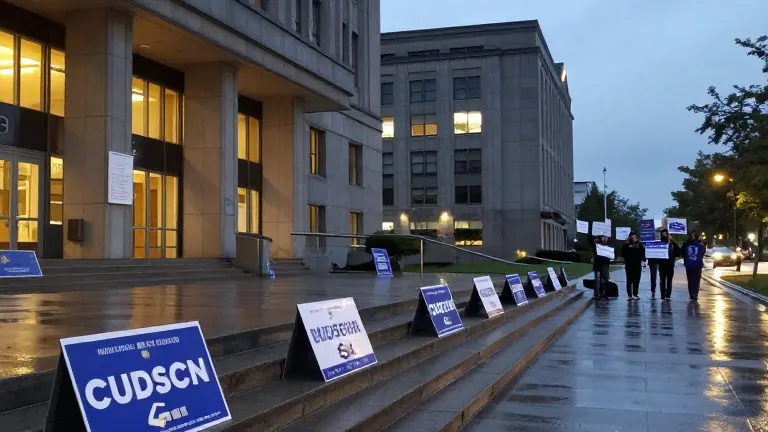
Nithya Raman has defeated Mayor Karen Bass in the Los Angeles mayoral election, securing a victory that shifts control of the nation’s second-largest city to a 45-year-old city councilwoman. Raman, an urban planner backed by the Democratic Socialists of America, claimed the seat from the 73-year-old incumbent in a result that marks a generational shift at City Hall. The outcome follows a national trend where insurgent left-wing candidates have challenged establishment rivals, mirroring the election of Zohran Mamdani in New York last year.
Raman’s entry into the race represented a sharp reversal after she had initially endorsed Bass, a former ally. She stated that the city had reached a "breaking point" and filed her candidacy just before the deadline. Her campaign focused on the deterioration of basic services, citing dirty streets, potholes, and broken streetlights that have plagued neighborhoods for years. She positioned herself as a candidate for change against the backdrop of long-running issues that persisted under Bass’s administration.
Bass’s tenure was undermined by the deadly Palisades Fire, which started while she was out of the country and left the fire department unprepared. The devastation created a perception among voters that Bass should be held accountable, a sentiment she never fully overcame. Bass became the first Los Angeles mayor in two decades to lose a reelection bid. In a statement, she said she called Raman to congratulate her. "While this is not the outcome we hoped for, the people of Los Angeles have spoken," Bass said. "I have committed to ensuring a smooth and seamless transition. Moving this city forward is what Los Angeles needs from all of us."
Raman’s platform includes specific targets for homelessness and public safety. She promised to reduce the number of people sleeping in encampments by at least half by 2028, the year the city hosts the Olympic Games. Her approach involves expanding medical teams for people living in encampments to build trust and eventually bring them indoors. She also plans to provide more housing to move people out of city-rented hotels. Raman called Bass’s previous efforts on homelessness ineffective and criticized the current police chief for being too accommodating to federal immigration authorities. She pledged to replace the chief with someone aligned with her vision.
A Berkeley IGS/LA Times poll conducted from Oct. 19 to 25 showed that about four in 10 likely voters viewed reducing homeless encampments as a top priority for the next mayor. About three in 10 prioritized public safety or building affordable housing. Raman leveraged this anxiety in her advertising. One ad showed an empty lectern at the site of a massive warehouse fire and the epicenter of Skid Row. "Our city is in crisis," Raman said in the commercial. "Where is our mayor?"
Bass argued that she had made enough progress to merit a second four-year term. She branded Raman’s views on policing and homelessness as "extreme" and accused her of being "not ready for primetime" to manage a city of 3.8 million people. Despite these attacks, Raman capitalized on the public’s restlessness. The race was defined by Democratic divisions across the country, with left-wing challengers gaining ground against established figures.
Bass enjoyed substantial support from the Democratic establishment. Gov. Gavin Newsom, former Vice President Kamala Harris, and former House Speaker Nancy Pelosi backed her, along with nearly every member of the City Council. Bass had served in the state Legislature and Congress before becoming mayor in 2022 and was once considered for former President Joe Biden’s vice-presidential running mate. Billionaire developer Rick Caruso said he was voting for Bass, though he stopped short of a formal endorsement.
Raman secured support from advocacy groups, including Our Revolution, founded by Sen. Bernie Sanders, and the Sierra Club. Her backing from prominent local politicians was thinner. She did, however, hold a widely publicized private meeting with former Gov. Arnold Schwarzenegger, who was not running in the race. The meeting signaled her effort to broaden her network of allies as she prepares to govern a city with a struggling entertainment industry, a major port, and major tourist destinations.
The election result forces a transition in leadership for a city grappling with structural challenges. Raman takes office with a mandate to address encampments and public safety, areas where previous efforts have been described as intractable despite billions spent in the region. Her victory stands in contrast to the high-profile endorsements that surrounded Bass, reflecting a voter preference for a new approach to long-standing municipal issues.