Ohio Groups Push Local Bans on AI Data Centers
A volunteer network spanning 88 counties is using ballot measures to stop hyperscale facilities from replacing farmland near residential areas.
By Lorenzo Marshall ·
A volunteer coalition known as Conserve Ohio is driving ballot measures in ten communities this fall to amend local charters. The amendments would prohibit large-scale data centers used to power artificial intelligence. This move goes beyond the temporary pauses adopted by hundreds of municipal and county governments across the state.
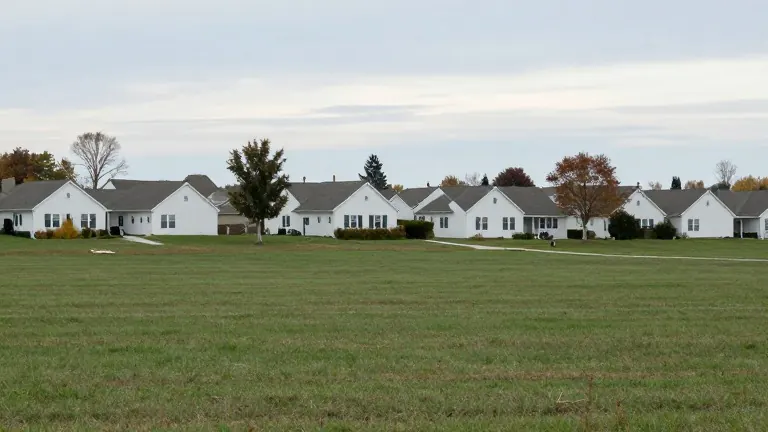
The initiative is led by Nick Owens, a lifelong Republican attorney from Mt. Orab, a village of 4,300 people in a rural exurb of Cincinnati. Owens formed the group after property records showed about 1,000 acres of farmland and trees in his area were sold to a data center developer in 2024 and 2025. In some places, the land borders two-story family homes. Nondisclosure agreements blocked Owens from learning details of the plans, prompting him to recruit other local attorneys and a real estate agent. Together, they built a network reaching nearly all of Ohio's 88 counties, comprising Democrats, Republicans, and Independents.
Conserve Ohio is also circulating a petition for a state constitutional amendment that would ban such facilities statewide. The group aims to place that measure before voters in 2027. Owens stated, "We're going to find out in ten communities whether or not the communities want them." The group argues that while tech projects bring tax revenue, school funding, and construction jobs, the costs of noise, emissions, and pollution are too high. Owens noted that hyperscale facilities will require new power plants and said, "Our community is not for sale."
The issue has become a central topic in the upcoming midterm elections, including the tight U.S. Senate race. Former Democratic Senator Sherrod Brown has labeled incumbent Republican Senator Jon Husted "the face of data centers." Brown cited Husted's role as lieutenant governor in welcoming tech firms and championing their investments. Husted countered that Brown once supported data centers himself. Husted has pushed a bill in Congress to make data centers pay for grid upgrades and other energy-related costs, but Senate Democrats have blocked it, calling the measure toothless.
Statewide candidates have stopped short of backing the sweeping moratorium opponents want. Linda Moodie, an independent volunteer with Conserve Ohio, distributed petition clipboards and candy at a recent event in Fairfield, a Cincinnati suburb. She observed that residents are more engaged when the issue affects their immediate surroundings. Moodie said, "The closer it hits to home, the more people that are going to want to do something."
Owens, who served as a Trump delegate at the Republican National Convention two years ago, did not specify how he will vote in the midterms. He pointed to the lack of campaign yard signs in Mt. Orab as evidence of dampened Republican enthusiasm, citing the data center fight and diesel prices at $6 per gallon. His county, like much of rural Ohio, voted 80% for President Trump in 2024. Owens expects an enthusiasm gap among rural Republicans to be more pronounced than any gap among urban Democrats.
Owens criticized President Trump's recent posts on Truth Social, where the president said communities opposing data centers risk being "backwards and poor." Trump added, "If we kill the Golden Goose, you will only have yourselves to blame." Owens called these remarks "tone deaf." He explained, "No one wants to be poor or backwards. I want our regular way of life."
Construction at the Mt. Orab site has not begun, and the start date remains unclear. On a recent crisp fall day, the only sound at the edge of the property was birdsong.
Source: NPR
More Politics · National news · Report a business · Got a Story?