Gulf Nations Intercept Iranian Strikes as U.S. Hits Qeshm Island
Tensions escalate in the Middle East with new U.S. strikes on Iran and retaliatory attacks on Bahrain and Kuwait, while shipping disruptions continue in the Strait of Hormuz.
By Harper Foster ·
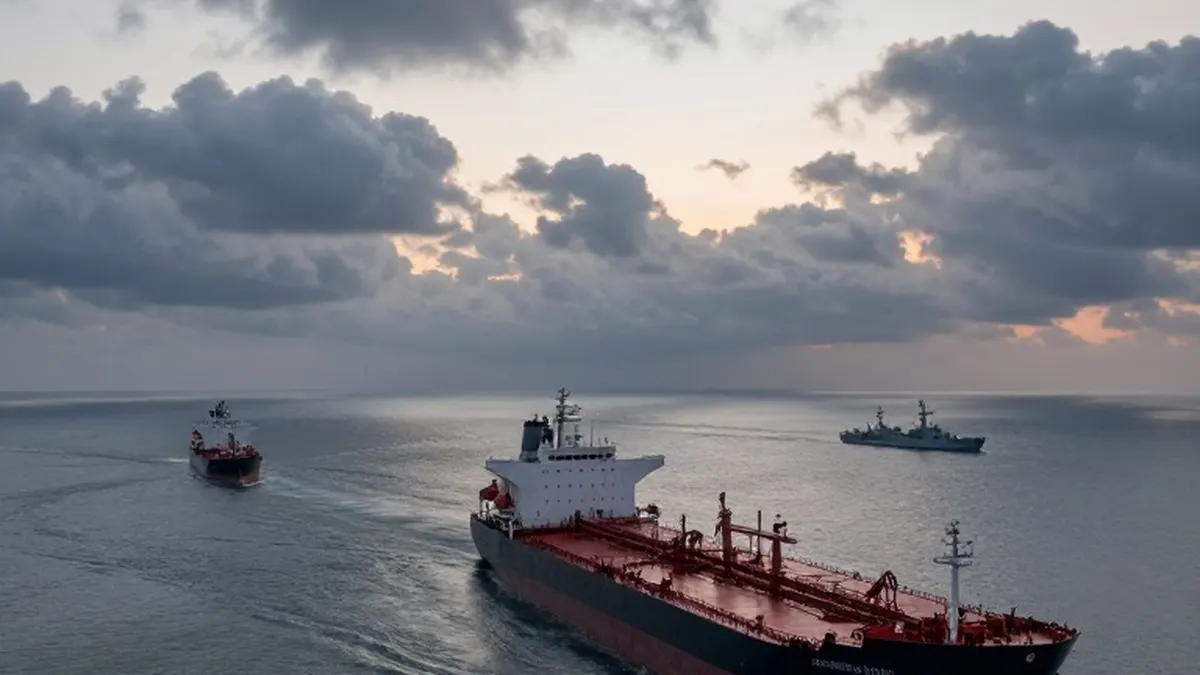
Bahrain and Kuwait reported on Wednesday that they successfully intercepted weapons launched against them. These defensive actions followed U.S. military strikes on Iran's Qeshm Island, located within the strategic Strait of Hormuz. The sequence of events indicates a significant intensification of conflict, with Iran appearing to increase its pressure on American allies in the Persian Gulf as regional tensions rise.
A U.S. official described the Tuesday attacks on Qeshm Island as a defensive measure. The strikes were a direct response to Iranian forces targeting U.S. personnel and assets in the area. This military action occurred just hours after Iran announced it had targeted a U.S. radar installation in Bahrain for the third time in under a week. U.S. authorities confirmed that all of these recent Iranian attacks were intercepted.
In Yemen, the Saudi-led coalition announced a major air campaign against the Iranian-backed Houthi rebels. The coalition stated that strikes launched on Tuesday destroyed 60 legitimate military targets. These sites included the Houthi-held capital of Sanaa, as well as areas in the Amran, Saada, and Hodeida provinces. The objective was to degrade the rebels' missile and drone capabilities by destroying mountain storage tunnels and assembly workshops.
Houthi officials reported significant casualties from the Saudi strikes. Anees al-Asbahi, a spokesman for the Houthi-run health ministry, said at least 17 people were killed. He detailed that a strike on a sponge factory in Hodeida killed at least 15 people and wounded 13, while an attack in the Kitaf district of Saada killed two and injured four. Additionally, at least nine people were wounded in a strike on a shoe factory in Sanaa.
The Iranian army claimed that its drones targeted Patriot air defense systems and launch platforms at the Ali Al-Salem Air Base in Kuwait. Kuwait's military stated that its air defenses were responding to hostile drone threats and advised the public to follow safety guidelines. The Kuwaiti foreign ministry warned that continued attacks constitute a dangerous escalation that threatens regional stability and undermines diplomatic efforts to de-escalate the conflict.
Bahrain also reported intercepting attacks early on Wednesday. This followed a statement from Tehran's Revolutionary Guard the previous day, which claimed it had struck a base used by U.S. forces. Iran's official IRNA news agency cited a regional official who said the U.S. hit Qeshm Island but did not cause serious damage to the area.
Shipping activity in the Strait of Hormuz remains under strain. ADNOC, the state oil company of the United Arab Emirates, said one crew member was missing after one of its ships was struck the night before. The company reported that eleven people were injured and that search and rescue operations were ongoing. All other crew members were safely evacuated from the vessel.
Monitoring agencies report that ships are being attacked in or near the Strait of Hormuz on a near-daily basis. Iran has claimed responsibility for some attacks on vessels it considers to be transiting the waterway without permission. The U.S. military has also struck ships it deems to be violating its naval blockade on Iranian ports.
To mitigate the impact of the conflict on energy exports, Iraq has resumed pumping oil to Turkey through a dedicated pipeline. Oil Minister Bassem Mohammed Khudair al-Abadi stated on Tuesday that the initial capacity is 120,000 barrels per day. He indicated that this capacity will gradually increase to reach 500,000 barrels per day.
This pipeline, which has been largely idle since 2023 due to legal and commercial disputes, offers an alternative route to avoid the Strait of Hormuz. While its capacity is modest compared to other regional infrastructure, such as the Saudi East-West pipeline which handles seven million barrels per day, it strengthens Iraq's export resilience. Iraq and Turkey signed a deal in August to increase exports through this route to the Turkish port of Ceyhan.
More News · National news · Report a business · Got a Story?