Economic Divide Fuels Voter Confusion Ahead of Midterms
Johns Hopkins professor argues that while aggregate data shows strength, the gap between asset owners and lower-income households drives voter sentiment.
By Harper Foster ·

Voters heading to the polls this year face a stark disconnect between official economic indicators and their personal financial realities. Alessandro Rebucci, an economics professor at Johns Hopkins Carey Business School, says this gap is defining the current midterm cycle. He explains that voters judge the economy based on their own cost-of-living experiences rather than aggregate statistics.
Rebucci notes that macroeconomic data depicts a strong overall economy. However, he argues that the distribution of that economic pie significantly shapes public mood. When high-income earners and asset owners see gains that do not trickle down, a large segment of the population feels the strain, regardless of the headline numbers.
Economists have recently labeled this dynamic a K-shaped economy. The term refers to a graphical representation of divergent outcomes. It shows high-income groups pulling ahead while middle and lower-income earners stagnate or fall behind. Rebucci clarifies that the wealthiest households spend more than the poorest, both in absolute dollars and as a percentage of their income and wealth.
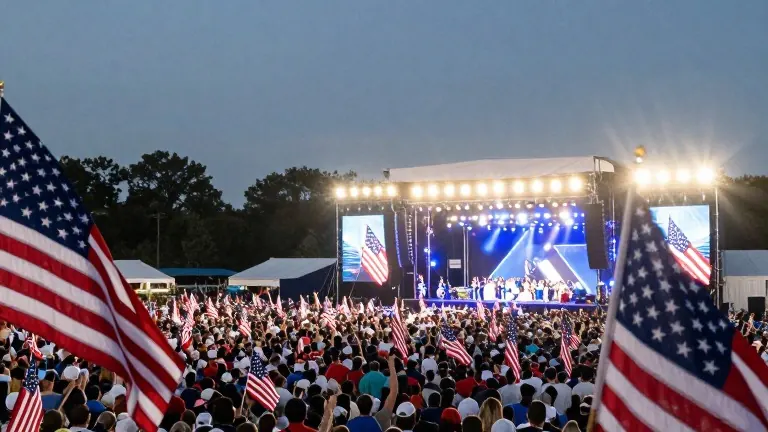
President Donald Trump has campaigned on the premise that the nation is thriving. At a rally in Las Vegas on Aug. 5, he declared, "The economy is the greatest economy we’ve ever had, by far." This assertion contrasts with recent consumer surveys showing that many voters hold less optimistic views about their personal finances.
Political analysts note that such contradictions are common in election years. The party currently in power in Washington typically emphasizes economic strength to secure support. The 2026 midterms are no exception, with both sides weighing the balance between macroeconomic health and microeconomic pain.
Rebucci suggests that Americans have long accepted a degree of economic inequality. He states, "This is an economy that is comfortable with inequality." He argues that the goal is not to eliminate these gaps entirely but to adjust the system so people can live better within that structure.
According to Rebucci, the key perception for voters is the sense of opportunity. He emphasizes that people need to believe they have a shot at reaching the top 10% or the top 1% of the income distribution. This belief in upward mobility, rather than the current distribution of wealth, is what he identifies as the critical factor in how the public perceives the system.
Source: KTVK