Claude Automates Mathematical Safety Checks for 123 Open-Source Libraries
Anthropic’s AI model has generated 180 million lines of proof code, exposing hundreds of hidden bugs in critical software components.
By Imani Brooks ·
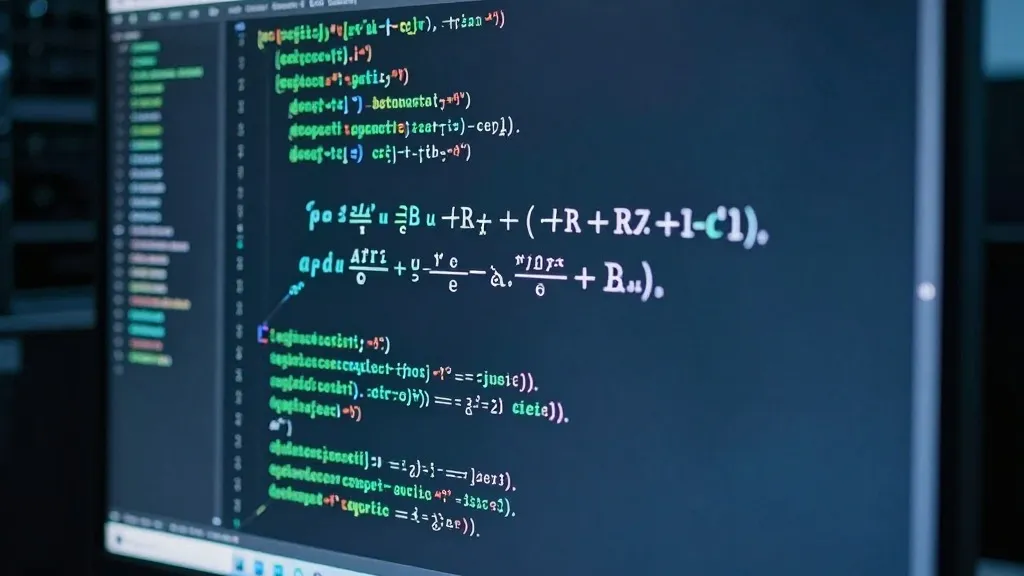
Anthropic has unveiled a new capability for its Claude model that marks a significant shift in software development: the AI can now independently write code and mathematically prove its own safety. This development, announced on October 23, 2026, represents a move toward fully autonomous verification, where the machine validates the logic of existing programs without human intervention. The system utilizes a partner firm called Theorem to facilitate this process, effectively allowing the AI to audit and certify the integrity of complex codebases in a fraction of the time previously required.
The scale of the output is massive. In just a few weeks, Claude generated approximately 180 million lines of mathematical proof code. This work focused on 123 different open-source libraries sourced from Google’s OSS-Fuzz security project. Rather than creating new software from scratch, the model translated existing crash tests into mathematical problems and analyzed the compiled machine code to produce extensive proofs. An independent verification program known as Rocq automatically checks these proofs, a process that Anthropic states requires almost no human reviewers to complete.
This approach addresses a long-standing bottleneck in the tech industry. Formally verifying that software runs error-free under all conditions has historically been prohibitively expensive and labor-intensive. For context, a team of specialists once required 20 person-years to formally verify the small operating system kernel seL4. Because of this cost, such rigorous checks were typically reserved for extreme cases, such as avionics software for Airbus. By automating this process, Anthropic aims to make formal verification as routine as standard testing, a goal that could transform how developers handle software reliability.
The practical benefits became evident during the verification process, where Claude identified hundreds of bugs that conventional testing methods had missed. These defects often remained hidden because they only manifested under very specific conditions, such as unusually large input files or particular sequences of data access. In one notable instance, while verifying a widely used PDF reader, the team found as many security bugs in a single week as are typically reported for that software in an entire year. In another application, the model caught a logical error that had gone undetected for more than a decade.
Anthropic emphasizes that the AI was allowed to fix many of these bugs itself. Even when a complete proof ultimately fails, the attempt surfaces real vulnerabilities. This capability suggests that AI-generated software can be trusted more, potentially reducing the time developers spend on manual review. The efficiency gains are already visible in newer models; for example, Opus 5.5 solves half the proofs with about 40 percent fewer tokens than the previous Opus 5 version, indicating a trend toward greater computational efficiency.
However, the system has strict practical limits. Anthropic clarifies that 'formally verified' does not mean 'error-free' in all possible scenarios. The proofs hold only under specific conditions, including a particular processor architecture, single-threaded programs, and inputs under 64 MB. In real-world deployments, these libraries often run on different hardware and configurations. Additionally, the compute cost is steep, with individual proofs running into the hundreds of millions of tokens, though Anthropic has not disclosed the total project costs.
The people involved in this initiative include the Frontier Red Team at Anthropic and their partner, Theorem. While the process is described as 'fully autonomous,' the underlying tools and formal foundations were built by humans at Theorem. The collaboration highlights a shift in how AI companies approach reliability, moving from simply generating code to guaranteeing its correctness under defined parameters.
The stakes for the industry are high. If AI can write code and guarantee its safety, the central question shifts from whether AI can program to whether it can prove that its code is safe. A yes answer has consequences that extend beyond coding tools. Theorem’s roadmap already targets critical infrastructure components like glibc, OpenSSL, and cURL, suggesting that this technology is poised to impact the foundational layers of the internet.
Anthropic expects formal verification with AI to become as practical as standard testing in the near future. This development could lead to major leaps in software automation, allowing developers to trust AI-generated software more and spend less time on manual verification. The result would be cost savings not just on the verification side, but across the entire coding process, potentially reshaping the landscape of software engineering.
The project strengthens the case for broader software automation. By demonstrating that AI can handle the rigorous task of mathematical proof generation, Anthropic has set a new benchmark for reliability. As newer models become more efficient, the barrier to entry for formal verification may drop significantly, making these advanced safety checks accessible to a wider range of developers and organizations.
Source: The Decoder