Beef Curriculum Drops Methane Lesson After Rancher Criticism
A free science module used by 1.2 million students was removed from the AFBFA platform following online backlash from producers who disputed the link between cattle and climate change.
By Aiko Petrov ·
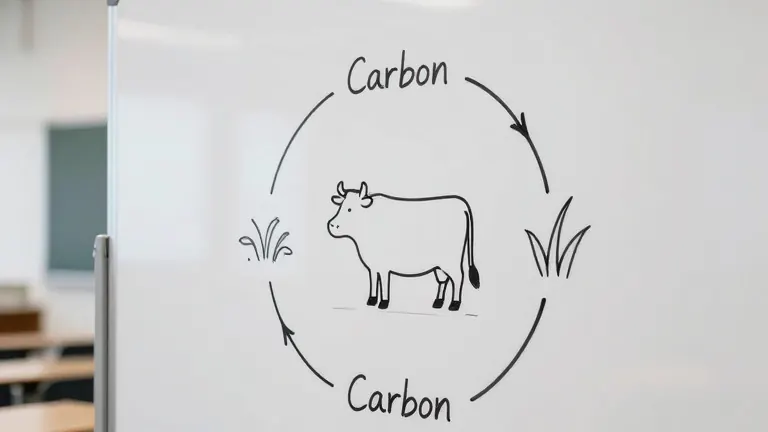
The American Farm Bureau Foundation for Agriculture removed a science lesson on cattle methane from its free educational platform in February, following criticism from ranchers. Rick Henningfeld, the foundation's education director, confirmed the removal during a speech at the CattleCon convention. He stated that the organization heard feedback and is currently editing the material with the goal of releasing a new version quickly.
The lesson, titled 'Methane & Cattle: A Climate Connection,' was introduced late last year. It was designed for high school students to understand how cattle digestive processes contribute to methane emissions. The module utilized data from the UN's Intergovernmental Panel on Climate Change to explain that methane is a potent greenhouse gas, although it remains in the atmosphere for a shorter period than carbon dioxide.
The curriculum reaches approximately 1.2 million students across more than 100 school districts nationwide. It is funded through the beef checkoff, a mandatory levy on cattle sales. A spokesperson for the foundation indicated that the topic requires more than a 45-minute lesson to be adequately covered. The organization said it is developing a longer version with help from university experts, noting that a new lesson on cattle digestion published in July is not a direct replacement.
Jim Mundorf, a rancher and podcaster, initiated the online backlash after seeing a Facebook post promoting the lesson. He wrote a blog post on Lonesome Lands describing the material as condescending to farmers. Mundorf argued that blaming cattle for climate change was similar to blaming natural phenomena like volcanoes or lightning strikes. His post was shared by the ranchers coalition of CPAC and spread across the farming community.
Brett Kenzy, a South Dakota farmer who chairs a committee for the R-CAL USA, also criticized the lesson. In comments to a trade paper, Kenzy called the inclusion of the methane topic a slap in the face. He argued it was unfair to claim cows harm the environment. According to Mundorf, farm bureau contacts later told him they did not think the lesson would be used again after the initial wave of criticism.
Climate scientists disputed the premise used by some industry advocates regarding the biogenic cycle. Carl-Friedrich Schleussner, a researcher at the International Institute for Applied Systems Analysis, stated that ongoing biogenic methane emissions maintain about 0.3 degrees Celsius of global warming. He emphasized that cutting these emissions is essential to limit future temperature increases. Drew Shindell, a Duke University climate scientist, noted that the lesson contained an error, listing livestock as responsible for only 2% of human-caused methane emissions. The actual figure is slightly over 30%.
Shindell, who chaired the UN's 2021 Global Methane Assessment, described the removal as a shame. He pointed out that the role of methane in climate change is well established by laboratory measurements and satellite observations. Glenn Branch, deputy director of the National Center for Science Education, raised questions about the foundation's review process. He suggested that the recent episode indicates producer needs are taking precedence over scientific goals.
The beef industry has a long history of engaging with K-12 education. A study by Jennifer Jacquet and Loredana Loy of the University of Miami found that the National Cattlemen's Association treated global warming as a public relations issue in the 1990s. In 1991, pressure from the group led Random House to stop reprints of a children's book that linked cattle to global warming. Jacquet stated that influencing education has been part of the industry's strategy for decades.
The US Department of Agriculture oversees agricultural checkoff programs. In September, the agency ordered these programs to end support for environmental, social, and governance initiatives. The USDA said it had no role in the decision to remove the specific methane lesson. Vivayic, the Nebraska-based consultancy that develops the curriculum for the foundation, said its goal is for students to interpret real scientific data.
The foundation announced it would implement a new producer review for all published materials. Henningfeld said this process ensures that science, teacher needs, and producer interests are all represented. The foundation said its review process invites a group of producers to suggest topics and examine draft materials before release.
More Business · Watch Your Wallet · Report a business · Got a Story?