Waymo Pushes Overseas While Remaining a Small, Money-Losing Unit for Alphabet
Alphabet's Other Bets segment, home to Waymo, brought in $372 million last quarter but lost $2.05 billion as the parent company's cash flow turned negative.
By Aiko Petrov ·
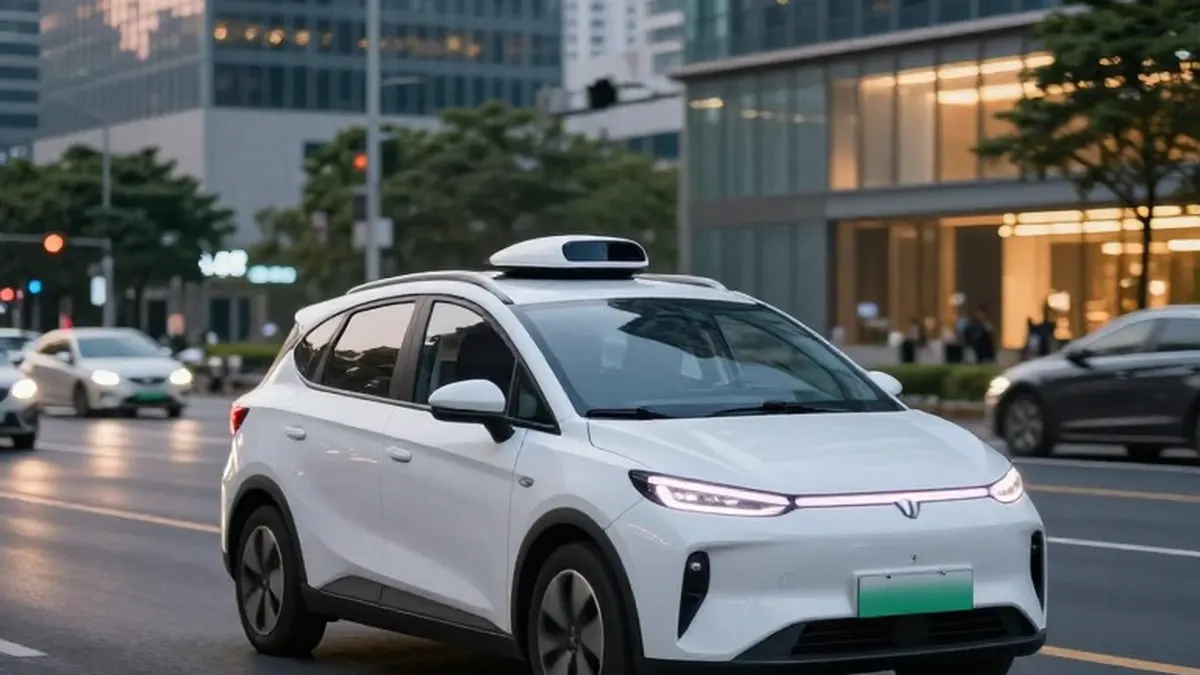
Waymo leads the U.S. robotaxi market and is widening its reach abroad, yet it still contributes almost nothing to the revenue of its parent company, Alphabet, which is spending heavily to fuel its growth.
In its third-quarter earnings report released Wednesday, Alphabet said its Other Bets segment, which includes Waymo, produced $372 million in revenue. That was up 8% from a year earlier but amounted to only 0.3% of total company sales.
The segment's costs far outstrip that income. Its operating loss grew to $2.05 billion for the quarter, compared with $1.43 billion a year ago. Other Bets also holds Isomorphic, a drug design research business that uses Google's Gemini 4 Argon AI models.
CEO Sundar Pichai highlighted Waymo's growth near the end of his opening remarks on the earnings call. "Waymo now operates in 15 major U.S. cities and just recently opened up service to the public in San Antonio, San Diego and Tampa with planned expansions into Canada, Germany, Singapore and Spain," he said. Waymo announced in August that it plans to begin robotaxi rides in Germany in 2027, which would be its third international market and its first in the European Union.
At home, Waymo holds a commanding lead but faces emerging rivals in Amazon's Zoox and Tesla. Globally, its toughest competitor is Apollo Go, the China-based service run by Baidu.
For years Alphabet could treat Waymo as a side project, since its core online advertising business generated tens of billions of dollars in annual profit and large amounts of cash. That cushion has thinned as the company invests aggressively in artificial intelligence. Free cash flow has turned negative, and Wall Street has shown signs of unease.
Alphabet missed expectations on both earnings and revenue Wednesday, and its stock fell almost 10% in extended trading. The company kept its full-year capital spending forecast at $195 billion to $205 billion, mostly for AI infrastructure, and posted negative free cash flow of more than $9 billion for the quarter.
Waymo has been drawing on outside capital as well. Earlier this month it announced a $5 billion term loan, its first debt financing. In February it said it had raised $16 billion at a $126 billion valuation in a round led by Alphabet, with participation from Andreessen Horowitz, Fidelity, T. Rowe Price, Sequoia Capital, Kleiner Perkins and others.
Operationally, Waymo last week began offering driverless rides to and from the Las Vegas airport. It had previously announced airport service in five other cities, including San Francisco and Phoenix. "Waymo is on a great trajectory," Pichai said, adding that the service has now driven more than 300 million fully autonomous miles.
Tesla, by comparison, says on its website that driverless vehicles in its Robotaxi network have completed about 3.8 million miles "unsupervised," meaning without a human driver at the wheel. CEO Elon Musk said on Tesla's earnings call last week that the Robotaxi business should become a "meaningful" revenue contributor by the second half of 2027.
Source: CNBC
More News · National news · Report a business · Got a Story?