UK shoppers fill pantries with three days of food after official push
Residents in Hampshire, London, and North Shields are buying tinned goods, water, and backup power sources following the government's new Be Ready campaign.
By Aiko Petrov ·
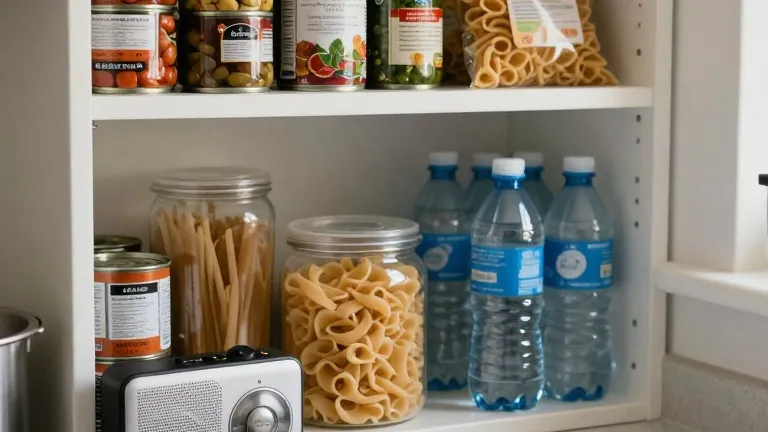
The UK government launched a new campaign on Thursday urging households to keep three days worth of essential supplies. The initiative, part of the Be Ready drive, asks families to store food, water, medicines, and backup power sources. The goal is to prepare citizens for a range of emergencies, including those linked to Russian state-sponsored terrorism and climate change impacts.
Ministers have signaled this need for several months, but the formal launch has accelerated activity in supermarkets. Lawrence Barratt in Hythe, Hampshire, started his stockpile about two weeks ago. He now adds dried goods like beans, soups, and noodles to his weekly shopping list. He is also buying bottled water and keeping a first aid kit, a battery-powered radio, and a torch. Barratt says his camping power bank can charge phones and run a small fan heater.
Barratt recalled the empty shelves during the 2020 lockdown, which influenced his decision. He felt unprepared before seeing the government's online advice. In Greenwich, London, Marco Camurri has been preparing for a few months. His family stores pasta, passata, stock cubes, and medicines. They also keep wood for barbecues and maintain fuel tanks at 50 percent, or about 300 miles of driving range. Camurri notes that his family tracks expiry dates on a spreadsheet to ensure the stock rotates.
Jack Davenport in North Shields cited El Niño as a primary driver for his preparations. He described the current infrastructure as creaking and outdated. Davenport listed threats including climate disasters, AI, and energy insecurity. He suggested the government aims to reduce long-term panic by presenting these events as manageable possibilities. He noted that younger generations have not experienced the hardship common before the war.
Not all residents agree with the strategy. Deirdre O'Sullivan in Leicester called the guidance daft. She compared it to 1970s advice about nuclear attacks. O'Sullivan argued that the three-day target is inadequate for a true emergency. She believes a food shortage would be obvious over a longer period. She described the policy as a way to show action, similar to a line from Yes Minister.
The Be Ready campaign website is now the central hub for these recommendations. The government continues to promote the three-day standard as a baseline for household resilience.