French Moderates Struggle to Coalesce Ahead of Presidential Vote
With five months remaining until the first round of the French presidential election, centrist candidates face significant challenges as radical factions dominate the political landscape.
By Aiko Petrov ·
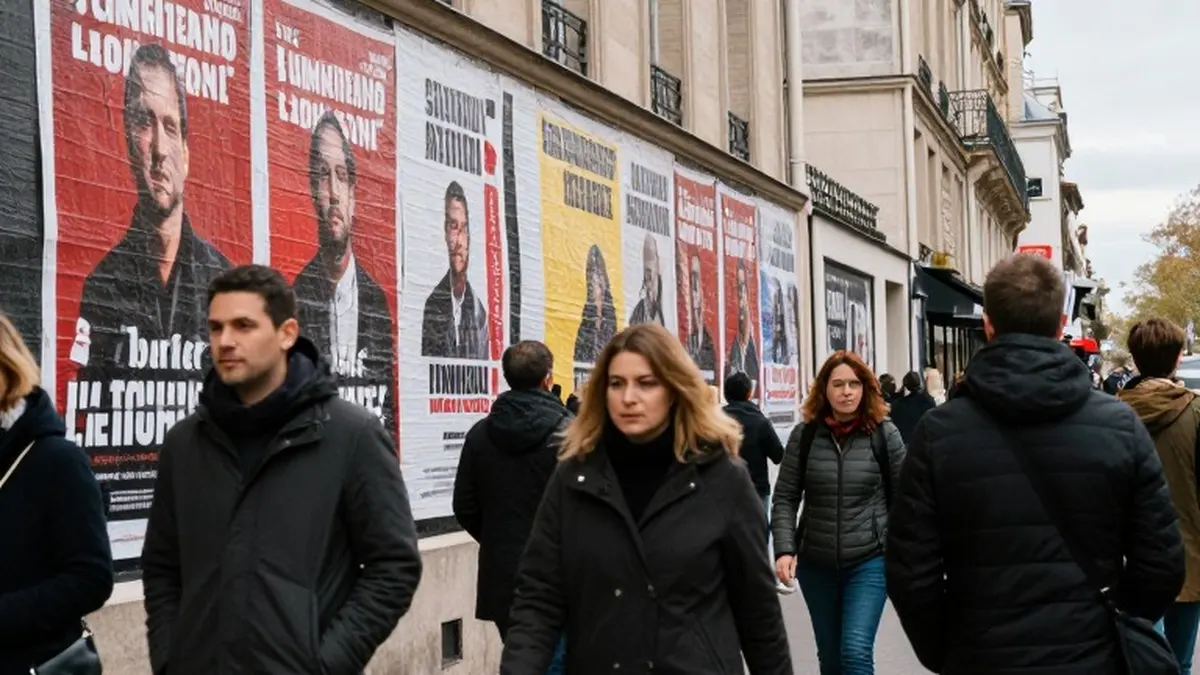
The French presidential election is approaching, with five months remaining until the first round of voting to select Emmanuel Macron’s successor. The current political landscape appears fragmented, with no clear frontrunners emerging for the top two positions that will advance to the May runoff. The race is currently dominated by Marine Le Pen of the far right and Jean-Luc Mélenchon of the far left, who maintain a significant lead over other contenders.
Supporters of these radical figures appear to be shaping the public discourse, both on social media platforms and in public demonstrations. This dynamic suggests a potential radical break from mainstream political norms, leaving the remaining candidates significantly behind in the polls. The dominance of these extreme factions raises questions about the viability of moderate politics in the upcoming contest.
This scenario echoes the political climate of a decade ago when Macron was first elected at the age of 39. At that time, Macron was a political outsider who had never held public office. He campaigned on a promise of political transgression, advocating for an approach described as 'en même temps,' or 'at the same time,' which aimed to blend the best elements of both the left and the right. However, this promise did not result in a durable coalition of movements.
France’s political institutions are designed to grant strong executive power, which allowed Macron to govern largely on his own. Even as his minority government finds itself badly outnumbered in the current parliament, the structural strength of the presidency has enabled him to maintain control. This concentration of power has contributed to a deep sense of resentment among many French citizens toward their outgoing president.
This domestic dissatisfaction may surprise international observers who still view Macron as a charismatic political prodigy representing mainstream values. The gap between his international image and the domestic perception of his leadership is a key factor in the current election dynamics. As the field of candidates remains splintered, political parties from the conservative right to the socialist left are attempting to build momentum around a candidate capable of rallying the moderate electorate.
So far, these efforts have failed to generate significant excitement. Politicians are debating the optimal strategy to appeal to voters, weighing whether to adopt an insurgent approach or return to more traditional political styles. The choice of messaging and the specific platform adopted will be critical in determining which candidate can successfully unite the fragmented moderate base.
The production of this analysis involves a team including François Picard, Rebecca Gnignati, Juliette Laffont, Ilayda Habip, and Charles Wente. Their work highlights the complex challenges facing French moderates as they navigate a crowded and polarized field. The central question remains whether the center can hold together or if the radical wings will continue to dominate the narrative in the lead-up to the election.