Supreme Court clears 341-mile wall segment in Big Bend
Justices ruled 8 to 1 that a lower court judge lacked the power to halt construction near the Rio Grande.
By Aiko Petrov ·
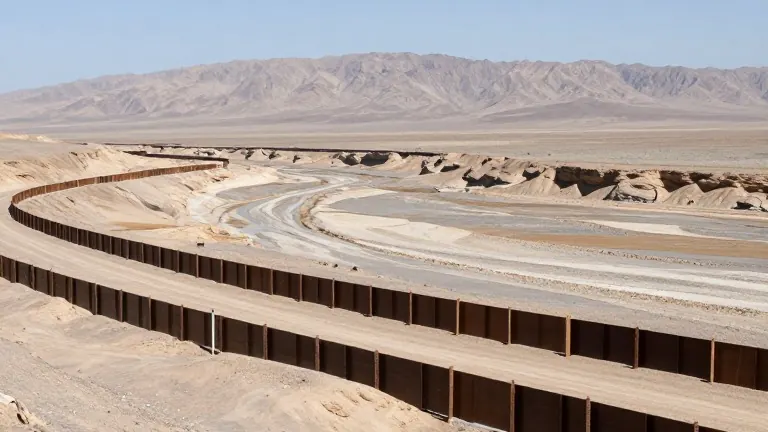
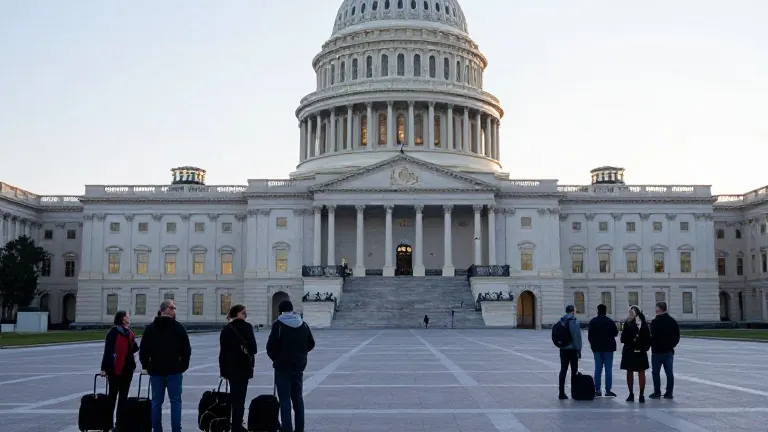
The Supreme Court authorized President Donald Trump to proceed with border wall construction in the remote Big Bend region of West Texas on Monday. The ruling removes a federal legal barrier that had frozen the project while litigation continued.
The High Court issued a five-page unsigned opinion stating that the federal judge who originally blocked the work did not have the authority to do so. The justices concluded that the Trump administration had a high probability of winning the underlying legal dispute. They also noted that the federal government holds urgent interests when challenged policies involve border security.
Justice Ketanji Brown Jackson was the only dissenter among the nine judges. Her lone dissent stands against a unanimous majority on the procedural question of judicial power in this specific context.
The disputed section spans 341 miles of border adjacent to the Rio Grande and includes the Big Bend National Park. The legal battle centers on three waivers issued by former Homeland Security Secretary Kristi Noem in February and her successor Markwayne Mullin in May and July. These waivers allowed the government to bypass standard environmental and conservation laws.
Government officials cited a 1996 law that grants the executive branch broad authority to build border infrastructure without extensive bureaucratic review. In a court filing, Solicitor General D. John Sauer argued that Congress intended to keep the process efficient. The administration pointed to data claiming 89,000 people were detained trying to enter the United States in that area in recent years.
Plaintiffs included the Center for Biological Diversity, the Friends of the Noisy Church, and river guide Danny Miller. Their attorneys argued that the construction would permanently alter a unique landscape and endanger distinct historical and cultural resources. They countered the government’s detention figures by stating that Big Bend actually has the lowest migrant encounter rates of any section of the southern border.
Federal Judge Kathleen Cardone had invalidated the Noem waivers on October 2, ruling that the secretary lacked such broad powers. She refused to stay her ruling, prompting the administration to appeal directly to the Supreme Court. The project is part of a larger 2,000-mile infrastructure plan funded by the Republican-controlled Congress, which includes steel panels, vehicle barriers, and new surveillance technology.