Sudan Transport Chambers Union lifts fares as fuel prices climb
The union lifted intercity bus prices by 40% and minibus rates by 30% as drivers face five-hour waits at pumps and incomes shrink.
By Harper Foster ·
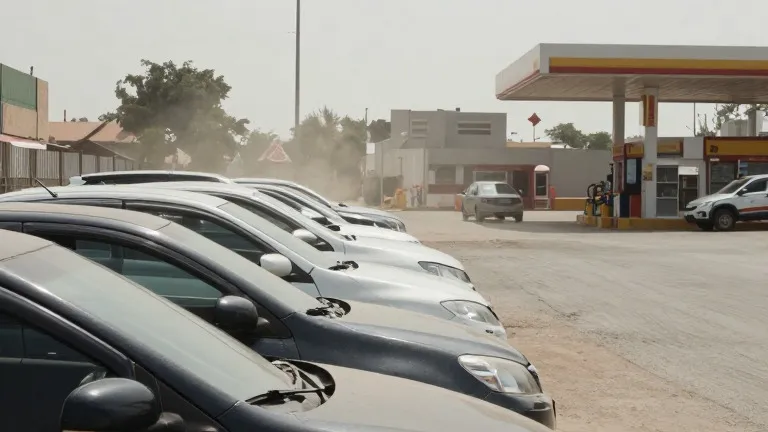
Sudan’s public transport system is adjusting to a severe fuel shortage that has disrupted daily life and worker incomes. The Sudan Transport Chambers Union, the body that regulates both public and private transport, announced fare increases this month.
Intercity bus fares rose by 40 percent, while minibus fares increased by 30 percent. These adjustments follow a period of scarcity where petrol is difficult to find and prices have climbed across the country. A gallon of petrol now costs 40,000 Sudanese pounds in Gazira State, while it sells for 35,000 pounds in Port Sudan.
Azhari Mohamed, a 60-year-old minibus driver in Port Sudan, illustrates the financial strain on operators. He drives a vehicle that burns three gallons of petrol daily, a cost of approximately 105,000 pounds or $11.30. To manage the scarcity, he works two days and spends a third waiting in line at pumps. His daily wait often exceeds five hours, and he sometimes reaches the end of the queue only to find the petrol has run out. After covering operating costs, Mohamed earns roughly 50,000 pounds, or $5.40, a day to support his family. He told Al Jazeera, "We just need fuel to be available so we can work."
Passengers bear the cost of these operational challenges. Aziza Ibrahim, a 38-year-old cleaner in Port Sudan, has reduced her working week to three days because travel expenses consume too much of her income. Her daily round trip to the city centre now costs 11,000 pounds, or $1.18. This amount takes up nearly half of her monthly salary of 400,000 pounds, which is equivalent to $43. She often borrows money to get to work and repays the loan when she is paid.
The United Nations Development Programme reports that the war has pushed average incomes in Sudan back to levels last seen in the 1990s. Fighting between the Sudanese Armed Forces and the Rapid Support Forces began on April 15, 2023. The Ministry of Energy and Petroleum valued war-related losses at $20 billion last year. The World Bank notes that attacks on the Balila oil field disrupted supplies to the Khartoum refinery, a facility that previously met about 60 percent of the national demand for petrol and liquefied petroleum gas.
Economic analyst Sidi Ohaj stated that government rules for importers have worsened the supply issue. Importers are required to deposit 200 kilograms of gold in the Central Bank and own fuel storage facilities. Some failed to comply and exited the market. Ohaj said, "This reduced supply relative to demand." He added that drone attacks on infrastructure and the war between the United States and Iran are disrupting global energy markets. Ahmed al-Haj, a trader in Omdurman, reported that higher fuel prices have raised the cost of moving a tonne of goods by 30 to 50 percent. Local deliveries in Omdurman that once cost 5,000 pounds now run between 10,000 and 12,000 pounds.