Senate passes 62-33 to overhaul federal permitting and speed energy construction
The bill amends landmark environmental laws to accelerate approvals for power lines, pipelines, and data centers, facing a tight timeline in the House.
By Harper Foster ·
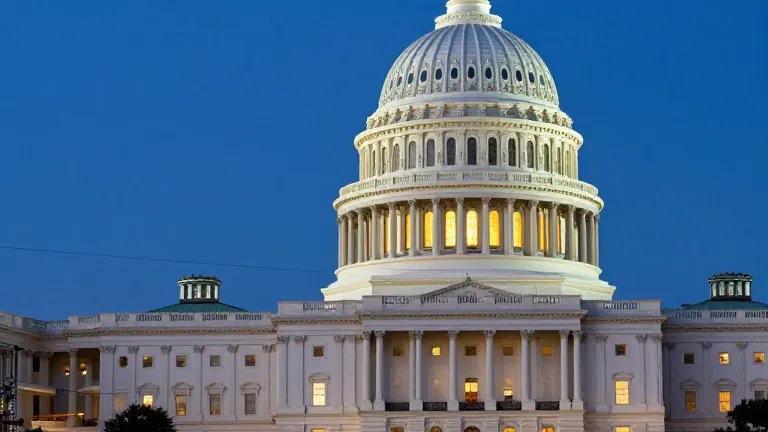
The United States Senate approved a sweeping bill on Thursday by a 62-33 vote to overhaul federal permitting rules. The legislation aims to accelerate the construction of large-scale infrastructure projects, including long-distance power lines, gas pipelines, and renewable energy farms. The vote marks the most substantial revision to environmental statutes in decades, according to experts.
The bill would amend or reduce several major environmental laws to facilitate faster federal approvals. It targets sectors such as wind and solar energy, broadband, housing, and gas-fired power plants. The measure received strong support from the Trump administration, business groups, energy developers, and labor unions. All but two Republican senators voted in favor. Fifteen Democratic senators also supported the bill, while the majority of their party opposed it.
Environmental organizations and Native American tribes criticized the legislation. Critics argued that the changes would limit communities' ability to use lawsuits to challenge polluting facilities. The bill modifies the National Historic Preservation Act, narrowing the review process for projects that affect culturally significant areas. Tribal groups stated that these changes would reduce their input into new industrial developments.
The legislation was drafted after months of closed-door negotiations. The talks involved Republican Senators Mike Lee of Utah and Shelley Moore Capito of West Virginia, along with Democratic Senators Sheldon Whitehouse of Rhode Island and Martin Heinrich of New Mexico. The bill responds to long-standing complaints from businesses that construction in the United States has become too difficult. One wind farm and power line project in New Mexico took nearly 20 years to complete due to lawsuits and route changes. A 303-mile natural gas pipeline through Virginia and West Virginia faced a decade of regulatory delays.
Senator Lee stated that environmental laws from the 1970s had created prolonged and expensive delays. The difficulty in building energy projects has intensified as the country struggles to meet soaring electricity demand for artificial intelligence data centers. Senator Whitehouse noted that voters wanted results on affordability. He said the bill would lead to lower energy rates soon.
The bill faces an uncertain path in the Republican-controlled House. Lawmakers are not in Washington next week and have a tight schedule before the new Congress takes office in early January. They must fund the government and consider other bills during this period. President Donald Trump has indicated he will sign the bill if it reaches his desk.
The legislation includes specific changes to existing laws. It exempts certain pipeline and power line expansions from lengthy reviews under the National Environmental Policy Act. It sets tighter deadlines and restricts the ability of environmental groups to sue under that act. The bill prevents courts from halting a project if they find an environmental review inadequate. Judges could only order agencies to update reviews while construction continues.
Other provisions limit states' ability to object to gas pipelines under the Clean Water Act. The bill includes project certainty provisions to prevent presidents from rescinding permits for approved developments. It also pushes utilities to plan more long-distance power lines and gives the federal government greater authority to site transmission across state lines. A new provision charges energy-hungry data centers more for electricity, a measure estimated to save ratepayers tens of billions of dollars over the next decade.
Senate Majority Whip John Barrasso expressed confidence that the bill would become law. He stated there is bipartisan support for the measure. Barrasso said the president will sign it and that the process was years in the making.