Restored Oklahoma Filling Station Preserves Legacy of Route 66 Hospitality
The Threatt Filling Station, the only known Black-owned gas station on Route 66, has undergone a significant restoration after being listed as one of the nation's most endangered historic sites.
By Lorenzo Marshall ·
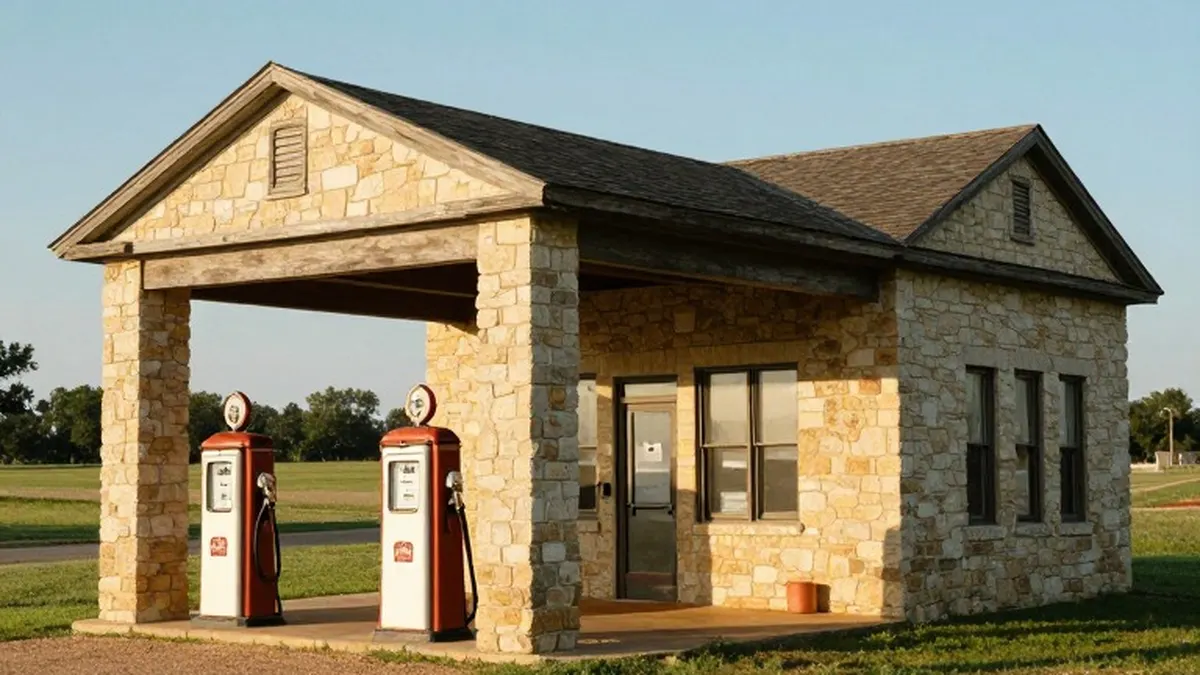
During the Jim Crow era, Black families traveling the more than 2,000 mile stretch of Route 66 from Chicago to Los Angeles often faced exclusion at most restaurants, motels, and gas stations. These travelers frequently had to carry their own food and fuel to survive the journey. However, one small family business located just east of Oklahoma City provided a guaranteed refuge. Known as the Threatt Filling Station, it was the only known Black-owned and operated gas station along the historic highway, according to the National Trust for Historic Preservation.
The station was founded by Allen Threatt Sr., who moved from Alabama to the farming community of Luther, Okla., in the early 1900s as part of the Great Migration. His father had been born into slavery, and Allen and his wife, Alberta, sought stability by acquiring their own farm. At that time, Oklahoma was a destination for many Black migrants who could own land and establish their own towns. Between 1865 and 1920, Black Americans settled more than 50 all-Black municipalities in the state, the highest number in the country.
Despite this progress, the region faced significant challenges. By the Great Depression, many of these all-Black towns had disappeared. Additionally, sundown towns, which were all-white communities that warned non-white residents to leave before dark to avoid violence or police harassment, became more common. Linda Fisher, the granddaughter of Allen Threatt Sr., noted that there was a sundown town on either side of the filling station during the Jim Crow era. Nevertheless, the Threatt family ensured that everyone was welcome at their establishment.
Allen Threatt Sr. built the original filling station in 1915 after noticing drivers passing by his property on the Ozark Trail. When Route 66 was officially founded in 1926, traffic increased from a trickle to a steady stream. After the initial wooden structure burned down, Threatt constructed a replacement using sandstone, designing it to resemble a small, welcoming house. The property soon became a community hub, hosting dances, social club meetings, barbecues, and occasional baseball games involving players from the Negro Leagues.
The Threatt family expanded over time, with Allen and Alberta raising 11 children. Several of them took over operations of the station in the 1950s. However, the construction of the Interstate Highway System under the Eisenhower administration led to a decline in traffic on Route 66. By the mid-1970s, the station closed to the public. The building, which is now on the National Register of Historic Places, fell into disrepair over the following decades.
In 2021, the National Trust for Historic Preservation listed the station as one of America's 11 Most Endangered Historic Places. This designation spurred a restoration effort led by a trio of Allen Threatt Sr.'s grandchildren. With support from nonprofit grants and significant volunteer work from family members, the exterior of the filling station has been restored.
Visitors to the site can now see ceramic Conoco gas pumps from the 1940s standing outside the building. Inside, new signs detail the history of the family, the station, and Route 66. The Threatt family members are available to speak with visitors, who can also purchase commemorative T-shirts. The family is currently planning to build an RV park, a restaurant, and potentially a new baseball diamond on the 150 acres surrounding the station.
Edward Threatt, a grandchild of Allen Threatt Sr. and a leader of the restoration project, emphasized the importance of honoring his ancestors. He stated that the family stands on the shoulders of both his grandfather and grandmother. The group aims to represent the legacy of their parents and grandparents by maintaining the property and sharing its story with the public.
More News · National news · Report a business · Got a Story?