Rhacophorus kurniatiae: New Flying Frog Species Found in Indonesian Highlands
Researchers identified a distinct amphibian species in Sulawesi that lays eggs in suspended jelly, a trait setting it apart from its 40 known relatives.
By Harper Foster ·
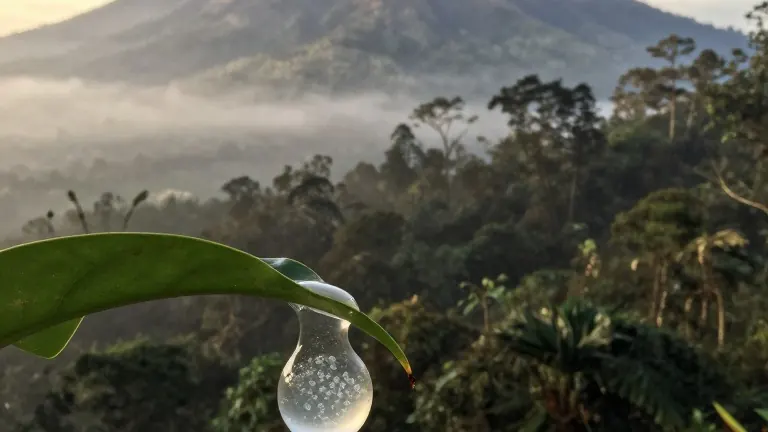
Scientists have formally described a new species of flying frog found in the highlands of Sulawesi, Indonesia. Named Rhacophorus kurniatiae, the amphibian was identified by a team from the Bogor Zoology Museum and the University of California, Davis. The discovery adds to the list of endemic species on the island, which sits on the equator and hosts ancient rainforests.
The research team first encountered the frogs during field surveys conducted between 2009 and 2013. Researchers waded through rivers and camped during lightning storms to study the mountainous wildlife. They observed thousands of the new species living more than 6,100 feet above sea level near the seasonal mountain lake Danau Coca-Cola. The frogs possess pointed snouts and large webbed feet that allow them to glide between trees.
Alan Hitch, a research affiliate with the UC Davis Museum of Wildlife and Fish Biology, noted that seeing frogs in such large congregations is rare. He described the sighting as a special occurrence. The species was confirmed as distinct after the team analyzed 28 physical traits, DNA, and vocalizations to compare the animal against the 40 other known Rhacophorus species.
Andrew Engilis Jr., curator at the UC Davis museum, classified the new frog as a cryptic species. This means it resembles other flying frogs in appearance and behavior but is genetically separate. The most notable difference lies in its reproductive habits. Instead of building foamy nests in water, the frogs lay eggs in a clear, gelatinous matrix that hangs from leaves over the lake.
Alamsyah Elang Nusa Herlambang, a researcher with the Museum Zoologicum Bogoriense, explained that tadpoles develop inside these jelly blobs for several weeks. He called the reproductive method unique. The species is named in honor of Hellen Kurniati, a late herpetologist who contributed to the field. Hitch said Kurniati had a heart of gold, a quality he believed drove her scientific work.
The discovery of Rhacophorus kurniatiae is part of a wider effort to catalog the biodiversity of the Mekongga region. The team also identified other new species, including worms with whip-like tails, fish with long snouts, and a gecko with bent toes. Engilis stated that defining this unique diversity has placed the region under consideration to become a national park, a step aimed at conserving the area's endemic life.