Eisenkot Sees Path to Government Formation After Prolonged Stalemate
Yashar Party leader Gadi Eisenkot is set to announce a potential route to a majority government, following weeks of complex coalition talks with Likud, haredi, and Arab parties.
By Harper Foster ·
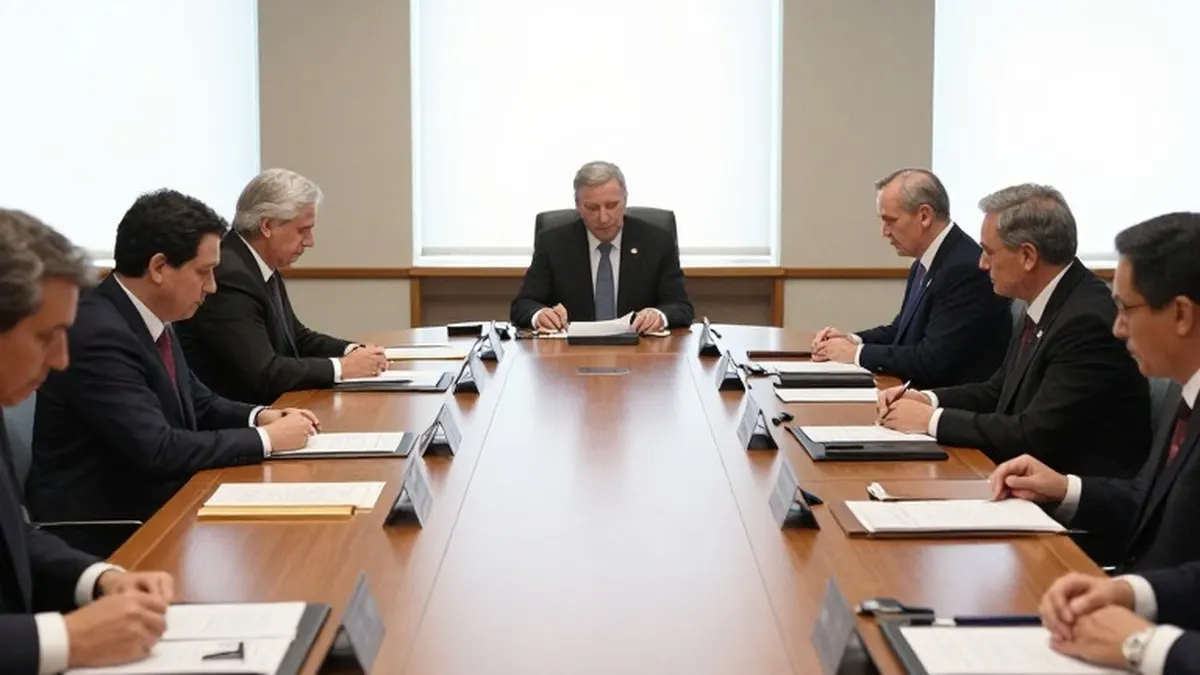
Gadi Eisenkot, the chairman of the Yashar Party, plans to declare that a viable method for forming a stable government has been identified, according to a report from KAN News published on Sunday. This development marks a significant shift in the political landscape, as the announcement is expected to come after a period of considerable uncertainty regarding the composition of the next administration.
The search for a governing majority has been ongoing since the 26th Knesset election held on October 27. Until recently, no clear path to a coalition had emerged from the various rounds of negotiations. Eisenkot has been actively engaging with representatives from Likud, the haredi ultra-Orthodox parties, and the Arab parties in an effort to secure the necessary support to establish a working government.
A key figure in these efforts is Avigdor Liberman, the chairman of Yisrael Beytenu. As a core partner within the Eisenkot-led bloc, Liberman has maintained direct lines of communication with the haredi factions, including United Torah Judaism. These backchannel discussions are seen as integral to the broader strategy for building a cross-party alliance.
On Sunday, a specific round of negotiations took place between representatives of Yashar and Likud. The primary topics under discussion included the establishment of a state commission of inquiry and the potential repeal of judicial reform measures. However, the central mechanism of forming a government through a rotation agreement was notably absent from the agenda of that particular meeting.
Eisenkot’s office confirmed to The Jerusalem Post that the rotation issue was not addressed during the talks, though they did not provide further details on the substance of the conversation. Reports indicate that discussions regarding this critical structural issue have been postponed for a later date.
Following their conversations, Likud and Yashar released a joint statement indicating that a follow-up meeting would be scheduled, although a specific date was not provided. The parties noted that they had presented their positions on a range of substantive issues and engaged in detailed dialogue. Despite the engagement, no formal agreements were reached during this session, according to Israeli media reports.
KAN News characterized the progress as limited, stating that the only agreements in principle reached involved points that were largely self-evident and did not address the core complexities of the negotiations. One such point cited was the definition of Israel as the nation-state of the Jewish people, which is widely accepted but does not resolve the deeper structural questions facing the coalition partners.
The upcoming announcement by Eisenkot is expected to clarify whether the recent diplomatic efforts have indeed broken the deadlock. The political community is watching closely to see if the proposed path can withstand the scrutiny of the Knesset and deliver a stable majority, ending the weeks of speculation and stalled talks that have characterized the post-election period.
As the coalition partners continue to navigate these challenges, the focus remains on whether the combination of Likud, the haredi parties, and the Arab parties, brokered by the Yashar-led bloc, can secure the necessary votes. The success of this endeavor will determine the direction of Israeli governance in the coming year.
Analysts suggest that the delay in discussing the rotation agreement may be a tactical move to allow other issues to be resolved first. If Eisenkot’s announcement holds true, it would represent a breakthrough in the fragmented political landscape, offering a new framework for cooperation among parties that have historically held divergent views on key policy areas.