Nvidia faces leadership vacuum as interim CEO navigates post-Huang era
Experts suggest Nvidia requires a dual leadership structure and greater transparency to retain key talent following Jensen Huang's resignation.
By Aiko Petrov ·
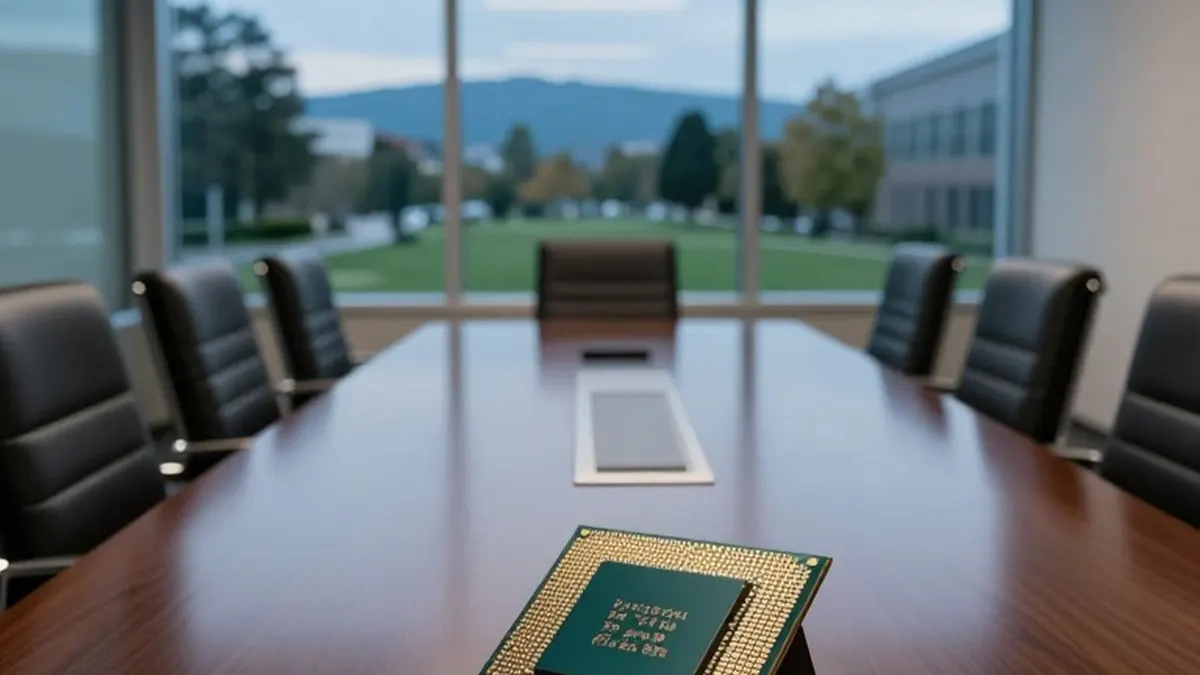
Nvidia is currently in a state of transition following the resignation of co-founder and long-time leader Jensen Huang. Huang stepped down after acknowledging that he had been unfaithful to his wife. The departure was complicated by reports connecting him to a woman whom U.S. intelligence officials stated was recruited by China's spy agency. With Huang's return to the company now ruled out, the AI powerhouse is searching for a new path forward under interim leadership.
Colette Kress, who served as the company's chief financial officer for thirteen years, has been appointed as the interim CEO. She took the helm during a critical period for the business, including the recent earnings call held on Tuesday. While her performance was generally viewed positively, observers note that the circumstances presented unique challenges for a finance-focused executive leading a technology giant.
Shivaram Rajgopal, an accounting professor at Columbia Business School, offered an analysis of the current situation. He stated that Kress handled the earnings call as effectively as one could expect given the unusual conditions. Rajgopal described her as a precise and disciplined leader who is very strong with numbers. However, he noted that her responses regarding long-term strategy and plans for employee retention appeared somewhat vague to outside observers.
Rajgopal expressed skepticism about the long-term viability of having a finance professional run a major tech company indefinitely. He remarked that he is unaware of many examples where technology firms have been successfully led by individuals from a purely financial background. This comment highlights the potential mismatch between the current leadership style and the technical nature of Nvidia's operations.
The company also faces a significant challenge in retaining its workforce. Many of Nvidia's engineers possess substantial financial wealth, which provides them with the freedom to leave and start their own ventures. Rajgopal pointed out that because many of these key technical staff are independently wealthy, they can easily walk away to establish competing businesses if they feel uncertain about the company's future direction.
Hiring an outside candidate to replace Huang may not be the solution, according to Rajgopal. He emphasized that Nvidia is a technically complex enterprise, meaning that even a candidate with a strong technology background might struggle to make an immediate and meaningful impact. The depth of technical expertise required makes finding a suitable singular replacement difficult.
Instead, Rajgopal recommended a collaborative approach. He suggested pairing Kress with a dedicated technology leader to balance financial oversight with technical vision. This dual-leadership model could help address the concerns of the engineering staff who are essential to Nvidia's innovation pipeline.
Transparency is another key area where Rajgopal believes the company can improve. He compared the current situation to Uber's handling of an investigation during the tenure of former CEO Travis Kalanick. In that case, Uber released specific recommendations but kept the underlying findings private. Rajgopal argued that Nvidia should follow a similar but more open approach by sharing more detailed information about the ongoing investigations.
The expert advised the company to provide stakeholders with the actual facts rather than just the final recommendations. This level of disclosure could help rebuild trust among employees and investors who are currently navigating the uncertainty surrounding the leadership transition and the circumstances of Huang's departure.
More News · National news · Report a business · Got a Story?