Mercedes-Benz to challenge Tesla FSD with point-to-point city driving assist in 2027
Mercedes-Benz plans to roll out two new Level 2 driver-assistance features, a hands-free highway system and a point-to-point city navigator, starting with an invite-only California program in December.
By Aiko Petrov ·
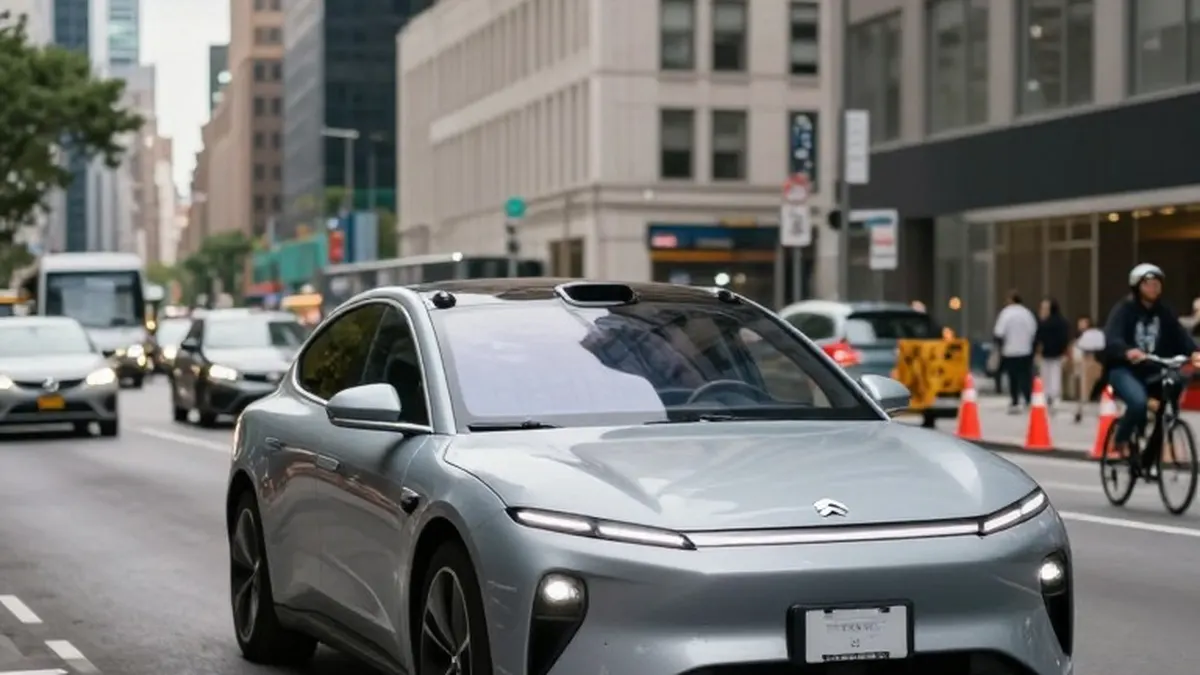
Mercedes-Benz is entering the partial autonomy race in earnest, announcing two new driver-assistance features that will put the German automaker in direct competition with Tesla, the current industry leader in hands-free driving systems. The features, a point-to-point city navigation system and a hands-free highway assist, are set to reach customers starting with an early access program in California next month, ahead of a broader United States launch in 2027.
The city-focused feature, called MB.Drive Assist Pro, is designed to handle most of the driving on local roads and in dense urban traffic. Once a destination is entered into the vehicle's navigation, the system assists across the entire route, managing highway exits, lane changes, intersections and traffic lights. There is one notable difference from Tesla's Full Self-Driving: Mercedes requires drivers to keep their hands on the wheel while navigating through cities.
Underpinning the system is an array of 27 sensors, comprising 10 cameras, 5 radars and 12 ultrasonic sensors, paired with a high-performance computer capable of 254 TOPS that runs on the company's new MB.OS architecture. The computer relies on Nvidia's Drive AV stack, which blends pure AI with a deterministic safety guardrail layer known as Halos.
The second feature, Hands-Free Highway Assist, works in a similar fashion to General Motors' Super Cruise or Ford's BlueCruise, allowing drivers to take their hands off the steering wheel on approved, controlled-access highways. It can operate at speeds of up to 85 mph, a significant increase over the 40 mph limit of Mercedes' previous-generation Drive Pilot system. It also includes Proactive Lane Change Assist, which automatically initiates lane changes to pass slower vehicles or to follow navigation toward an exit.
Earlier this month, a number of journalists tested the new features in San Francisco, and early impressions were largely positive. InsideEVs called the system a "real challenger" to Tesla FSD, praising how confidently and predictably it handled double-parked trucks, construction zones and pedestrians during a 25-minute downtown loop. The Drive noted that the system's "confidence and fluidity" felt more assured than rival systems. Tim Stevens, a Verge contributor writing for Endgadget, said it handled jaywalkers, cyclists and sudden U-turns "without issue" and took the stress out of city driving.
Mercedes will begin rolling out both features through an invite-only access program in California in December, with a nationwide launch to follow in 2027. The highway assist feature is expected to arrive in the spring. Eligible vehicles include the CLA Electric, GLC Electric, GLE, GLS and S-Class, with additional models planned for 2028.
The company has not announced exact pricing, but eligible owners will be able to unlock the software over the air through Mercedes' online store. Subscription plans will be offered in one-month, one-year and three-year terms.
The launch comes after Mercedes paused development of a Level 3 system, which would have allowed drivers to take their eyes off the road, in addition to their hands off the wheel, on certain approved stretches of highway. By pivoting to hands-free highway driving and point-to-point city navigation, Mercedes is wagering that its Nvidia-powered Level 2 features will have broader appeal and face less regulatory resistance.
More News · National news · Report a business · Got a Story?