Anthropic Faces $900 Billion Compute Bill Amid $1.3 Trillion Valuation
Anthropic's $1.3 trillion IPO valuation faces scrutiny against $900 billion in compute commitments and Nvidia's strategic acquisition of Hugging Face, highlighting the tension between AI hype and infrastructure economics.
By Aiko Petrov ·
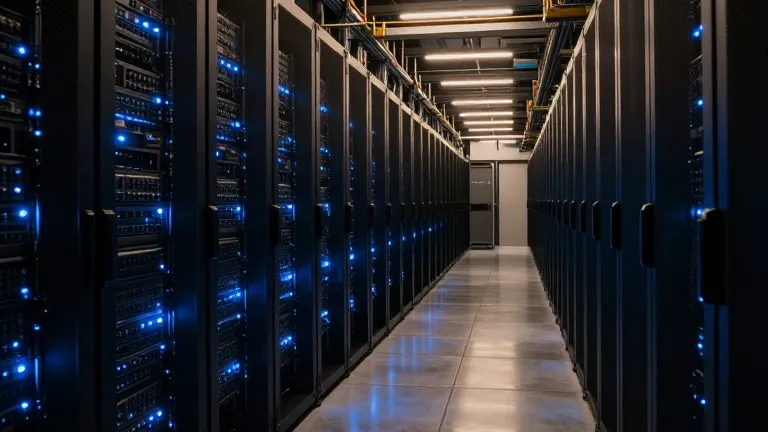
Anthropic is pricing its initial public offering at approximately $1.3 trillion to $1.4 trillion, a valuation that significantly exceeds the $900.9 billion in compute purchase commitments and lease agreements detailed in its latest securities disclosures. This gap between market value and fixed infrastructure obligations forms the core of a new scrutiny regarding the financial sustainability of the AI sector. The company’s November 10 proposal marks a pivotal moment for investors who must now weigh the promise of rapid revenue growth against the burden of nearly nine hundred billion dollars in future liabilities.
According to the IPO filings, approximately $451.6 billion of these commitments are expected to be incurred before the end of 2030, with the remaining balance stretching out through 2045. About $70.7 billion is due within the 12 months following September 30, 2026. While these figures represent contractual spending rather than immediate debt, they constitute a massive future financial obligation. Analysts note that while the company has disclosed substantial liquidity arrangements, the scale of these commitments demands a clear path to profitability that extends beyond simple revenue growth.
Anthropic reports an October annualized revenue run rate of approximately $81 billion, a figure that dwarfs the less than $20 billion annual revenue often cited in public discourse. However, the distinction between annualized revenue and actual profit remains critical. Revenue does not account for the costs of computing, research, personnel, electricity, and facilities. A trillion-dollar valuation relies on the assumption that the company will eventually generate extraordinary profits over many years to service its infrastructure debt. Investors are increasingly focused on unit economics, specifically the contribution profit each customer generates after the cost of serving them, rather than just the total number of subscribers.
The economics of serving AI users are complex and often opaque. Illustrative scenarios suggest that a single $20,000 GPU might serve 15 to 20 light users or one or two intensive coding users. If 20 light users pay $20 monthly, the $400 in combined revenue would take 50 months to recover the hardware cost alone, before accounting for servers, cooling, and electricity. Even if the wholesale cost of the GPU drops to $4,000, the break-even period remains at 10 months. This illustrates why subscription revenue alone is insufficient to guarantee customer profitability, especially for users running heavy, continuous workloads that consume significant reasoning capacity.
Nvidia occupies a unique position in this ecosystem, benefiting from the hardware demands of all major AI models. The company announced in September 2026 an agreement to acquire Hugging Face for approximately $12.93 billion, with closing expected in 2027 subject to regulatory approval. Hugging Face serves as a central hub for developers to discover and distribute machine-learning models. This acquisition raises strategic questions about the concentration of power in the AI supply chain, as Nvidia already dominates the accelerator ecosystem through its CUDA software platform, which was developed independently of the Hugging Face deal.
Regulators and market participants are watching closely to see if Nvidia will maintain the neutrality of the Hugging Face platform. The company has promised that Hugging Face will remain open and that developers will retain the freedom to choose competing hardware. However, these assurances face scrutiny from those who argue that a single entity controlling both the essential hardware and a major distribution channel could create barriers to entry. The key competition-policy questions involve whether competing accelerator manufacturers will receive fair access and whether the platform will remain neutral toward models that reduce demand for proprietary infrastructure.
The rise of open-weight models presents a structural challenge to the proprietary subscription model. Projects from DeepSeek, Alibaba, Moonshot AI, and others have demonstrated that advanced AI capabilities can be downloaded and operated on privately controlled infrastructure. These models can be quantized, a process that reduces the precision of model weights to lower memory requirements. For instance, a 200-billion-parameter model that requires 400 GB at 16-bit precision can be reduced to approximately 100 GB at 4-bit precision. This technology makes it feasible for businesses and developers to run capable models on cheaper, locally owned hardware.
This shift toward local inference threatens the assumption that customers will remain dependent on expensive centralized services indefinitely. If a business can deploy an open-weight model internally, it avoids the recurring costs of enterprise API pricing and the risk of vendor lock-in. The accessibility of these tools means that the ability to charge premium prices for AI access may not keep pace with technological improvements. The market is now grappling with a reality where the technology is rapidly advancing, but the financial valuations attached to it may be overly optimistic, echoing the dynamics of the dot-com era where the underlying technology was real, but the pricing was speculative.
Ultimately, the AI sector faces a test of its economic foundations. The combination of massive infrastructure commitments, the strategic consolidation of hardware and distribution channels, and the emergence of cost-effective open alternatives creates a complex landscape for investors. The success of companies like Anthropic will depend on their ability to convert high revenue run rates into sustainable cash flow. For now, the trillion-dollar valuations rest on a mix of proven growth and unproven long-term profitability, a balance that the market is only beginning to understand.