Iran strikes Kuwait base, targets Bahrain
New missile and drone attacks follow a U.S. strike on Qeshm Island, escalating tensions in the Gulf.
By Harper Foster ·
Iran expanded its military campaign against Gulf states on Wednesday, launching projectiles at a U.S. air base in Kuwait and multiple sites in Bahrain. The strikes occurred in the early hours of the morning, marking the latest escalation in a conflict that has persisted since February.
The attacks appear to be direct retaliation for a U.S. fighter jet strike on Tuesday. American forces targeted a Revolutionary Guard missile launch site on Qeshm Island in the Strait of Hormuz. That U.S. strike followed an earlier Iranian attack on an American radar installation in Bahrain on the same day.
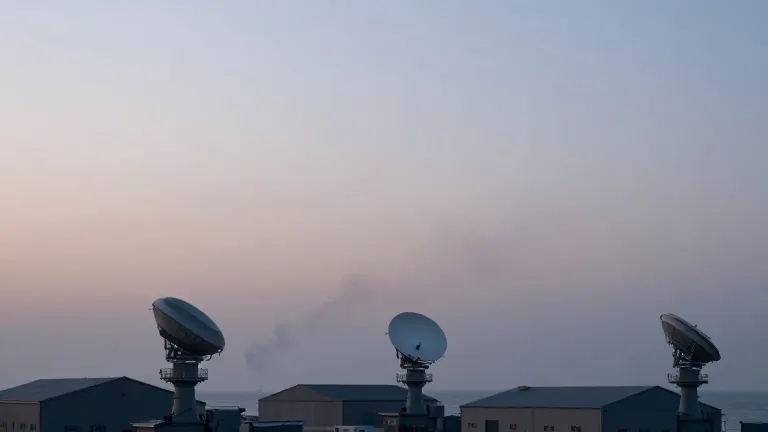
Iranian officials stated that their recent offensive actions, including strikes on U.S. facilities in Bahrain on Sunday and Friday, were responses to U.S. drone surveillance and damage to Iranian communications towers. The U.S. military had not immediately responded to requests for comment regarding the latest wave of strikes as of Wednesday.
In Kuwait, the Iranian Army targeted the Ali Al Salem air base. Reports from Iran's state broadcaster indicated that fire was directed at air defense systems, drone platforms, and missile launch sites. The Kuwaiti Army confirmed that its air defenses intercepted drone attacks. The country's Foreign Ministry described the repeated Iranian attacks as criminal and a threat to national stability.
During the initial phase of the conflict, Ali Al Salem Air Base was struck at least 30 times. An Associated Press report noted that at least 15 aircraft hangars, numerous warehouses, and 10 buildings near a residential area were damaged or destroyed during that period.
In Bahrain, the Ministry of the Interior issued two shelter alerts early in the morning. An all-clear was announced shortly after. The Bahraini military stated that it intercepted several Iranian attacks but did not release specific figures on casualties or property damage. Bahrain hosts the U.S. Navy's 5th Fleet.
Analysts suggest the attacks reflect Tehran's frustration with the current status quo. Hamidreza Azizi, a senior Iran analyst at the International Crisis Group, wrote that the accumulation of incidents increases the risk of miscalculation. He noted that even if neither side intends a broader confrontation, the frequency of strikes raises the stakes.
President Donald Trump has sent mixed signals on the next phase of the conflict. He has stated that new strikes are unlikely while simultaneously dispatching a third aircraft carrier and thousands of additional troops to the Middle East. The U.S. naval blockade continues to pressure Iran's economy, though military escorts have helped restore oil tanker passage through the Strait of Hormuz to prewar levels.
In a related development, Saudi defenses intercepted two cruise missiles fired by Iran-backed Houthi rebels toward Riyadh. Maj. Gen. Turki al-Malki, spokesman for the Saudi-led coalition, confirmed the interceptions. The previous day, coalition forces conducted a major air campaign in Yemen, claiming the destruction of 60 military targets. The Houthis reported that the strikes killed at least 17 people.
Danny Citrinowicz, a researcher at Israel’s Institute for National Security Studies, described the Iranian strategy as deliberate and calibrated. He argued that Iran aims to increase the military and economic costs of the blockade without triggering an all-out war. Citrinowicz stated that de-escalation requires either a negotiated agreement or a U.S. decision to lift the naval blockade.