FAA Lifts Nationwide Ground Stop After Router Failure
Aging equipment and data overload forced a halt to civilian and military flights, the second such stop since 2001.
By Lorenzo Marshall ·
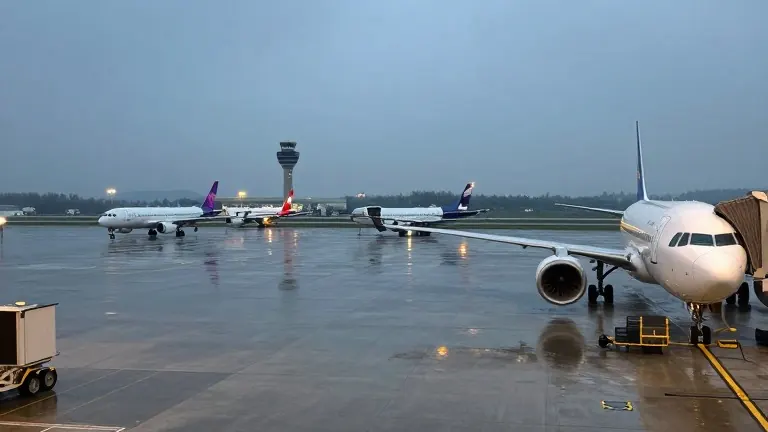
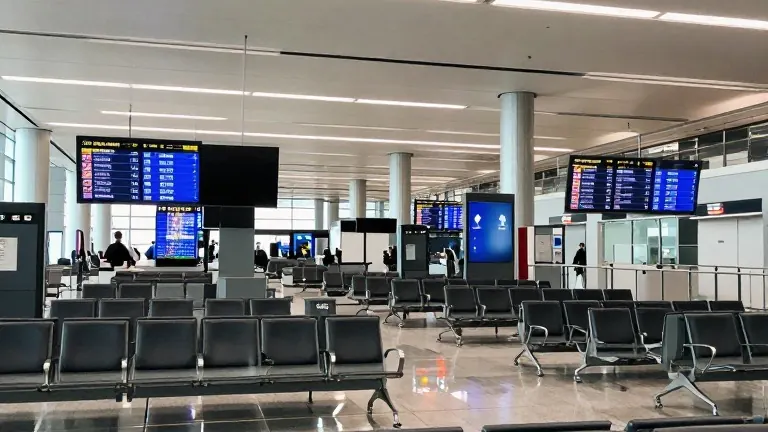
The Federal Aviation Administration ended a nationwide ground stop at 5:30 p.m. on Friday, allowing aircraft to return to the skies after a communications outage halted operations. The order had taken effect shortly after 1 p.m., disrupting flights at 22 Air Route Traffic Control Centers across the country.
U.S. Transportation Secretary Sean Duffy attributed the failure to aging infrastructure and technical strain. Speaking at a news conference, he stated that the air traffic control system is incredibly old and that routers became overloaded with data. He explained that some hardware failed to provide consistent information, which prompted the FAA to shut down the system as a safety precaution. Although some routers had been replaced, the remaining older units could not handle the load.
The disruption affected military operations at March Air Reserve Base in Riverside. A Department of War employee confirmed that the FAA’s Notice to Airmen applied to military flights. The official noted that no aircraft were moving or would move until further notice. March Air Reserve Base is home to the 452nd Air Mobility Wing, which operates air tankers and cargo aircraft. While these planes often use military-only airways, they routinely transit civilian airspace and use radio bands distinct from civilian pilots.
Local airports began issuing guidance to passengers within hours of the stop. Palm Springs International Airport advised travelers to expect delays and to check flight status directly with airlines before traveling. Ontario International Airport reported that it was monitoring the situation. At Los Angeles International Airport, a United Airlines pilot told reporters that the communications problem began at the Kansas City air traffic control center before spreading nationwide. Localized ground stops had also been issued at Chicago O’Hare and Midway airports shortly before the nationwide order, though it was not immediately clear if these were related.
The outage occurred one day after the FAA announced an expansion of its artificial intelligence-based flight management system called SMART. The system, initially used in the Washington, D.C., area, was being rolled out to all 22 control centers to reduce delays and fuel consumption. Air Space Intelligence, the developer of SMART, stated on social media that the ground stop was not connected to its technology. Homeland Security Secretary Markwayne Mullin said an investigation would determine if the system played any role.
Mullin described the event as a telecommunications outage rather than a national security threat. He assured the public that there was no indication of a cyberattack or other nefarious act. He added that there was no reason for people to be afraid for their loved ones.
This was only the second time since the 2001 terrorist attacks that the FAA issued a nationwide ground stop. The previous instance occurred in 2023 and lasted approximately 90 minutes when a pilot notification system went down.