FAA Asks Congress for $50B After Four-Hour Ground Stop Blames L3Harris
Secretary Sean Duffy points to contractor errors while Administrator Bryan Bedford accepts responsibility for the second national shutdown since 2001.
By Lorenzo Marshall ·
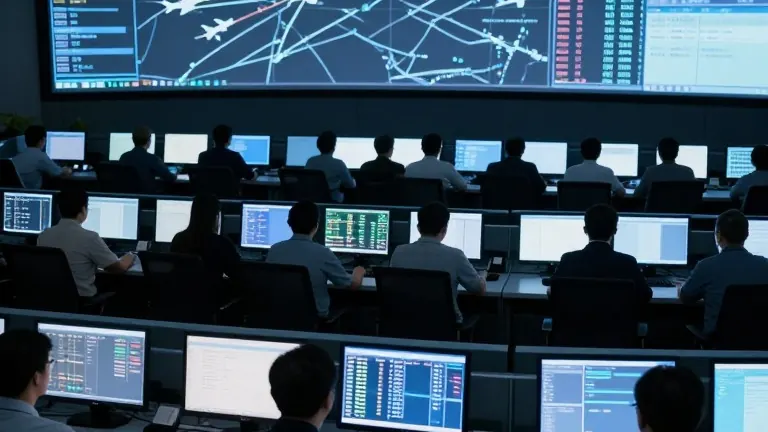
The Federal Aviation Administration has requested $50 billion from Congress to fund the remainder of its air traffic control modernization project following a nationwide ground stop that lasted more than four hours last Friday.
This figure is nearly double the $12.5 billion the agency received last year to begin the overhaul. Officials state that only about $10 billion of the new request will go directly to air traffic control technology, with the remaining funds allocated to runway upgrades, airport towers, and aging control centers built in the 1960s.
U.S. Transportation Secretary Sean Duffy has maintained that the incident stems from contractor errors. Speaking on "The Morning Meeting" on Wednesday, Duffy said a contractor failed to identify and isolate a router issue quickly enough.
"The monitoring of the network matters," Duffy said. He noted that new installations of the affected routers have been paused and technicians have disabled the specific function linked to the outage.
FAA Administrator Bryan Bedford offered a different perspective on accountability. At an event hosted by The Hill, Bedford stated that the agency is ultimately responsible for the network's performance, even if L3Harris performed the work.
"I am the chief accountability officer. I take full responsibility for it," Bedford said. "I wish people would lay off the secretary. He’s got a lot of work to do, but I’m the guy they hired to get this done. So, blame me."
The disruption was the second nationwide ground stop since the September 11, 2001 attacks. The cause was a Juniper router installed in El Dorado, Arkansas, as part of an upgrade replacing old copper wire with fiber optic lines. The device began sending thousands of inquiries every few seconds, which overwhelmed older network components.
This malfunction caused inconsistent radar and communications signals at 17 of the 22 key air traffic control centers. L3Harris, which owns and maintains the FAA's telecommunications network, issued a statement on Saturday pledging to support the investigation. The company declined to provide further details on Wednesday.
Investigators have not determined the root cause. Officials suggested the router may have been configured incorrectly, but Bedford noted the technician was an Air Force veteran who had completed similar work dozens of times. It is unclear why this specific device behaved differently from those installed in 68 previous upgrade projects.
Congress is unlikely to approve the full funding request immediately. Several key lawmakers said on Tuesday that they are hesitant to approve the amount because the FAA has not yet spent all the money authorized last year. Bedford acknowledged that members of Congress might be having "some indigestion associated with that."
Chris Sununu, president of the Airlines for America trade group, praised Bedford for his communication with airline leaders during the outage. Sununu said Bedford initiated a conference call with CEOs and operations leaders within about 30 minutes of the ground stop beginning.
"To be honest, he stayed on the phone effectively with all the CEOs all night long," Sununu said. "We did, I think, three or four calls over the period of the next few hours, brought in those operational folks. And so as they learned more, as they understood more of what was happening."