Bradenton veteran trains service dog
Army veteran Sean Hawker works with a local program to manage PTSD symptoms through canine partnership.
By Harper Foster ·
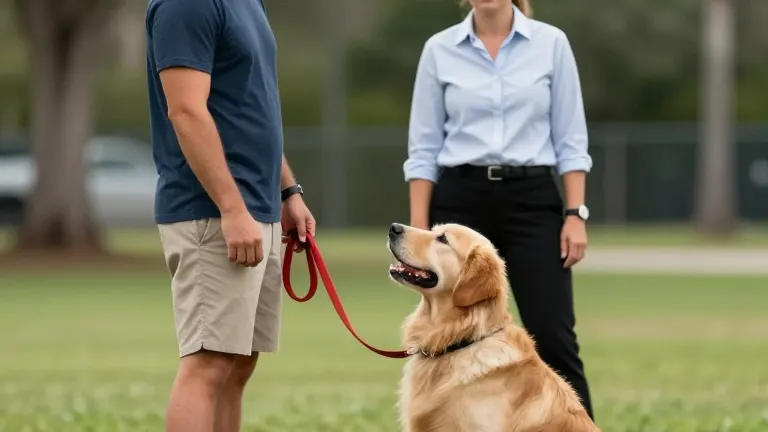
Army veteran Sean Hawker is currently training a service dog named Star to help him manage PTSD. Hawker served as a paratrooper in the United States Army and was medically retired from law enforcement as a patrol sergeant. He said his condition stems from both his military service and his time on the police force.
Hawker described his symptoms as episodes where he loses consciousness. “I black out. I don’t remember anything that happens,” he said. The goal of the training is to create a partnership that provides support during these difficult moments.
Hawker connected with Canines for Heroes, a local organization that assists veterans and first responders. The program pairs individuals with dogs and helps offset the financial costs of training. Sandra Laflamme, a co-founder of the organization, stated that the group helps cover expenses to remove financial barriers for participants.
The organization works with people who already own dogs or connects them with new animals, including rescue dogs when appropriate. Laflamme emphasized that the process requires commitment from the human handler. “Our recipients will always say it’s a human training thing,” she said. “I’m the responsible one. I’m the one in charge.”
Hawker is working with Julie Madison of Top Tier Canine Bradenton. Madison’s approach focuses on teaching the owner how to continue training and communicating with the dog after the formal program concludes. “She teaches you how to teach the dog,” Hawker said. He noted that Madison is not only training the animal but also instructing him on how to correct the dog later if necessary.
Madison said she observes changes in how veterans approach situations that previously felt overwhelming. “I’ll see people who go from, ‘I don’t want to leave my house, I can’t interact with people,’ to, ‘OK, you know what? I can do this,’” Madison said. She described the impact as influencing daily lives and providing a safety net.
The training process involves hands-on practice where the handler learns to control the dog through eye contact, consistency, and the handling of treats. The exercise demonstrates that the response of the dog is heavily dependent on the behavior of the person holding the leash.
Hawker hopes the partnership with Star will give his family more freedom. “It gives freedom to not only my family,” he said. He added that the dog will be present to help him manage through difficult moments.
Canines for Heroes provides ongoing support beyond the initial training period. Participants can return for additional help and connect with community meetups. Laflamme encouraged hesitant veterans to contact the organization immediately. “Just call us right away,” she said, noting that families can visit to observe the training process before making a decision.
Hawker advised other veterans and former law enforcement officers to seek help without hesitation. “We were not taught to be there by ourselves,” he said. He encouraged them to explore whether a rescue or PTSD service dog is right for them. “They will be there for you just like we were as battle buddies,” Hawker said.