Jordan House Refers Anti-Terror Bill to Committee
Proposed amendments would raise minimum prison terms to ten years following the Karak church shooting.
By Harper Foster ·
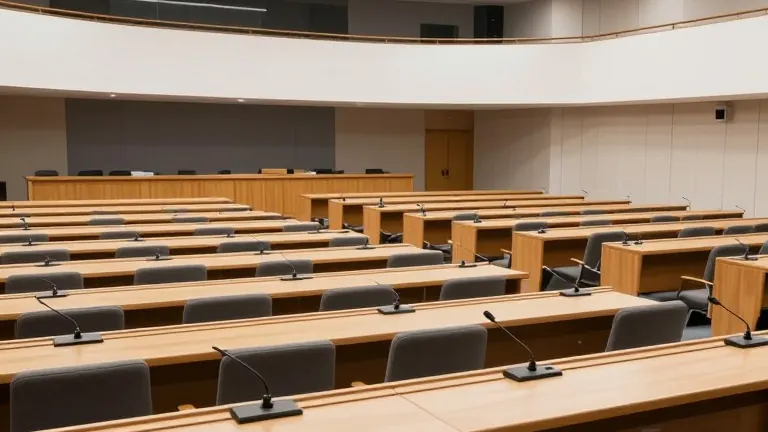
Jordan’s lower house voted on Wednesday to send proposed amendments to the 2006 Anti-Terrorism Law to the Legal Committee. The referral initiates a detailed review of the draft, which aims to tighten penalties for security offenses. Speaker Ibrahim Tarawneh confirmed the chamber would examine the statutes to determine necessary changes.
The legislative push follows two violent incidents in recent weeks. On October 23, gunmen opened fire during a funeral service at a Greek Orthodox church in the village of Hamoud in Karak. Authorities reported nine deaths and 34 people wounded in that attack. A separate incident occurred on November 5 in Amman, where a police officer was stabbed while on guard duty near the Sri Lankan embassy.
Judicial proceedings for these events have advanced rapidly. Last week, the State Security Court sentenced three men to death for the church attack. On Wednesday, the same court handed down a death sentence to a fourth man convicted of killing the police officer in Amman.
State-run reports indicate the government-backed amendments would double the minimum prison term for terrorism-related offenses to ten years. In specific cases, sentences could extend to 15 years. The death penalty would remain an option for the most severe offenses.
Not all lawmakers support the rapid timeline. Ayatollah Freihat, the First Deputy Speaker, argued against shaping the law based on immediate reactions to events. He warned that vague definitions, such as disrupting public order, could negatively impact freedom of expression. Freihat urged the government to withdraw the current draft and form a committee of legal experts for a comprehensive review.
The bill must pass the Senate and receive royal ratification to become law. King Abdullah II addressed the nation when opening the parliamentary session this month. He described the church attack as the work of a treacherous hand of terrorism that sought to test the resilience of the state.
The Legal Committee is now scheduled to examine the text. Once the committee completes its work, the legislation will return to the full chamber for debate and a final vote.