250 families displaced in Hebron as military orders evacuations after checkpoint shooting
Hebron's deputy mayor says the number of displaced residents is not final, with shelters already strained by the ongoing operation.
By Harper Foster ·
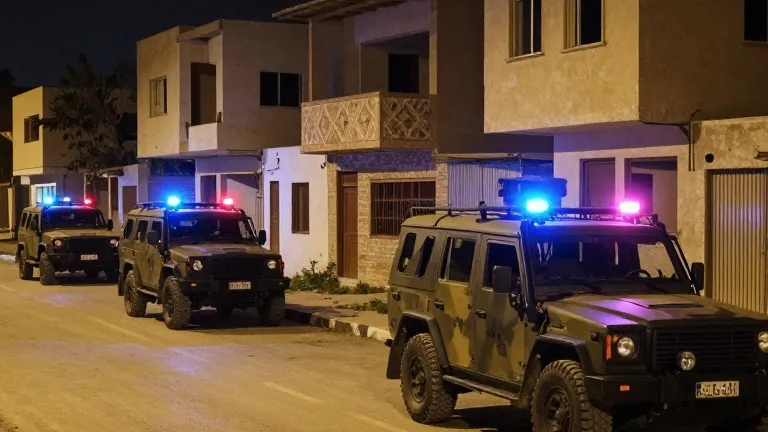
Israeli forces have forcibly removed approximately 250 families from their homes in Hebron following a shooting incident at the Farsh al-Hawa checkpoint. The displacement order was issued on Saturday morning, hours after two soldiers were killed and three others wounded in an attack on Friday. Khaled al-Qawasmi, the deputy mayor of Hebron, stated that the military began the operation around midnight on Saturday, giving residents only one hour to vacate their properties. He noted that the current count of 250 families is preliminary because the military siege is still active and more evictions may occur.
The military described the action as an operation to thwart terrorism, coordinated with the Shin Bet and the Border Police. Forces conducted searches for weapons and terrorist infrastructure while interrogating dozens of suspects. The two suspected Palestinian attackers were killed by Israeli fire. According to local sources, the operation has resulted in the leveling of about seven dunums of land in Farsh al-Hawa, targeting residential buildings, commercial shops, and industrial facilities. The Israeli army also imposed a broad closure on Hebron, blocking main entrances and roads while continuing to deploy troops across various parts of the city.
Residents in the al-Jalada, Ein Deir Bahha, Wadi al-Maghariba, and Shi'b al-Milh neighborhoods reported being ordered out at gunpoint. Abdul Hamid Shahada, a resident of al-Jalada, said the military stormed the area shortly after the Friday attack. Soldiers took positions near the homes of the Joba family, to whom the two alleged perpetrators belonged. The military distributed a map designating specific buildings for evacuation. Shahada said his family packed small bags with medicines, phone chargers, and documents, and did not sleep all night while watching from their windows. He noted that soldiers beat one man during the process and left neighbors' homes with doors and windows wide open, ransacking the interiors.
The Hebron Municipality activated an emergency plan to manage the displacement. Local officials opened the Child Happiness Centre, family guesthouses, the Korean Centre, and other facilities to house the evacuated families. Qawasmi warned that the limited capacity of these centers could lead to a shelter crisis if the operation expands. He said that some families were told they would be kept out of their homes for six months to a year, while others were given no specific timeline. The municipality established an operations centre to monitor residents' needs and prepare additional shelters in case the scope of evacuations increases.
The incident has disrupted the local economy and daily life in the city. At least 13 Palestinians were arrested in Hebron, while dozens were detained for several hours for field interrogations. The military closure extends beyond the targeted area, affecting surrounding villages, towns, and refugee camps. Forces continued raids and searches throughout the operation. Qawasmi emphasized that the closure is not limited to the specific neighborhood under siege but covers the entrances and gateways of Hebron. The military operation has not ended, and residents remain uncertain about when they will be permitted to return to their properties.
Source: Middle East Eye
More Business · World news · Watch Your Wallet · Report a business · Got a Story?