Storms refill Lake Powell, lifting water levels by 20 feet
Heavy rain in the Southwest has ended local water restrictions and boosted reservoir levels, though drought conditions persist.
By Aiko Petrov ·
Residents in the American Southwest are seeing immediate changes in their daily water access following a series of intense storms. In Pagosa Springs, Colorado, local officials lifted water restrictions that had been in place for over 10,000 people since October. Town manager David Harris noted that restaurants, which were previously asked to serve water only on request, can now operate normally. This shift represents a tangible relief for households and businesses that had been managing limited supplies.
The weather pattern that triggered these changes began in late October and continued into early November. Torrential rain caused normally small or dry creeks to overflow their banks, leading to flooding in local communities. While hundreds of people were ordered to evacuate and some areas became inaccessible, the water moved into the region’s depleted water storage systems. Martin Hoerling, a climate scientist and hydrologist at the University of Colorado Boulder, described the influx as an unexpected boost from nature.
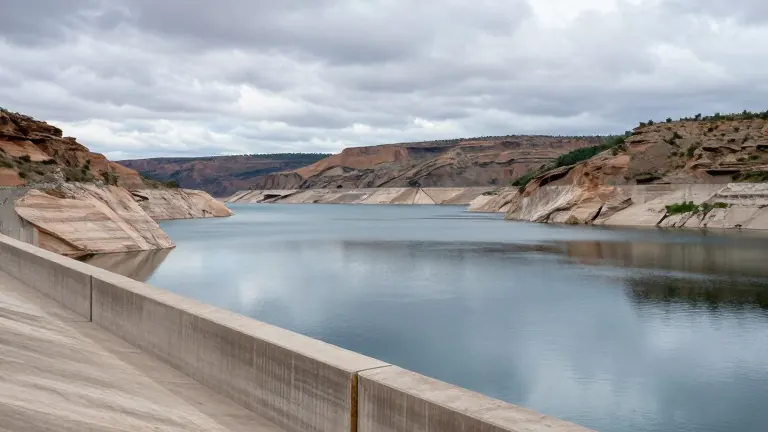
Lake Powell, the second-largest reservoir in the United States, rose more than 20 feet from its mid-September low. This increase dwarfs the gains typically seen from spring snowmelt. However, the lake is still only just over a quarter full. As of Friday, 15 of the lake’s 17 boat launches remained unusable. Hoerling estimated that the total water inflow could reach over 1.2 million acre-feet, a volume sufficient to support around 4 million average families for a year.
The impact extends beyond the large reservoirs. In Northern Arizona, Upper Lake Mary received more than 3 billion gallons of water since early October. This lake supplies up to 40% of Flagstaff’s water. Brian Huntzinger, the water production manager for Flagstaff, said the recent storms added the equivalent of more than two years of water to the town’s surface supply. This addition provides a critical buffer for an operation that relies heavily on underground aquifers. Huntzinger noted that the reservoir might overflow before snow begins to fall.
In central Arizona, heavy floodwaters trapped in homes flowed into streams that feed the Verde River. Water officials responded by releasing water from two nearly full dams into a normally dry stretch of the river in metro Phoenix. Bo Svoma, principal meteorologist at the Salt River Project, manages reservoirs on the Salt and Verde rivers. He confirmed that the releases were necessary to manage the surge in water levels.
Despite the recent rain, the region remains in a state of drought. The El Niño phenomenon, which has intensified heavy rain and floods, is expected to last several more months. Experts say its impacts will continue to affect water supplies stored in lakes, aquifers, and snowpack across the West. Last winter’s lackluster snowfall had done little to recharge water bodies when it melted in the spring and summer.
Federal water managers are not yet adjusting their allocation plans. Jack Schmidt, a professor at Utah State University who studies the Colorado River, said the U.S. Bureau of Reclamation is unlikely to change water releases from Lake Powell until snowpack peaks around April. Mary Carlson, a spokesperson for the Bureau, acknowledged that conditions have improved but stated that considerable uncertainty remains.
Under the current federal plan for the Lower Basin, California, Nevada, and Arizona will collectively reduce water use by 1.25 million acre-feet annually for the next two years. This reduction is equivalent to filling over 600,000 Olympic-sized swimming pools. Larger cuts are possible depending on future conditions. Nevada and Arizona are currently challenging the plan in court.
Some Arizona cities are taking steps to reduce their reliance on the Colorado River. Officials have agreed to fund preliminary work to expand an existing dam on the Verde River. The project aims to capture runoff from storms to store water for future use. Hoerling said the region must figure out how to be resilient in a drier future, noting that the current improvements are not yet sufficient to declare the drought over.