Service Workers and 33 Million Absentees Complicate Brazil's Final Presidential Vote
In Osasco, a former industrial hub now defined by malls and delivery apps, the shift from factory labor to service jobs has altered the political map ahead of Sunday's runoff.
By Harper Foster ·
Brazil heads to a presidential runoff on Sunday with 33 million people having abstained in the first round, the highest turnout drop since 1998. This large bloc of non-voters now holds a decisive role in a contest between left-wing President Luiz Inácio Lula da Silva and right-wing candidate Flávio Bolsonaro.
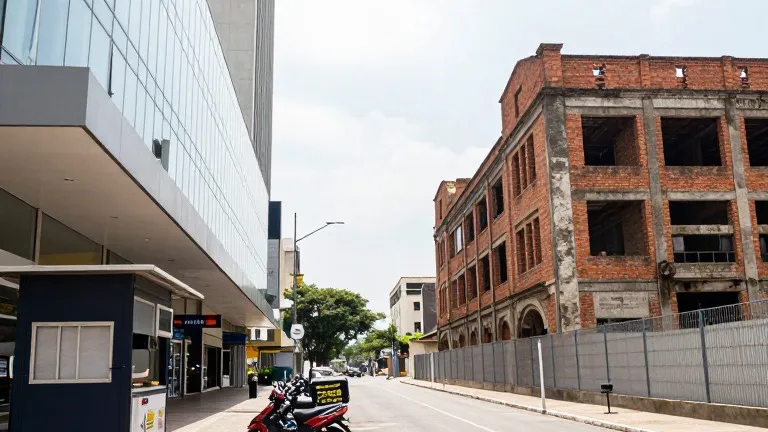
The political shift is visible in municipalities like Osasco, a city in the São Paulo state that once thrived on heavy industry. Formerly known for metal, chemical, and textile factories, Osasco has been rebranded as São Paulo's Silicon Valley. Closed factory sites have given way to shopping malls and headquarters for delivery app companies. In 2022, the municipality supported Lula. In this month's first round, it voted for Bolsonaro.
Gilberto Almazan, who leads a local metalworkers' union, describes the change as a stark deindustrialization. He notes that while factories disappeared, five malls were built. Almazan characterizes the current working class as no longer primarily industrial. He argues that many new workers prioritize flexibility over the collective welfare structures that supported Lula's rise. He calls this trend Uber-isation and describes the traditional union movement as stuck in the Middle Ages.
Richard Lapper, an author who has written biographies of both major candidates, observes that Brazil industrialized late and deindustrialized early. He describes Lula as a victim of his own success. Although unemployment has hit a record low and Brazil was removed from the UN's Hunger Map, Lapper points to a crisis of expectations. He cites higher prices, household debt, and high interest rates as factors that prevent citizens from feeling the improvement in their material conditions.
Voters express mixed sentiments about the current administration. Robson, a 53-year-old civil servant who supported Lula in the past, blames the government's mismanagement for the heavy tax burden. Tairine, a hot dog seller who previously abstained, plans to vote for Bolsonaro, stating that nothing has changed since Lula returned. Gisele Bonfim, a lawyer who voted for Lula in 2022, says she sees Bolsonaro as bringing the hope of change.
Flávio Bolsonaro has proposed cutting government spending, reducing ministries, and lowering some taxes. He stated he would retain some of Lula's flagship welfare programs. He has also denied recent corruption accusations. His platform contrasts with Lula's approach, which relies on mobilizing large crowds. Lula's campaign recently held a rally in São Paulo that drew approximately one million people, an event widely shared via aerial footage on social media.
Lula, 80, has used social media to counter claims that his age is a liability, referring to himself as the king of selfies. His support remains strong among the poorest segments of the population. In Maré, a large favela in Rio de Janeiro, abstention was above the national average, yet Lula still won the local vote. Vitoria, an 18-year-old mother earning under 300 pounds a month, praises the minimum wage increase and free essential medicines under Lula's presidency.
However, some residents in areas like Maré are wary of Bolsonaro's proposals. Vitoria doubts the plan to designate the Comando Vermelho gang as a terrorist organization, fearing police raids similar to those in Rio last year that resulted in more than 130 deaths. Andreza Dionísio, a resident, blames last-minute changes to polling station locations and a sense of hopelessness for the low turnout in her area.
Religious institutions are also influencing the vote. About a quarter of Brazilians attend evangelical churches, which are providing childcare, employment advice, and food. Pastor Silas Malafaia, who is under investigation for allegedly obstructing Jair Bolsonaro's coup trial, supports Flávio Bolsonaro. He says the candidate shares the church's values on family and opposition to abortion. Almazan fears that there will never be another Lula, leaving the final result dependent on whether voters believe the president can present a new narrative.
The final vote will determine whether the incumbent can retain power or if the shift toward a service-based economy will cement a right-wing victory. The 33 million voters who stayed home in the first round may tip the balance in favor of either candidate on Sunday.
Source: BBC News
More Politics · World news · Report a business · Got a Story?