Rwanda and DRC head toward new Geneva talks as Washington peace process stalls
A fresh round of negotiations is expected this week, but Kigali and Kinshasa remain divided over what fulfilling their commitments under the Washington Accords actually means.
By Lorenzo Marshall ·
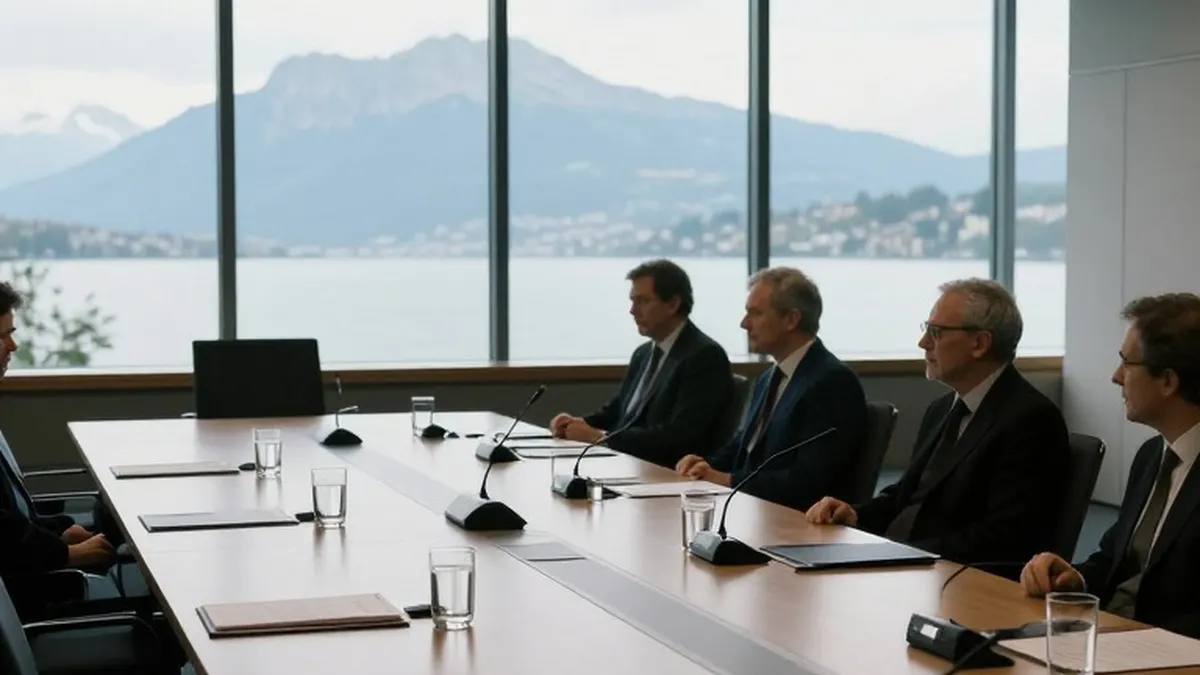
A new round of talks between the Democratic Republic of the Congo and Rwanda is expected to take place in Geneva on November 19, according to Africa Intelligence, as the two governments struggle to implement the Washington Accords for Peace and Prosperity. Al Jazeera reported that it was unable to independently confirm the meeting.
At the centre of the deadlock are two obligations: neutralising the Democratic Forces for the Liberation of Rwanda, known as the FDLR, and Rwanda lifting what it calls its defensive measures. The two sides disagree not only over how much progress has been made, but over what would even count as compliance.
The Washington Accords were signed on December 4, 2025, building on a peace agreement of June 27, 2025 and a Declaration of Principles from April 25, 2025. The commitments include neutralising the FDLR, the disengagement of Rwandan forces, respect for territorial integrity and an end to support for armed groups. Implementation is overseen by the Joint Security Coordination Mechanism, which brings together the DRC, Rwanda, the United States, Qatar, Togo as African Union mediator, and the AU Commission.
The mechanism met in July, August and September 2026, but progress remained largely procedural, covering information-sharing, monitoring arrangements, verification and the disarmament and demobilisation of FDLR members. The parties have yet to agree on what fulfilment of their respective security obligations would look like.
Rwanda says it has begun delivering on its side. Addressing the UN Security Council on September 29, Permanent Representative Martin Ngoga said Kigali had started lifting its defensive measures, while insisting the FDLR remained active in eastern DRC and continued to cooperate with Congolese forces and other armed groups. Kinshasa, for its part, points to a protocol announced on July 28 with a faction of the FDLR's armed wing, setting out disarmament and demobilisation arrangements. Government spokesman Patrick Muyaya told Al Jazeera the process formed part of the commitments under the Washington agreements.
Kigali rejected that arrangement. Foreign Minister Olivier Nduhungirehe called it a "crude manipulation", and Ngoga argued that a deal with one faction could not satisfy the broader commitment to neutralise the group. The dispute exposes the core problem: Kinshasa presents the protocol as progress, while Kigali says disarming one faction does not prove the FDLR's wider capacity has been dismantled, and no shared standard for measuring progress exists.
Pressure on Rwanda increased on October 28, when the United States sanctioned Rwanda's Ministry of Defence and the Zigama Credit and Savings Society over alleged support for the M23 armed group. Washington accused the ministry of directing Rwandan forces operating alongside M23 and supplying military equipment, and alleged Zigama facilitated financial and logistical support. Kigali rejected the allegations, with spokesperson Yolande Makolo saying the FDLR-related commitments remained unfulfilled and calling for all parties to be held accountable.
The Washington track runs alongside a separate Qatar-facilitated process in Doha between Kinshasa, M23 and its ally, the Congo River Alliance, which produced a Declaration of Principles in July 2025 and a framework covering ceasefire monitoring, humanitarian access, disarmament and the restoration of state authority. The political landscape shifted on October 12, 2026, when the Front for the Refoundation of the Nation was established, announcing the dissolution of the AFC and assuming its rights and obligations under the Doha process. The founding declaration, however, does not clearly spell out the separate organisational status of M23, leaving open questions about who represents the nongovernmental side and who implements Doha commitments.
Alongside the peace track, the United States and the DRC signed a strategic partnership on December 4, 2025 to expand economic cooperation, including investment in mining, critical minerals and infrastructure, reflecting Washington's interest in Congolese copper and cobalt. Following a steering committee meeting in Paris on November 6, the two governments reported growing interest from US companies, while Kinshasa stressed the partnership should be judged by tangible investments rather than announcements.
The Washington process follows decades of regional diplomacy, from the 1999 Lusaka Ceasefire Agreement and the 2002 Pretoria Agreement to the 2007 Nairobi Communique and the 2013 Peace, Security and Cooperation Framework. The FDLR, formed in 2000 by remnants of the former Rwandan armed forces and Interahamwe militia who fled to the DRC after the 1994 genocide against Tutsi in Rwanda, remains a central point of contention. The expected Geneva round will test whether the two capitals can agree on a credible, verifiable way to measure compliance, without which progress on the ground risks lagging far behind the diplomatic framework.