Russia developing second military satellite network, Ukrainian intelligence says
Ukrainian intelligence says Russia plans to launch 240 Innoset satellites by 2036 while pursuing a larger deployment under its Rassvet programme.
By Aiko Petrov ·
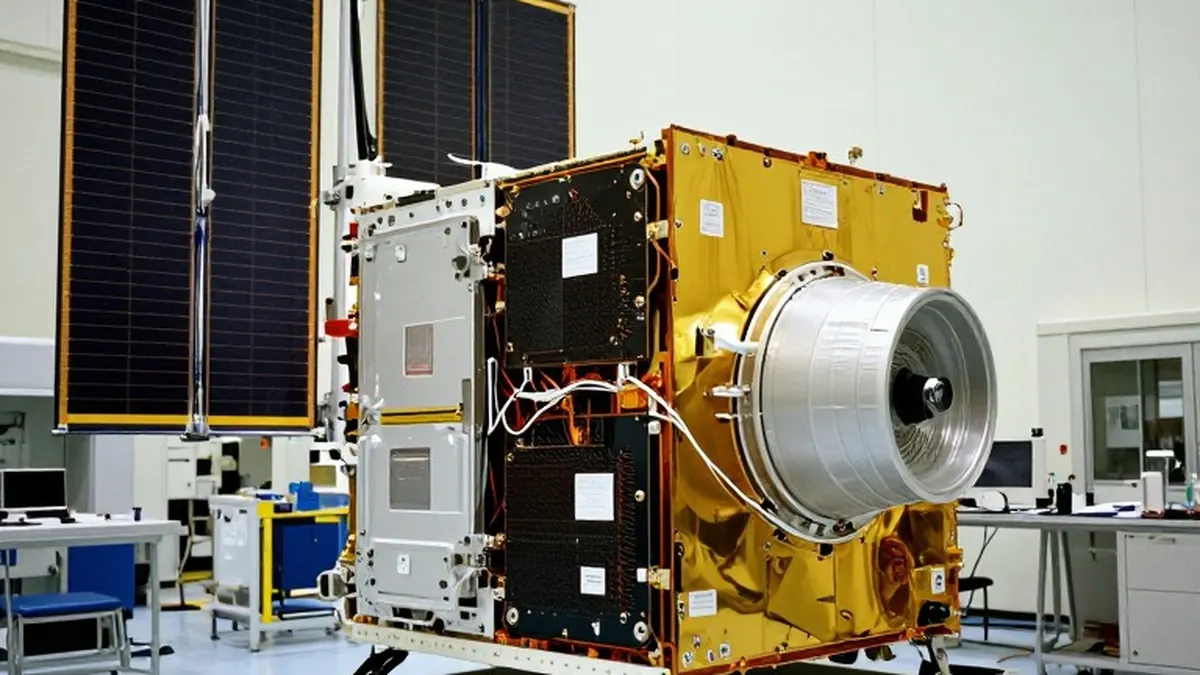
Russia is working on a satellite communications network called Innoset for its armed forces alongside its Rassvet low-Earth orbit system, according to Defence Intelligence of Ukraine. The agency cited its deputy head, Major General Vadym Skibitskyi, who discussed the Russian satellite programmes in an interview with The Times.
Skibitskyi said Moscow has a 10-year plan for deploying satellite networks to serve its military. Innoset is being developed by Geoscan, a company based in St Petersburg, with plans calling for 240 satellites to be launched for that network by 2036. It is a separate project from the Rassvet system.
The planned Rassvet constellation is considerably larger. According to Skibitskyi, Russia intends to deploy 924 satellites under that programme by 2035. The schedules he described place the target for Rassvet a year ahead of the deadline for launching the planned Innoset satellites.
Skibitskyi warned that Russia's deployment of low-Earth orbit satellite networks presents a global threat. His assessment focused on the potential military uses of a fully deployed Rassvet system, including the possibility of operating unmanned weapons in areas far beyond the Black Sea.
If Rassvet were fully deployed, he said, Russia could fit different weapons with receivers connected to the network and use them around the world. He identified Europe, Africa, the Middle East and the Far East as regions where Moscow could operate naval drones or unmanned aircraft through such a system.
The deployment of Rassvet has nevertheless faced obstacles, according to an earlier Ukrainian intelligence assessment. On 13 November, the agency reported that the project was being held back by dependence on foreign components, trouble placing satellites in their intended orbit and difficulties developing compact terminals for users.
Earlier reports also described a gap between the orbital altitude reached by much of Rassvet's second satellite batch and the altitude originally planned. Of the 16 satellites in that batch, 13 had settled into an orbit approximately 508 kilometres above Earth.
That position was described as an intermediate orbit, below the intended altitude of roughly 800 kilometres. The reported orbital difficulties form part of the challenges facing Rassvet as Russia pursues the satellite deployment plans outlined by Skibitskyi.