Researchers Use Drones and Dogs to Monitor 76 Endangered Orcas in Salish Sea
Scientists collect breath and stool samples from Southern Resident killer whales to track declining health markers like miscarriages and calf mortality.
By Harper Foster ·
The Southern Resident killer whale population has dropped to 76 individuals, a decline that persists despite decades of conservation efforts. Researchers are now deploying advanced aerial technology and trained animals to monitor the health of these endangered marine mammals in the waters between Washington State and British Columbia.
Deborah Giles of The SeaDoc Society leads this collaborative effort with the San Diego Zoo Wildlife Alliance. The team operates out of Kingston, Washington, but must travel south each fall to locate the whales. The orcas have shifted their hunting grounds away from their traditional summer habitat near the San Juan Islands. They now spend more time foraging just north of Seattle for coho and chum salmon, a change driven by the shrinking availability of their primary food source.
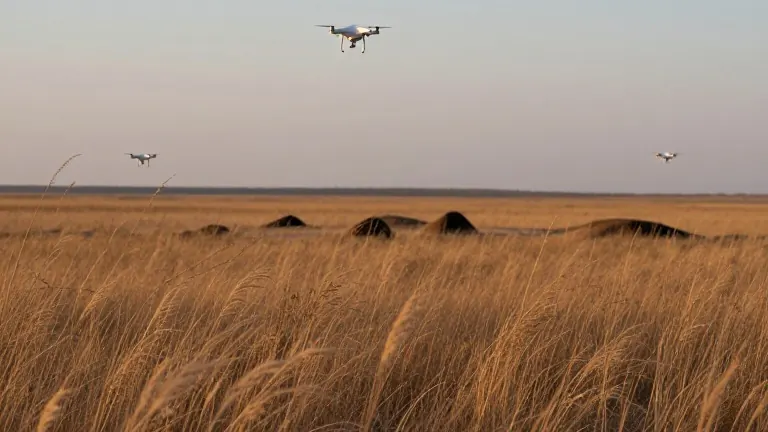
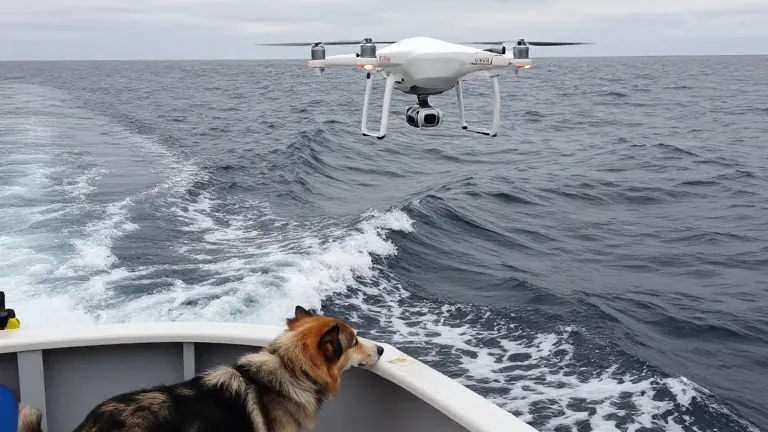
James Sheppard, a senior scientist and drone pilot for the San Diego Zoo Wildlife Alliance, flies a specialized aircraft from a 22-foot research boat. The drone is equipped with petri dishes and microscope slides designed to capture droplets from the whales' spouts. Sheppard hovers the aircraft about 12 feet above the water surface to sweep through the spray. The spout from an adult male can reach six to 10 feet into the air and spread as wide as a basketball. He must retrieve the drone quickly to prevent wind and sunlight from degrading the biological samples.
On the ground, an 11-year-old dog named Eba assists in the collection process. Held on a leash by Jim Rappold, Giles' husband and research partner, Eba sniffs the air from the boat's bow to locate feces. When she detects a scent, she whines and paces to alert the team. Although the dog identified a potential sample during a recent November survey, the researchers were unable to visually locate the feces in the water. The whales generally ignore the drone, viewing it as a strange seagull, and continue swimming even when they notice the aircraft.
The collected breath and stool samples contain hormonal, bacterial, fungal, parasitic, and DNA data. These materials are sent to the San Diego Zoo Wildlife Alliance lab for analysis to create individual health profiles for each whale. Giles noted that this comprehensive record allows the team to intervene if a specific animal requires attention. The data has revealed that many female orcas are experiencing miscarriages, a trend that compounds the already high rate of calf mortality.
The decline in orca health is linked to the reduction in salmon populations. Before colonization, Chinook salmon weighed over 100 pounds and were abundant. Today, the average weight is about 12.5 pounds due to dams, overfishing, noise pollution, and toxic chemicals. This scarcity forces the whales to hunt in the open ocean, making research more difficult. In contrast, Bigg's killer whales, which feed on plentiful marine mammals in the Salish Sea, are thriving and giving birth to calves every two years.
Giles stated that while reducing vessel noise is helpful, the most critical action is restoring salmon runs. Salmon that spawn in the Salish Sea often migrate as far north as Alaska, where they are caught before they can return to the orcas' hunting grounds. The research team continues to track the 76 remaining whales to document their physiological status and support future conservation decisions.