Iowa blast air tests offer reassurance, but lead contamination questions remain
Initial monitoring detected no airborne lead after an Army detonation in Iowa, while scientists and residents await laboratory results to assess possible contamination.
By Lorenzo Marshall ·
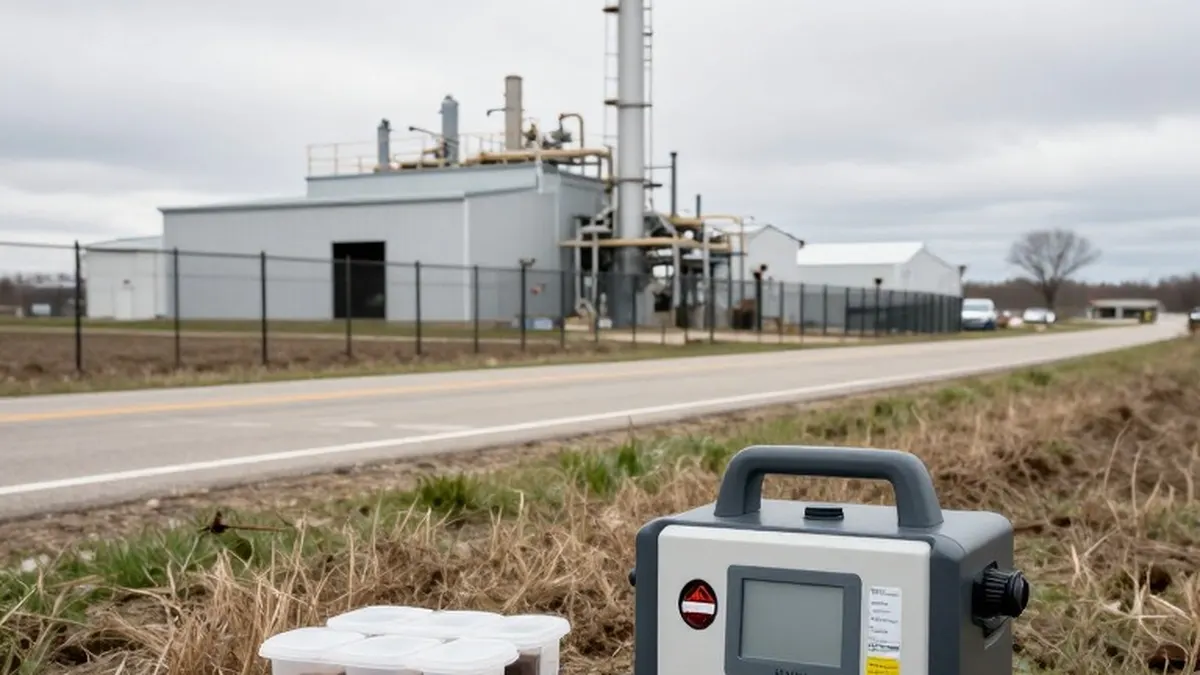
Initial air monitoring detected no lead after the Army detonated 9,700 pounds of lead azide in Middletown, Iowa, on Wednesday, offering encouragement to scientists and residents concerned about pollution. But independent experts said laboratory testing of deposited dust would be needed to determine whether contamination occurred and identify any areas requiring cleanup.
The explosion took place at 9 a.m. local time at the Iowa Army Ammunition Plant. Army leaders said the chemical had deteriorated and become so unstable that it could explode on its own, leaving detonation as the only option. The operation followed two weeks of public opposition over communication and preparation time, particularly around Thanksgiving, which prompted officials to postpone the blast.
The Environmental Protection Agency said real-time monitoring at four locations found no lead in the air. In a post around 5:30 p.m., the Army said the Federal Emergency Management Agency had issued an “all clear” for the surrounding area, but offered little additional explanation. Surface sampling was continuing, the Army said, with results to follow.
Some evacuated residents remained reluctant to return. Sean Byers, who lives across the street from the plant, said he intended to keep his children away from home for several days and worried that potential long-term effects were being downplayed. Garrett Anthony, a Burlington resident living about 7 miles from the site, welcomed the air readings but said ground testing and confirmation from independent scientists remained important. He had saved soil before leaving to provide a possible testing baseline.
Lead is a highly dangerous neurotoxin, with no exposure level considered safe. Dr. Joel Kaufman, a University of Washington professor who studies air pollution, described the early readings as promising but said they needed support from laboratory analysis of ground dust collected across many locations. Purdue University engineering professor Andrew Whelton also said deposited particles must undergo chemical analysis before the contamination picture becomes clearer.
The EPA said it had 300 employees and contractors working in Iowa and had collected 1,200 air, land and water samples before the explosion. New samples were being sent to agency laboratories. Regional EPA administrator Jim Macy said in a letter to Iowa’s governor the previous Friday that initial dust wipe results were expected in the days after detonation, while a complete review would take longer.
The Army released deposition and air dispersal maps at 3 p.m. Wednesday under a permit requirement to distribute an updated plume estimate within six hours. The maps offered few immediate details, and the air map displayed no plume because sensors detected no lead. The Army and EPA are also expected to identify potentially affected bodies of water and promptly offer public water systems sampling resources, drinking water evaluations and household filter equipment.
University of Iowa researchers prepared separate air and surface sampling, with scientists from Oregon and New York traveling to assist. Professor Patrick O’Shaughnessy said the group hoped to share preliminary findings Thursday morning. Whelton had previously criticized the agencies for providing insufficient public detail about testing and questioned whether permit documents adequately addressed how to establish the safety of homes, schools and businesses.
Cleanup at the detonation site is expected to take three months. Permit documents anticipated a crater 38 feet wide and about 5 feet deep, with workers potentially moving up to 13 tons of debris to a hazardous waste facility. Following public objections, the Army added gel blocks, aqueous foam and a wall of water containers to absorb debris and limit contamination. Whether those measures will affect the cleanup schedule remains unclear.
More News · National news · Report a business · Got a Story?