Prague rally against public media funding changes expected to draw hundreds of thousands
Organisers expect up to 600,000 people to protest against a Czech government proposal to replace public broadcasting licence fees with state budget funding.
By Aiko Petrov ·
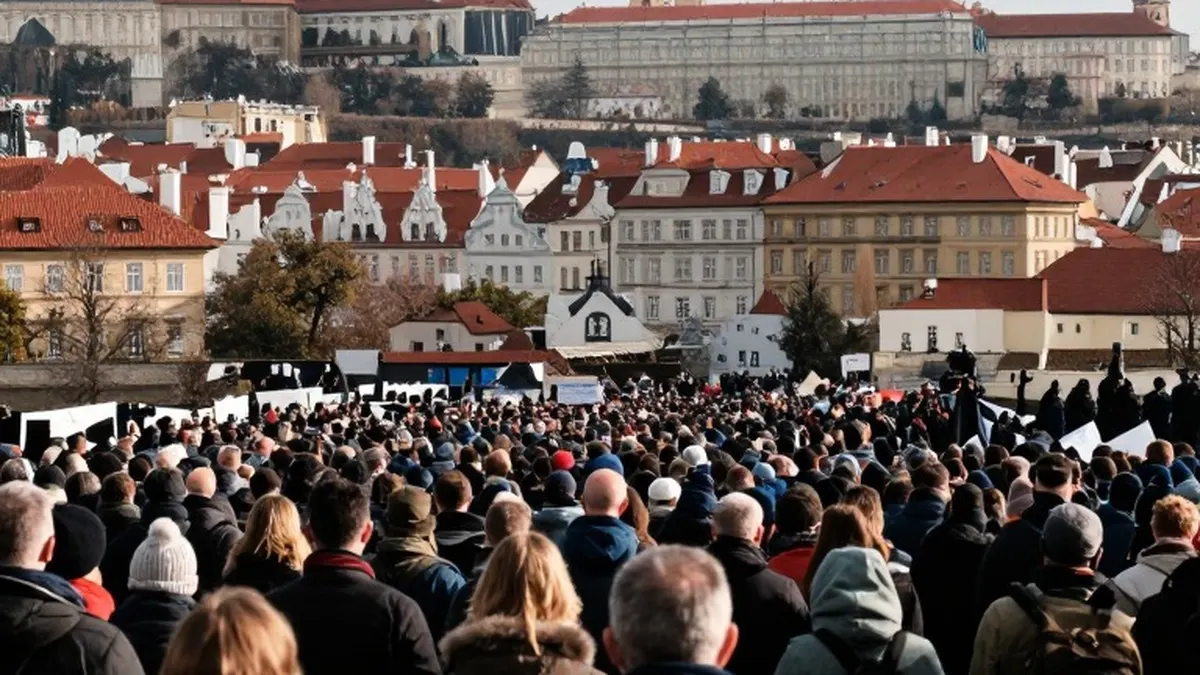
Hundreds of thousands of people are expected to gather in Prague on Sunday, November 15, to oppose proposed changes to the funding of Czechia’s public broadcasters. Organisers say the demonstration could rank among the largest in the country’s history, with media independence at the centre of the dispute.
Million Moments for Democracy, the group organising the rally, forecasts an attendance of between 400,000 and 600,000 at Letná Plain, overlooking Prague’s historic centre. The protest follows weeks of demonstrations across Czech towns and cities, as well as a strike by employees of Czech TV and Czech Radio.
The government wants to abolish the mandatory licence fees that support the two broadcasters and replace them with money from the state budget. Under the proposed changes, television and radio budgets would fall by about 15%. The fees currently amount to a combined monthly payment of 205 koruna, or £7.
Opponents argue that financing the broadcasters through the state budget would increase ministers’ influence over their newsrooms. They point to Slovakia, Hungary, Poland and Serbia, where current or former rightwing populist governments have weakened media independence, as examples of the direction they fear Czechia could take.
The dispute presents another challenge for Prime Minister Andrej Babiš and his coalition, which brings together populist, hard-right nationalist and Eurosceptic parties. Daniel Stach, a television presenter and prominent campaign figure, said some participants would also be expressing broader opposition to the government. Million Moments for Democracy accused the authorities of disregarding experts and critics and treating democratic institutions as their own property.
International media organisations have also criticised the proposal. The European Broadcasting Union, European Federation of Journalists, Reporters Without Borders and International Press Institute have compared it with contentious measures associated with Slovak Prime Minister Robert Fico and former Hungarian prime minister Viktor Orbán.
Babiš, a billionaire who returned to power last year, rejects the suggestion that the changes threaten media freedom. He has accused protesters of stirring up public concern through unsupported allegations. In an opinion article published last week, he described opposition arguments about the licence fees as the “seven lies”.
He also dismissed criticism as “hysterical outbursts” and said claims that public media would be nationalised were deliberately false. Addressing concerns about government influence over broadcasters’ journalism, Babiš wrote: “Under no circumstances will we interfere in editorial work.”