Surviving officer files whistleblower complaint over inadequate base defenses
A US Army major alleges the Pentagon ignored warnings about missing drone protections before a deadly strike on a Kuwaiti base.
By Aiko Petrov ·
A surviving US Army officer has filed a whistleblower complaint accusing the Pentagon of disregarding repeated concerns regarding insufficient protective measures for troops. Maj. Stephen Ramsbottom, who was injured during an Iranian drone strike in March, submitted the document detailing what he describes as a failure of leadership to address known vulnerabilities.
The incident occurred on March 1 at the Shuaiba port facility in Kuwait. During the attack, six US Army Reserve soldiers were killed, and 25 others, including Ramsbottom, sustained injuries. In an interview with CBS News's 60 Minutes aired on Sunday, Ramsbottom characterized the event as a tactical failure attributed to the Army, its leadership, and himself.
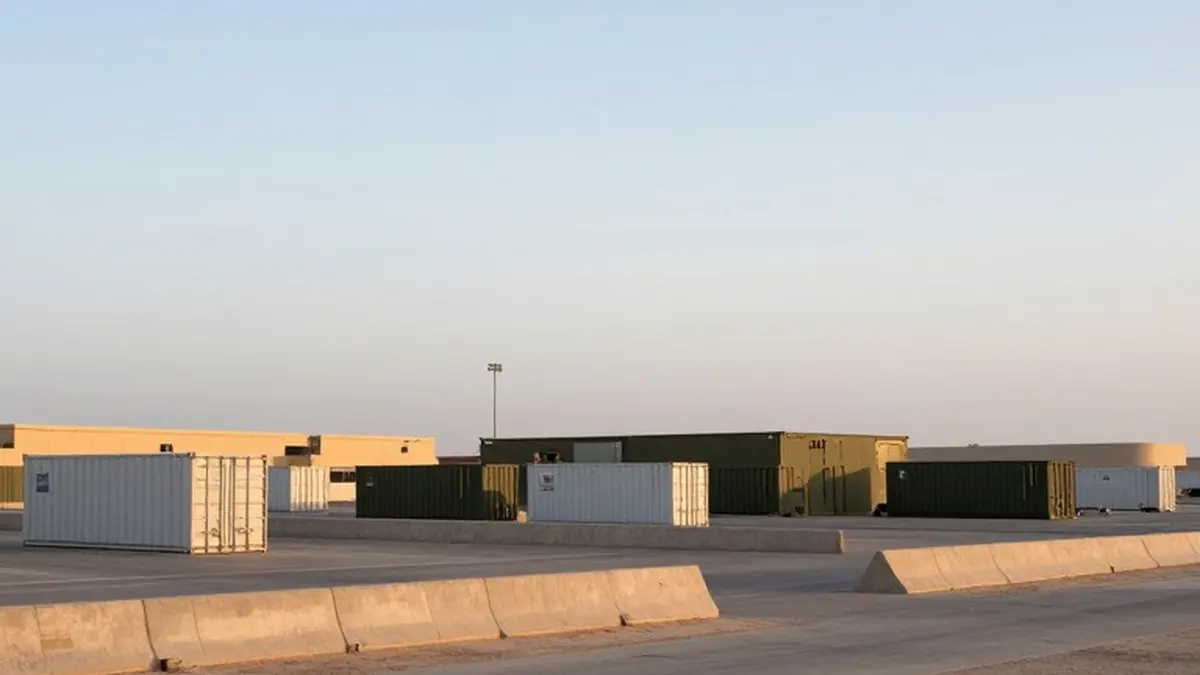
Ramsbottom described the US operations center at the location as resembling a trailer park. This assessment contradicts statements made by senior Pentagon officials at the time. Chief spokesperson Sean Parnell wrote on March 3 that the secure facility had been fortified with six-foot-high walls, suggesting a level of protection that Ramsbottom and other sources dispute.
According to a source familiar with the location, the site was only surrounded by concrete barriers designed to protect against car bombs. There were no specific structures in place to shield personnel from drone or missile attacks. Another source noted that the attack arrived rapidly, with no prior warnings or sirens to alert troops to evacuate or enter bunkers.
The whistleblower report highlights that the Army installation lacked a physician or a fixed aid station when the drone strike took place. Additionally, there was only one ambulance present at the site during the emergency. Ramsbottom stated that he had raised the issue of missing aerial protection with superior officers in various meetings, only to be told that the troops did not need to worry about it.
Ramsbottom also pointed out that the command sergeant major had previously assured the troops that the military would attempt to secure a counter-drone system for the base. However, the equipment never arrived at Shuaiba. Ramsbottom noted that it remains unclear whether the system was ever formally ordered or requested.
The timeline of the attack followed a significant geopolitical event. Approximately 9 a.m. the morning after the US and Israel conducted a strike that killed then-supreme leader Ali Khamenei, soldiers at Shuaiba received an all-clear signal. They had spent the previous night moving in and out of bunkers. About 30 minutes after returning to their workspaces, the drone struck.
Ramsbottom provided a vivid account of the moment of impact. He recalled being knocked to the ground, comparing the sensation to someone hitting him in the back of the head with a baseball bat. He stated that his vision immediately went black following the collision.