Researcher argues anti-Muslim racism forms a global system of racial power
Dr. Amina Shareef contends that the recent conflicts in Gaza, Iran, and Lebanon are manifestations of a broader political structure that normalizes mass suffering among Muslim populations.
By Aiko Petrov ·
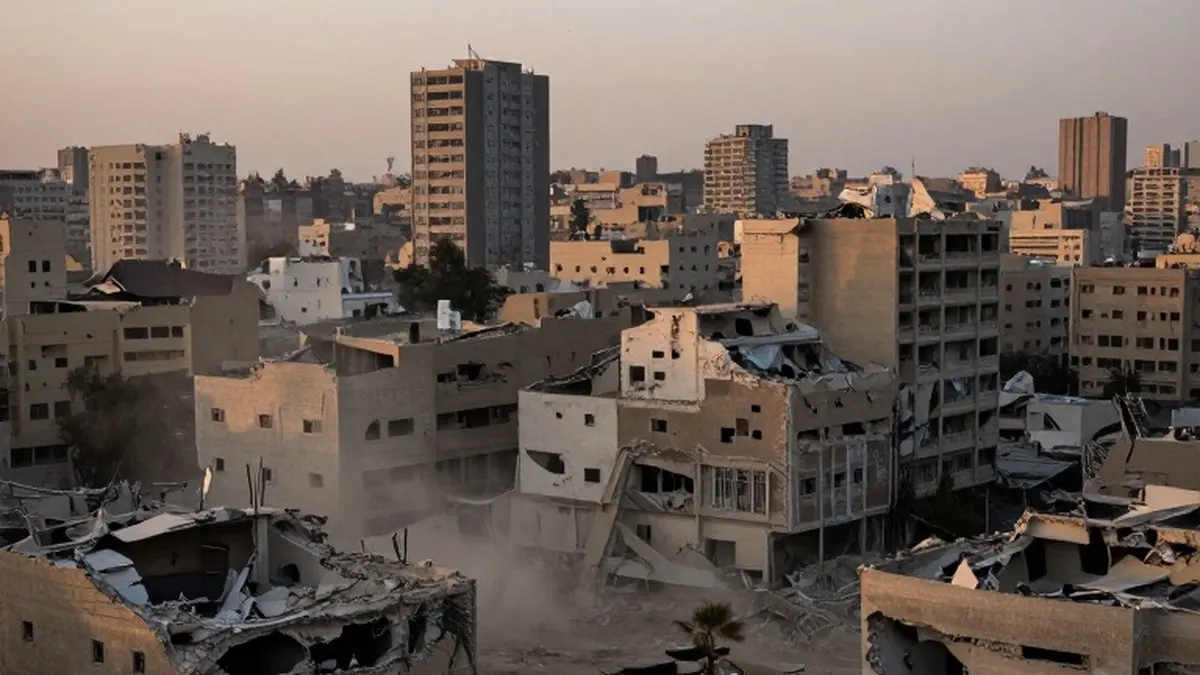
Dr. Amina Shareef, a researcher specializing in anti-Muslim racism, has proposed that the widespread destruction currently visible in Gaza, Iran, and Lebanon is not an isolated set of events. Instead, she argues that these conflicts are part of a long-standing historical trajectory of anti-Muslim racism. This historical context, she suggests, has made the mass suffering and death of Muslim populations politically acceptable to the global community.
According to Shareef, Islamophobia should not be viewed merely as a form of individual prejudice or social discrimination. She defines it as a comprehensive global system of racial power. Within this framework, Muslims and those identified as such are constructed as inherent security threats. This conceptualization allows for violence against these groups to be justified under the banner of security needs.
A central element of this system is the archetype of the Muslim terrorist. Shareef notes that this figure portrays the political agency of Muslim communities as naturally threatening to the status quo. The logic derived from this archetype extends far beyond standard measures such as surveillance, detention, and militarized borders. She argues that it also encompasses active warfare, political abandonment, and the deliberate destruction of the basic conditions required for life to continue.
The researcher identifies Palestine as a primary location where these contemporary security practices have been developed and refined. She describes a process in which these technologies of control are then reproduced in other regions, a concept she terms the Palestine boomerang. This mechanism suggests that the methods used in one conflict serve as a template for others, creating a cohesive strategy of control across different geographic areas.
While acknowledging that conflicts in Iran, Lebanon, Kashmir, Syria, Yemen, Iraq, and Afghanistan possess distinct historical backgrounds, Shareef argues that they share a recurring structural pattern. In each of these instances, Muslim populations are portrayed as threats. Consequently, their suffering becomes easier for political leaders to justify or overlook, as the underlying narrative frames their existence as a risk that must be managed.
This pattern of justification relies on the dehumanization of the affected populations. By framing them as security risks, the political cost of military intervention or neglect is reduced. The destruction of infrastructure and the loss of life are thus presented not as tragedies, but as necessary components of a broader security strategy. This perspective shifts the focus from the human impact of the conflict to the strategic objectives of the intervening powers.
Shareef emphasizes that the impact of this system is felt most acutely by those living in the affected regions. The constant state of alert and the presence of militarized forces alter daily life, creating an environment where survival is a daily challenge. The psychological toll of being perceived as a threat, combined with the physical reality of conflict, places a significant burden on communities that have already endured decades of instability.
In her conclusion, Dr. Shareef states that confronting anti-Muslim racism is fundamentally a struggle to protect human life and dignity. She calls for sustained resistance against the systems that expose entire populations to what she describes as premature death. This resistance, she argues, requires a continuous effort to challenge the narratives that make violence seem inevitable or necessary.
The researcher further argues that the responsibility to seek justice remains vital, even when the outcome of that struggle is uncertain. She suggests that giving up on the pursuit of justice because success is not guaranteed is a concession to the very systems that seek to normalize suffering. By maintaining the pressure for accountability, activists and citizens can work to dismantle the structures that facilitate anti-Muslim racism.
As the conflicts in the Middle East continue to draw global attention, Shareef’s analysis offers a framework for understanding the deeper political and racial dynamics at play. Her work highlights the importance of looking beyond immediate military events to examine the broader historical and systemic forces that shape the treatment of Muslim populations worldwide. This perspective encourages a more nuanced understanding of current affairs and the long-term implications of policy decisions.